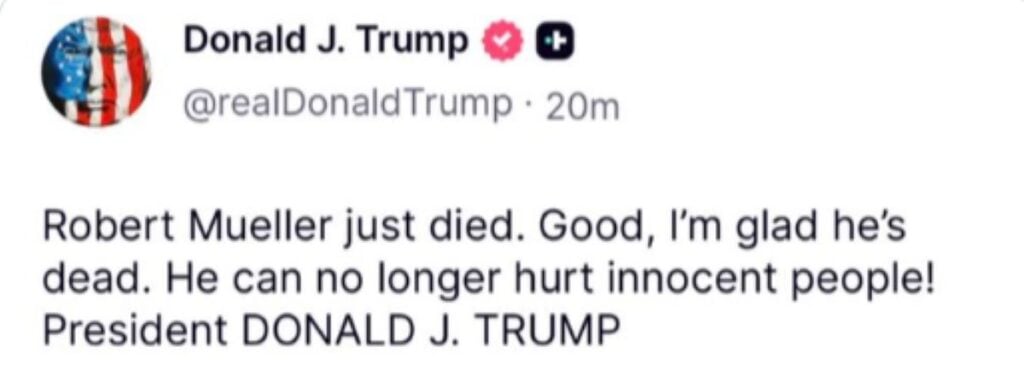
“Robert Mueller just died. Good, I’m glad he’s dead. He can no longer hurt innocent people!”
That’s the President of the United States, posting on Truth Social Saturday, hours after the death of the former FBI director was reported.
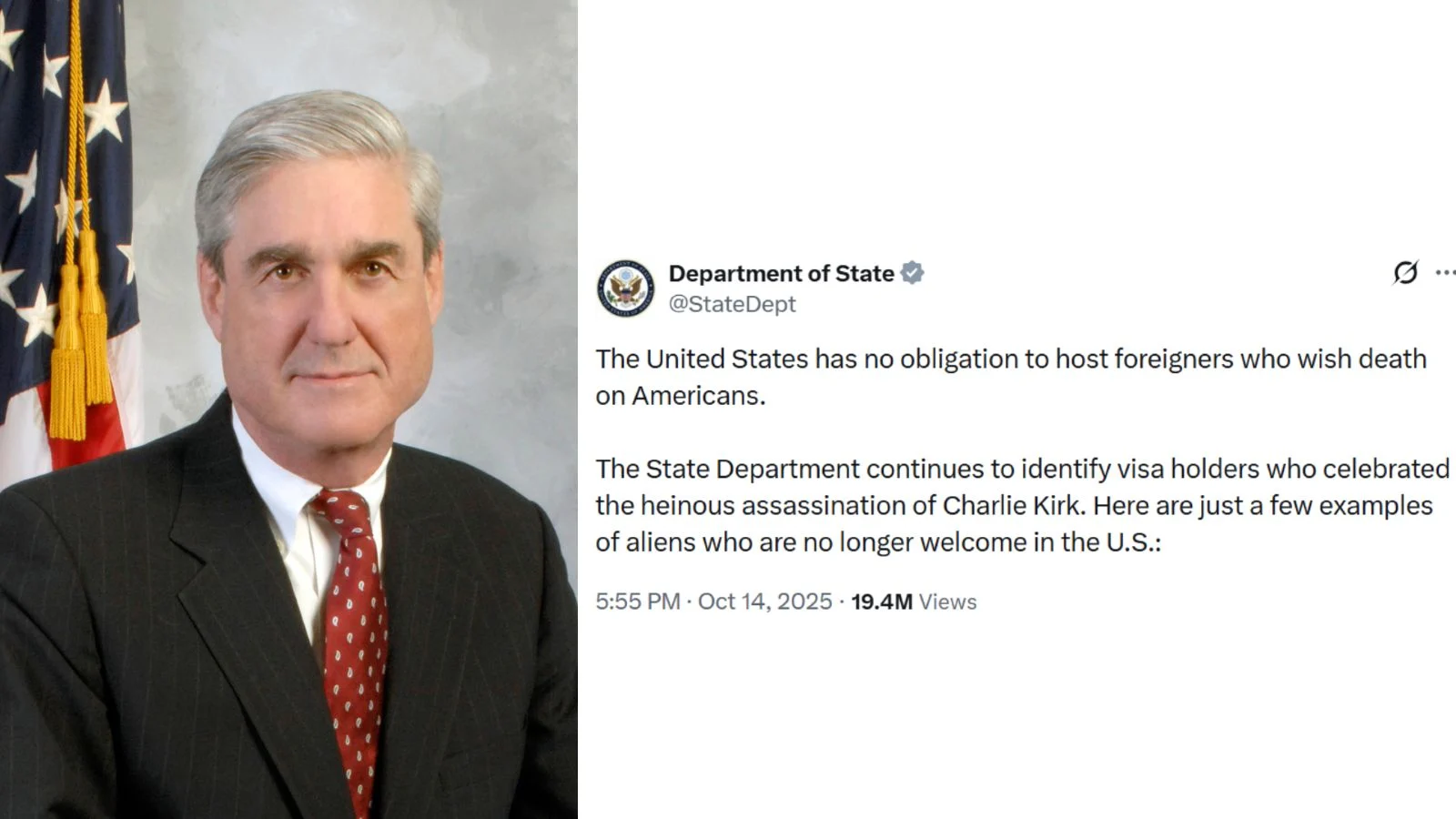
Robert Mueller served in Vietnam. He earned a Bronze Star and a Purple Heart. He led the FBI for 12 years — through September 11, the anthrax attacks, and two presidencies. He was appointed by George W. Bush, and Obama later signed the law extending his tenure. His family disclosed in 2025 that he had Parkinson’s disease. He was 81.
The president of the United States said he was glad the man was dead.
Six Months Ago, the Rules Were Different
On September 10, 2025, Charlie Kirk was shot and killed while speaking at Utah Valley University. He was 31. Within 24 hours, the State Department’s deputy secretary, Christopher Landau, posted on X that he was “disgusted to see some on social media praising, rationalizing, or making light of the event” and said he had directed consular officials to take “appropriate action.”
Days later, Secretary of State Marco Rubio said visa revocations were under way. In October, the State Department announced it had revoked visas from six people — from Argentina, Brazil, Germany, Mexico, Paraguay, and South Africa — over social media posts about Kirk’s death. The department posted redacted versions of their comments on X, followed by two words: “Visa revoked.”
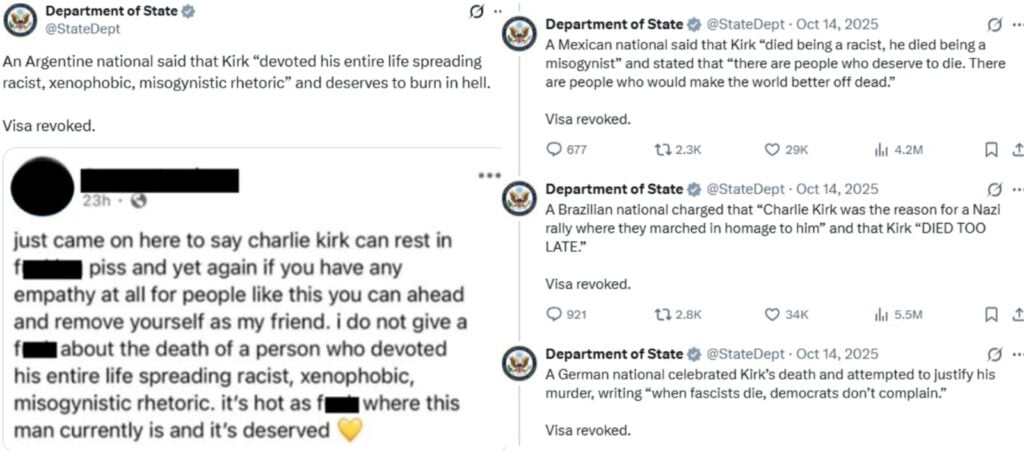
The posts that triggered revocations included calling Kirk a racist, saying he “died too late,” and mocking Americans for grieving. One South African man lost his visa after posting that Kirk “won’t be remembered as a hero.”
The State Department’s official position: “The United States has no obligation to host foreigners who wish death on Americans.” Vice President Vance urged listeners to “call their employer.” Teachers and other workers were fired or suspended. MSNBC cut ties with Matthew Dowd. ABC suspended Jimmy Kimmel’s show before bringing it back. The Pentagon disciplined troops over social media posts about Kirk. A government apparatus was built, in real time, to punish people for disrespecting the dead.
Now Place Them Side by Side
A South African man lost his visa for saying Charlie Kirk wouldn’t be remembered as a hero. The president said he was glad Robert Mueller was dead.
A Brazilian national lost her visa for writing that Kirk “died too late.” The president posted “Good, I’m glad he’s dead” within hours of Mueller’s death being reported.
The State Department said America “has no obligation to host foreigners who wish death on Americans.” The president celebrated an American’s death publicly.
At the time of writing, there had been no public statement from the State Department about the Mueller post. No condemnation from the officials who built the Kirk response. No calls to report anyone. The machine that ran at full speed six months ago is silent.
When Standards Become Tribal
The problem with Trump’s post isn’t that it was cruel. Cruelty from this president is documented and expected. The problem is what it does to the standard that his own administration built.
The Kirk visa revocations established a precedent: the United States government takes disrespect for the dead seriously enough to revoke travel privileges over social media posts. That wasn’t framed as partisan. It was framed as moral. “The United States has no obligation to host foreigners who wish death on Americans” is a statement about values, not about party.
Trump’s Mueller post didn’t just violate that standard. It proved the standard was never a standard. It was a weapon, deployed selectively. When a conservative dies, the government mobilizes. When a man who investigated the president dies, the president celebrates. The machinery of decency only runs in one direction.
Every future appeal to civility — every “have some respect,” every “this is beneath us,” every “we’re better than this” — now comes with an asterisk. The Kirk precedent said America holds the line on respecting the dead. The Mueller post said the line only applies to certain dead.
The Receipt That Doesn’t Expire
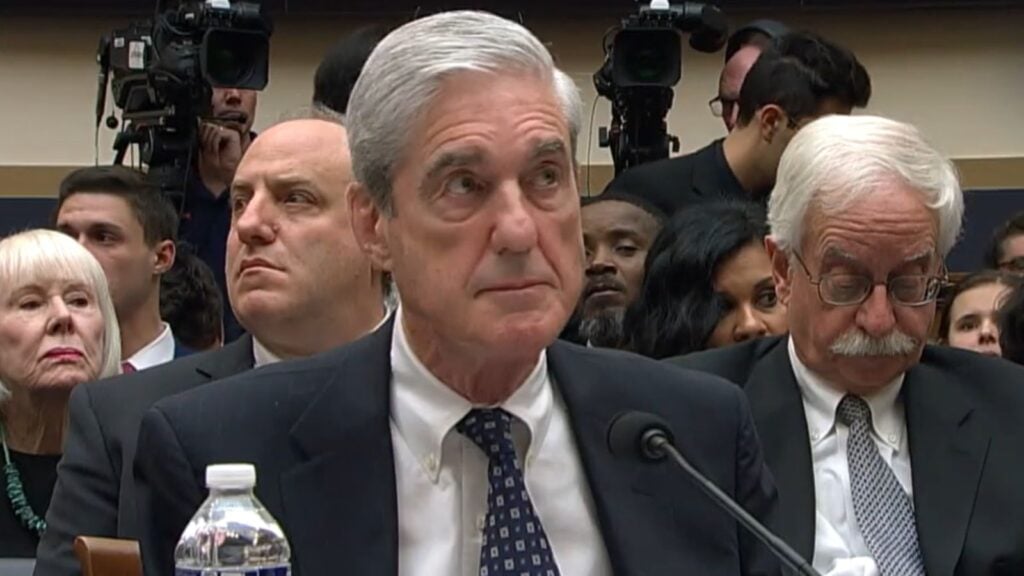
Mueller’s investigation produced dozens of indictments and multiple guilty pleas. His report did not establish that the Trump campaign conspired or coordinated with the Russian government, and it did not exonerate the president on obstruction. It was, depending on who you ask, either a necessary investigation into foreign interference or a politically motivated witch hunt. Reasonable people disagree.
But Mueller served his country for over five decades. He served in Vietnam. He led the FBI when the towers fell. He was a longtime Republican. He did his job, filed his report, and largely disappeared from public life. His family disclosed in 2025 that he had Parkinson’s. And the president of the United States responded to his death by saying “Good.”
Six months ago, that word — aimed at a dead man by a foreigner on social media — would have been enough to lose a visa. Today, it came from the Oval Office. That’s not hypocrisy. That’s the moment the standard stopped pretending to exist.