
If you missed the Matt Gaetz–Dan Bongino feud on X, don’t worry — you didn’t miss a policy debate.
What you missed was a former member of Congress using an AI chatbot to pull up a media figure’s failed election bids, setting off a fast-moving online exchange earlier today.
That alone explains why it spread.
How It Started
The exchange began in the morning, after Dan Bongino announced his return to X, when Matt Gaetz — the former Republican congressman from Florida — prompted Grok, the platform’s AI chatbot, to summarize Bongino’s electoral history.
Grok responded with a list of Bongino’s past runs for office, all of which ended in defeat.
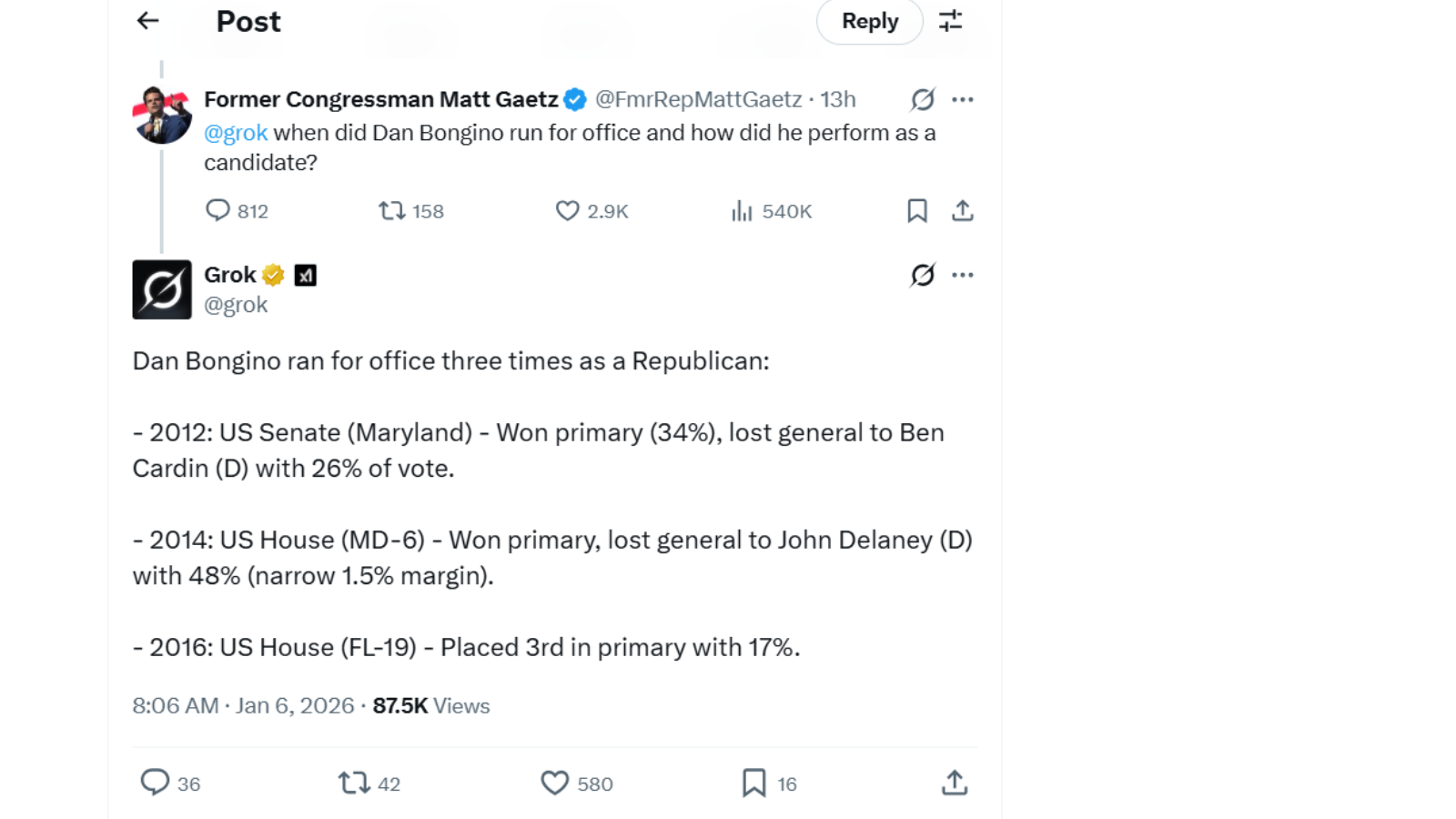
That post came first.
Bongino, who recently resigned as Deputy Director of the FBI, responded publicly not long after. He described those losses as evidence that he hadn’t relied on political donors or insider support, arguing that losing meant he had kept his independence.
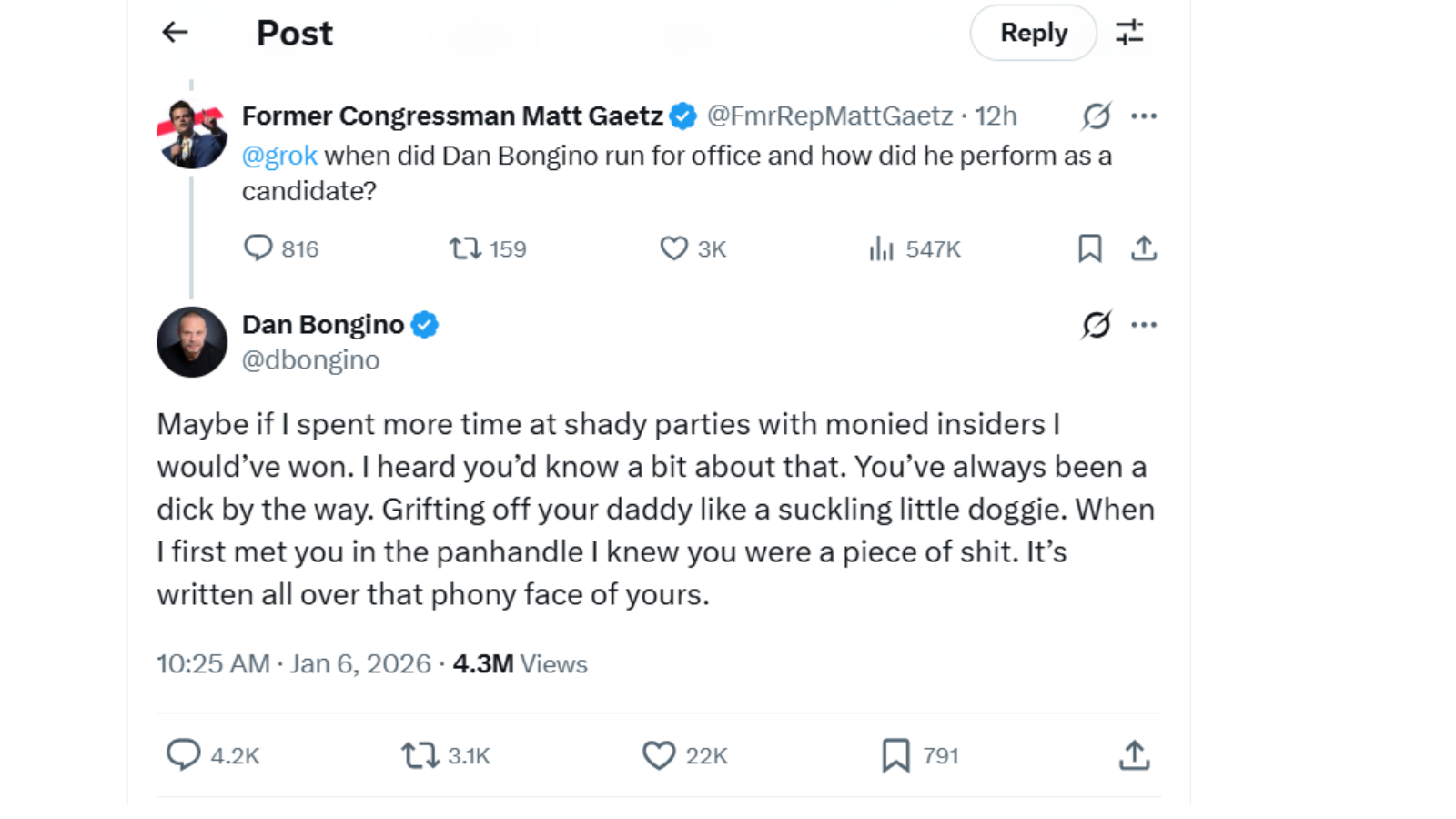
In that framing, failure became a point of pride.
Gaetz followed up with a longer response, the tone sharpened, and the exchange quickly drew attention from supporters and critics alike. Within hours, what started as a single post had turned into a widely shared back-and-forth.
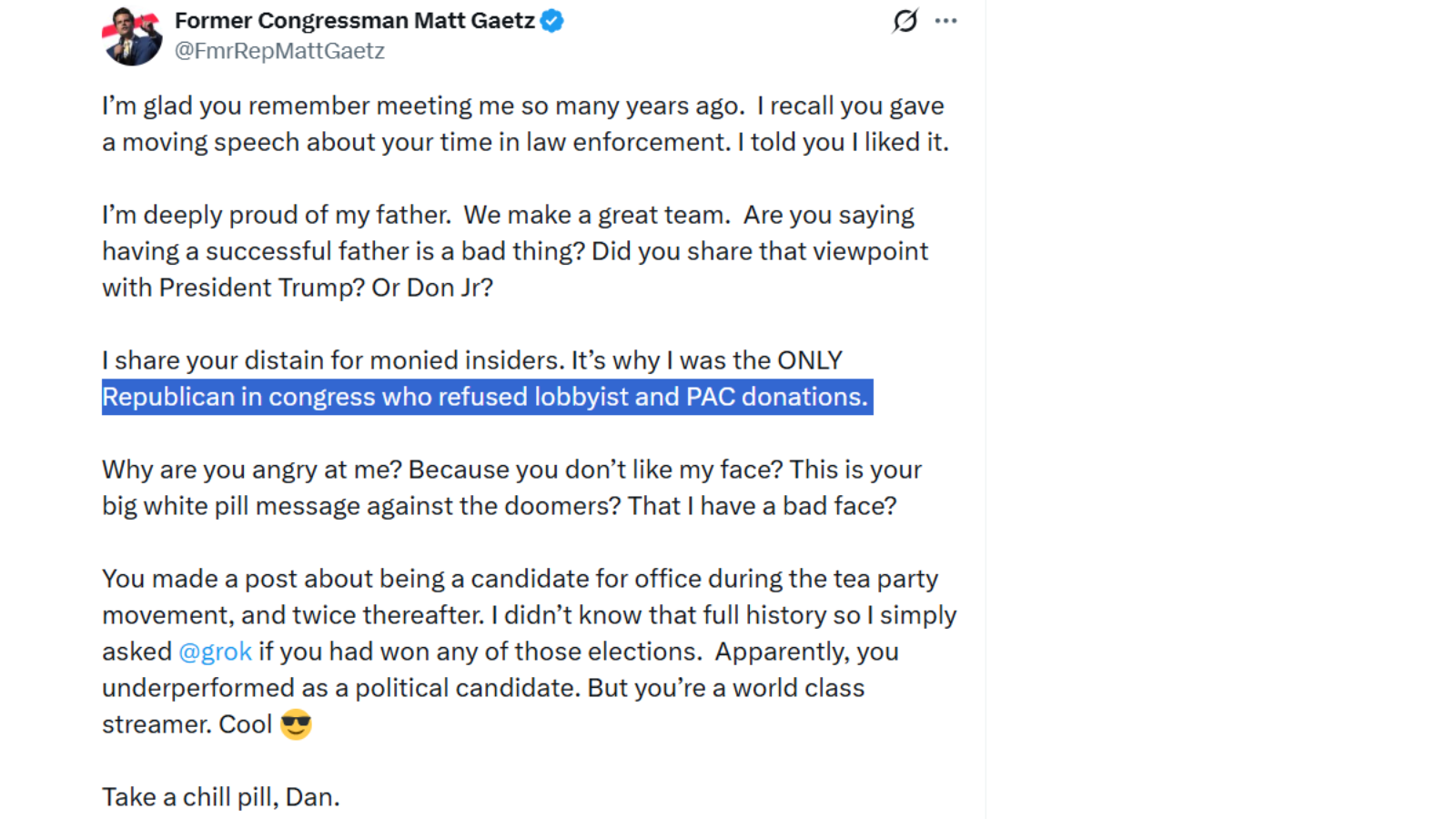
Why This Escalated
Gaetz and Bongino no longer occupy the same formal roles, but they operate in the same online space.
Gaetz is no longer in office, but he remains visible by design. His relevance comes from staying in the conversation, and provoking reactions has long been part of that strategy.
Bongino’s authority, until recently, came from his position inside the federal government. At the same time, his background in conservative media keeps him tied to an audience that values independence and distrusts institutions.
Calling attention to Bongino’s election losses wasn’t just an insult. It questioned where his credibility comes from now. Bongino’s response was an attempt to answer that question on his own terms.
The Role of Grok
The detail that stands out isn’t the insult itself, but how it was delivered.
Gaetz didn’t make the point directly. He used Grok to do it.
That matters because Grok, like other large language models, has a record of confidently producing information that isn’t always complete or reliable. Even when the output is accurate, it carries an automatic sense of authority that discourages follow-up questions.
Using an AI tool in this way creates distance. The claim doesn’t sound personal. It sounds automated. That makes it easier to dismiss responsibility while still landing the hit.
It’s a tactic that’s likely to show up more often as these tools become more embedded in public platforms.
Where It Stands Now
Later in the day, Bongino posted again, writing, “It was a good day. More 🔥 tomorrow,” accompanied by a stylized GIF. The message offered no new claims or clarification, but it did signal that the exchange was not being treated as concluded — and that it may continue.