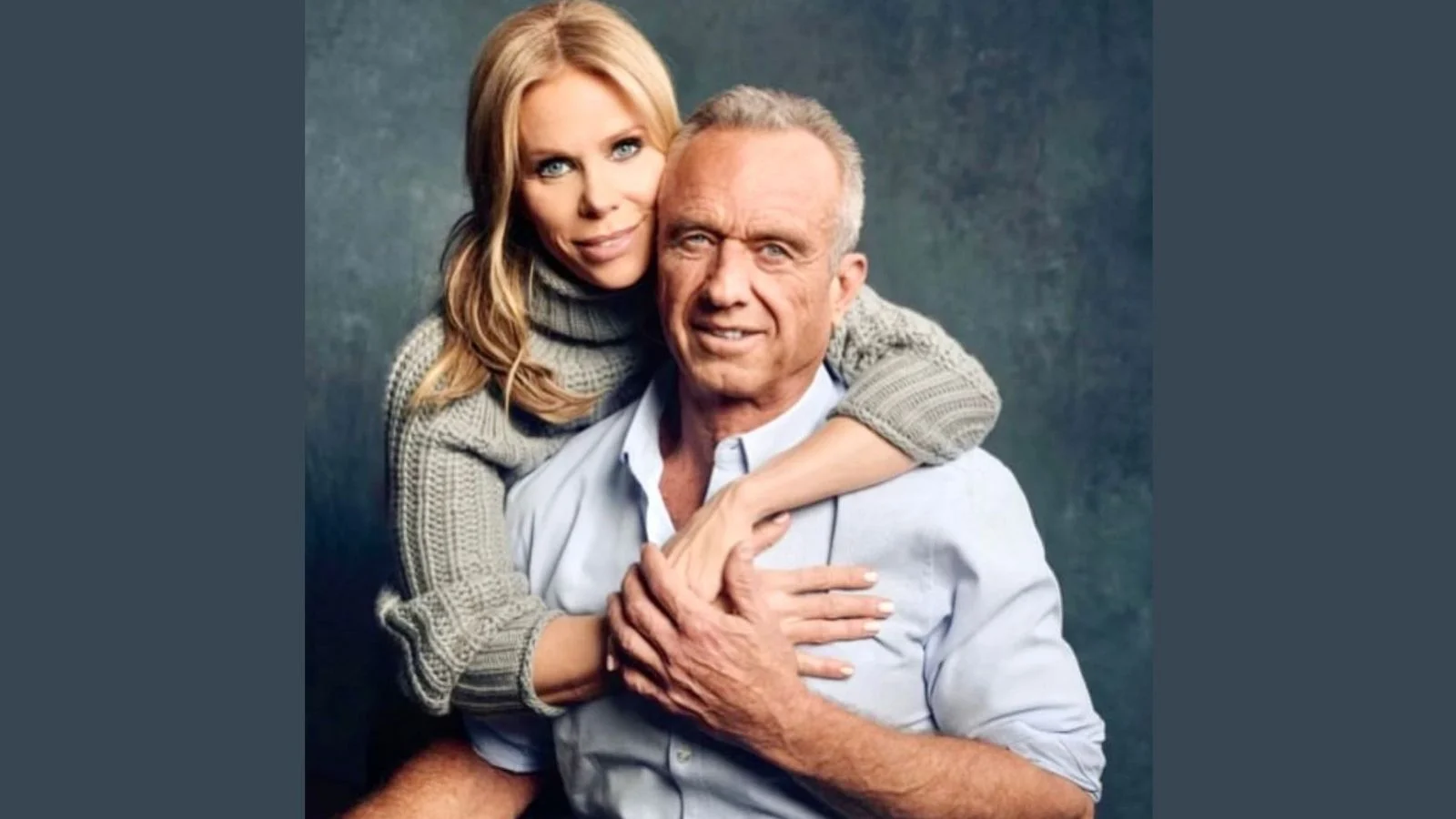
The overlap between celebrity culture and political power has always been messy, but this latest chapter feels especially calibrated. And it’s not just a scandal, nor just survival, but something closer to strategy. According to investigative reporter Isabel Vincent statement to People, the marriage between Robert F. Kennedy Jr. and actress Cheryl Hines may have been preserved less out of romance and more out of political necessity.
Here is the core of it. In her upcoming biography RFK Jr.: The Fall and Rise, set for release on April 14, 2026, Vincent claims Kennedy feared that a third divorce would damage his standing within Donald Trump’s inner circle. That concern, she suggests, became a deciding factor in keeping the marriage intact after a very public rough patch. The context matters. This all follows a 2024 sexting scandal involving journalist Olivia Nuzzi, which reportedly pushed the couple close to a split.
Let’s be clear. Kennedy still secured his position as U.S. Secretary of Health and Human Services with a narrow 52 to 48 Senate vote on February 13, 2025. But Vincent’s reporting frames that win as one that comes with a private cost. A marriage that, at least according to her account, was under serious strain while he was stepping into one of the most visible roles in government.
A Job Description That Includes Staying Married
If this all sounds like something out of a political drama, that is because it kind of is. According to biographer Isabel Vincent, the most telling detail is not just that the marriage survived, but why it did. She claims Robert F. Kennedy Jr. “really tried to make it up to her” because, in his view, another divorce would have been politically damaging at exactly the wrong moment.
Here’s the thing. Vincent frames this as more than emotional repair. She suggests Kennedy saw the situation in strategic terms. While it would have been his third divorce, he reportedly viewed it as a “second filing” in a way that still carried serious weight with a base he believed leaned traditional on marriage. Timing, optics, and perception all start to blur here.
Vincent describes the relationship today as “somewhat together,” which feels deliberately vague but also revealing. She notes that Cheryl Hines is not consistently appearing alongside him at public events, despite her visibility as a Curb Your Enthusiasm star. It is a small detail, but it adds up. It is the kind of absence that quietly signals distance without ever confirming it.
What makes this especially layered is how it connects back to the 2024 scandal involving Olivia Nuzzi.
It sounds dramatic, but it also tracks with the broader logic of power. If, as Vincent suggests, Kennedy believed his supporters expected a certain image, then staying married was not just about saving a relationship. It was about protecting viability. The apology becomes strategic. The reconciliation becomes necessary.
And where does that leave things now? Somewhere in between. A marriage that still exists, but one that Vincent portrays as carrying the weight of what it took to keep it intact. The distance she describes today feels less like a coincidence and more like the aftereffect of a decision made under pressure.
The Backstory That Refuses to Stay Quiet
To understand why this claim is gaining traction, you have to look backward. Kennedy’s relationship history is not just background noise. It is part of the narrative.
He divorced his first wife, Emily Black, in 1994 and married Mary Richardson Kennedy that same year. That second marriage unraveled publicly and painfully, ending in a bitter divorce and custody battle that began in 2010. Mary Richardson Kennedy died in May 2012, a tragedy that continues to cast a long shadow.
Then came 2024. The reported involvement with Olivia Nuzzi reopened old patterns in a very modern way. A digital scandal, public enough to spark headlines, personal enough to destabilize a marriage that had lasted over a decade.
@faulkner.for.maine I’m sorry for ruining your sunday morning with news of RFK jr’s cheating scandal with Olivia Nuzzi. Here’s the breakdown on how they met, but a more important observation is how blonde, pretty white women seem to just be given things in life so easily. Must be nice. #olivianuzzi #rfkjr #textingscandal #breakingnews #viralfyp ♬ Chopin Nocturne No. 2 Piano Mono – moshimo sound design
What makes this compelling is not just the repetition, but the timing. Each chapter of personal turmoil seems to collide with a moment of professional transition.
The Art of the Faked Separation
If Vincent’s version of events leans toward strategy, Hines’ own account introduces something even more surreal. In her 2025 memoir Unscripted, she reveals that Kennedy suggested they fake a separation during the 2024 campaign.
Pause on that. Not an actual split, but a staged one, designed to manage public perception and shield her from political fallout.
Hines ultimately chose to present a united front. In her writing, she emphasizes that they remained married and that their relationship endured. She frames their challenges as something they have moved past.
This is where the contradiction sharpens. On one hand, there’s a memoir that leans into resilience and partnership. On the other hand, there’s a biography that suggests the relationship is still fractured beneath the surface.
So which version reflects reality? That is still unclear.
@womeninamericaThe more you know!♬ original sound – Women in America
Keeping Up Appearances in the District
Here is where the story moves beyond one couple and into something bigger. The idea of the “political spouse” has always been loaded, but it is evolving in real time.
What makes this interesting is how image management now operates across two powerful ecosystems. Hollywood and Washington. Hines brings visibility, relatability, and a certain cultural currency. Kennedy brings legacy, controversy, and institutional power.
Together, they form a kind of hybrid public figure. One that requires constant calibration.
It raises a question that feels very current. Do voters still expect their leaders to project a polished, traditional family image? Or have audiences become more aware, even more accepting, of the behind-the-scenes maneuvering required to maintain that image?
The answer is not straightforward. Public reaction, especially on social media, appears split. Some see Hines as a strategic partner navigating a difficult landscape. Others read the situation as a continuation of patterns that have defined Kennedy’s personal life for decades.
The High Cost of the Kennedy Name
The Kennedy legacy has always carried a mix of prestige and scrutiny. That duality is part of what keeps stories like this in the spotlight.
Olivia Nuzzi is out at Vanity Fair as new allegations surface about an affair with RFK Jr. and another political figure.
VF will let her contract quietly expire at year’s end—just months after she jumped from NY Magazine following the first scandal. pic.twitter.com/HG7leGUUig— MAGA Cult Slayer🦅🇺🇸 (@MAGACult2) December 7, 2025
Vincent’s reporting on Mary Richardson Kennedy’s alleged diaries adds another layer of complexity. The idea that those journals were kept as a form of insurance suggests a relationship shaped by mistrust and anticipation of conflict. Again, these claims sit within the biography and are not independently verified, but they contribute to the broader narrative.
Here’s the thing. When personal history becomes part of political vetting, nothing stays buried. Every past relationship, every documented moment, gets reexamined through the lens of present power.
For an audience that follows both politics and entertainment, this story hits a particular nerve. It is not just about policy or performance. It is about the cost of maintaining an image in a system that rewards stability, or at least the appearance of it.
As the April 14 release of Vincent’s book approaches, more details are expected to surface. Kennedy has not publicly responded to these specific claims, and there are no verified reports on how his colleagues or supporters are reacting.
What remains is a portrait that feels unresolved. A marriage described as intact but strained. A career that may have depended, at least in part, on that stability. And the public trying to piece together two competing narratives.
In the end, this story lands because it sits at the intersection of ambition, image, and human complexity. It asks a quiet but persistent question. How much of what we see in public life is real, and how much of it is carefuly maintained to keep the whole structure from falling apart?