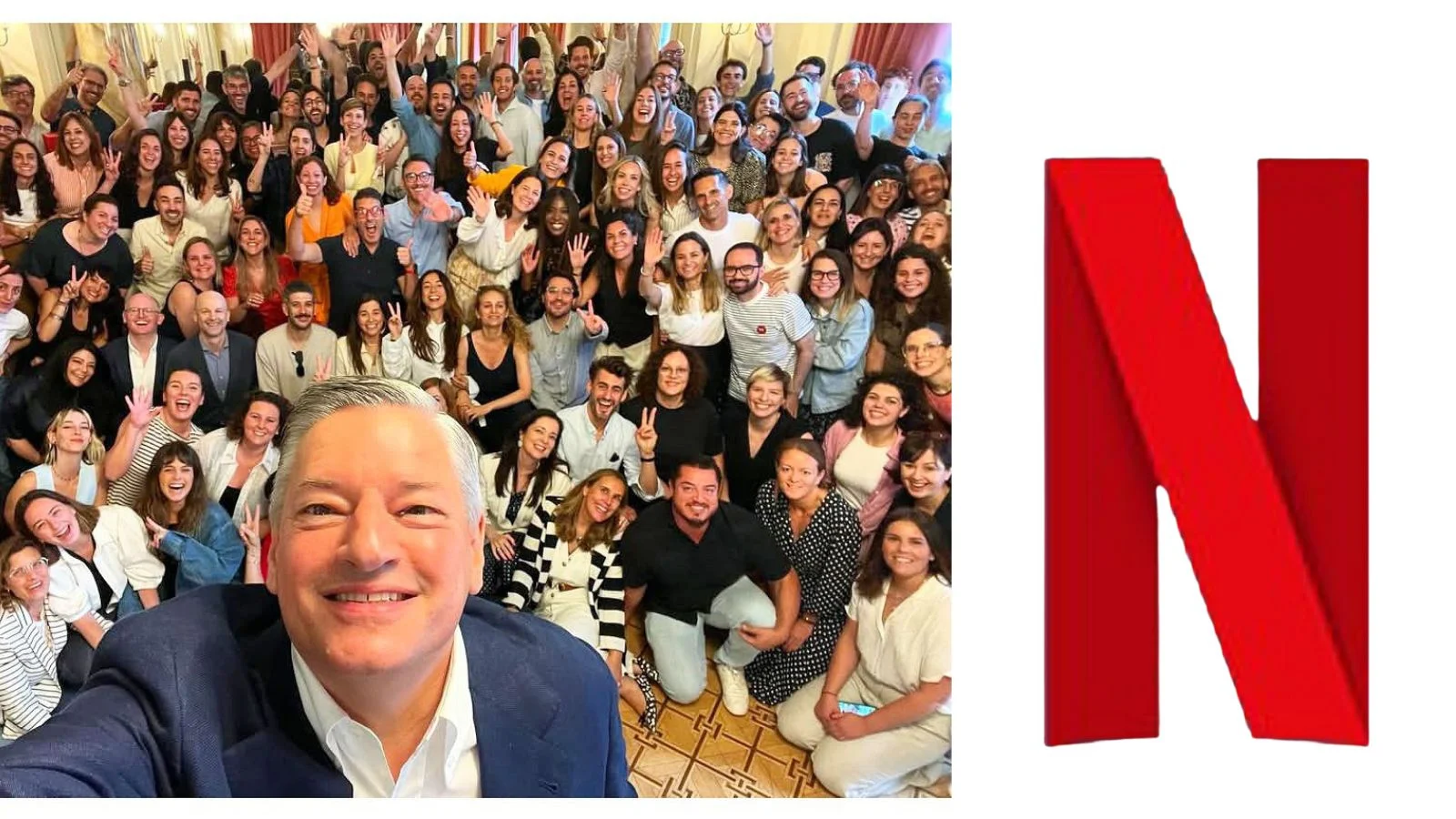
The landscape of Hollywood shifted on its axis this week as Netflix co-CEO Ted Sarandos went on the record with a promise that few would have predicted just three years ago. Speaking in an extensive interview with The New York Times on Friday, January 16, 2026, Sarandos confirmed that if Netflix’s staggering $83 billion offer for the Warner Bros. Discovery streaming and studio business closes, the company will not simply absorb the legendary studio into its app.
Instead, Netflix intends to become a genuine box-office titan, maintaining the industry-standard 45-day exclusive theatrical window that has long been a point of contention between streamers and exhibitors. This isn’t just a soft suggestion; Sarandos is calling it a “hard number.”
“When this deal closes, we will own a theatrical distribution engine that is phenomenal and produces billions of dollars of theatrical revenue that we don’t want to put at risk,” Sarandos told the Times. His tone was uncharacteristically aggressive regarding the traditional box office, a space Netflix once treated as little more than a marketing expense for Oscar eligibility.
“We will run that business largely like it is today, with 45-day windows. I’m giving you a hard number. If we’re going to be in the theatrical business, and we are, we’re competitive people, we want to win. I want to win opening weekend. I want to win box office.”

This pivot comes at a critical juncture for the $83 billion deal, which was first announced in early December 2025. While Netflix is the frontrunner, it isn’t the only suitor in the room. Paramount Global, backed by Skydance’s David Ellison and a massive personal guarantee from Oracle founder Larry Ellison, is currently in “hot pursuit” with a hostile tender offer valued at upwards of $108 billion for the entirety of Warner Bros. Discovery. By committing to a “hard number” on theatrical windows, Sarandos is clearly attempting to soothe the anxieties of the “exhibition community”, the theater owners and operators who have long viewed Netflix as the “Death Star” of the cinema industry.
The immediate context of these remarks suggests a calculated effort to win over WBD shareholders and regulators who worry that a Netflix-owned Warner Bros. would mean the end of the traditional moviegoing experience for franchises like Harry Potter, DC, and Dune. Sarandos is framing the acquisition not as an execution of the theatrical model, but as a hostile takeover of its success. The “win opening weekend” mantra is a direct challenge to legacy studios like Disney and Universal, signaling that Netflix no longer wants to just participate in the cultural conversation; it wants to own the numbers that define it.
However, the exhibition community remains cautiously optimistic at best. While a 45-day window for tentpole releases is a major concession, Sarandos did not clarify if this policy would extend to New Line Cinema releases or smaller mid-budget dramas that often struggle to find a foothold in the modern multiplex. The “hard number” serves as a headline-grabbing peace offering, but the fine print of how Netflix handles a slate as diverse as Warner’s remains to be seen.
Industry insiders note that while 45 days is the current “standard,” the definition of “standard” has been slippery ever since the pandemic. By pinning himself to a specific figure, Sarandos is staking his reputation, and billions of dollars in potential revenue, on the belief that Netflix can play the legacy game better than the legacy studios themselves.
From Disruptor to Defender: The Data Behind the Pivot
To understand why Ted Sarandos is suddenly championing the box office, one has to look at the “due diligence” process that occurred behind the scenes of the $83 billion bid. For years, Netflix’s public stance was that theaters were an “outmoded” concept for many Americans, particularly those outside major metropolitan hubs. But according to Sarandos, the data they uncovered while looking at Warner Bros.’ books told a very different story. The economics of the theatrical business were, in his own words, “more positive than we had seen and we had modeled for ourselves.”
“It’s a healthy, profitable business for them,” Sarandos admitted. “We weren’t in that business not because we hated it. We weren’t in that business because our business was doing so well.” This admission is a rare moment of corporate humility, acknowledging that while the Netflix subscription model is a juggernaut, it cannot replicate the raw, front-loaded cash flow of a global theatrical smash hit. Warner Bros.
Pictures, a studio with a hundred-year history, has a “theatrical distribution engine” that Sarandos now views as a prize asset rather than a legacy burden. This engine doesn’t just sell tickets; it creates the kind of “eventized” cultural moments that Netflix has struggled to maintain with its “binge-and-forget” release cycles.

Historically, Netflix’s relationship with theaters has been combative. From the limited release of The Irishman to the one-week “sneak peek” of Glass Onion: A Knives Out Mystery, the streamer has traditionally used theaters as a high-end billboard to drive app sign-ups or satisfy the contractual demands of elite directors like Martin Scorsese or Rian Johnson. The “theatrical window” was usually treated as a nuisance, a three-week hurdle to be jumped before the film could land on the service.
By shifting to a 45-day model, Netflix is essentially adopting the strategy of its rivals, Disney and Universal, who have found that a robust theatrical run actually increases a film’s value and viewership once it finally hits streaming.
The timing of this “theatrical awakening” is also tied to the shifting sands of the $83 billion deal. Paramount Global is currently waging a proxy war to block the Netflix merger, arguing that their own bid is superior in terms of “value, timing, and certainty of closure.” Paramount, a company with deep theatrical roots, has framed itself as the “safe” choice for the soul of Warner Bros.
Sarandos’s vocal support for the 45-day window is a strategic counter-move designed to prove that Netflix can be a responsible steward of Hollywood’s most storied assets. If Netflix can convince the industry that it will protect the box office, it removes one of the primary regulatory and cultural obstacles to the merger.