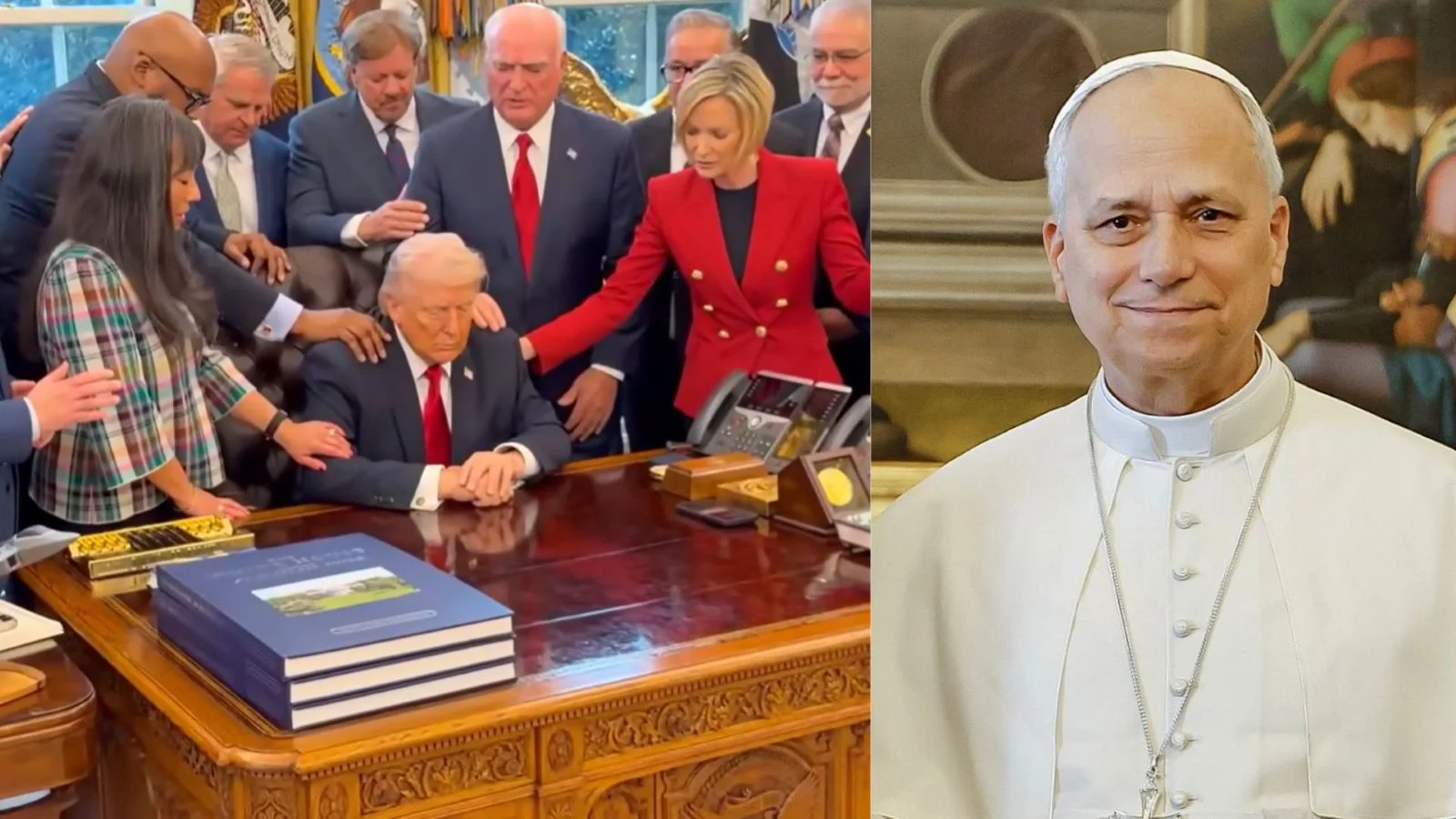
On March 5, a circle of evangelical leaders gathered around Donald Trump in the Oval Office, laid hands on him, and prayed for grace, protection, and wisdom as the Iran war continued. Pastor Tom Mullins asked God to protect Trump, protect U.S. troops, and help the country return to “one nation under God.”
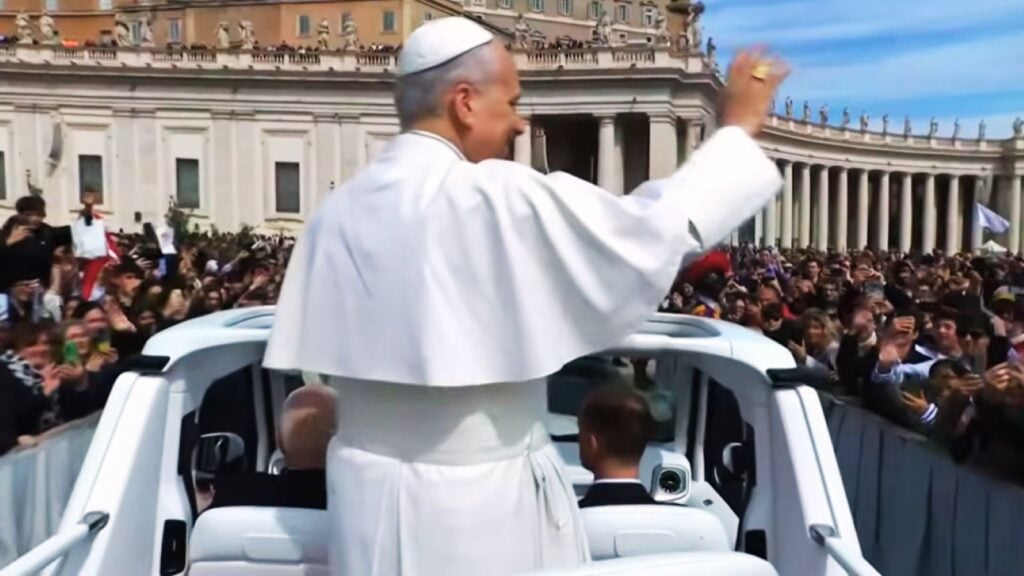
Three weeks later, on Palm Sunday in St. Peter’s Square, Pope Leo XIV quoted the prophet Isaiah: “Even though you make many prayers, I will not listen: your hands are full of blood.” Then he added his own line: God “does not listen to the prayers of those who wage war, but rejects them.”
One side laid hands on the president. The other quoted Isaiah about hands full of blood. They claim the same God. They are describing opposite things.
What the Oval Office Prayer Was, and Wasn’t
To be fair, the March 5 scene was not, on its face, a bloodthirsty spectacle. Presidents have long welcomed clergy. Americans of many faiths pray for leaders and troops in wartime. Many conservatives will look at that moment and see something ordinary, even necessary: pastors asking God for wisdom in a dangerous hour. That is a serious point, not a cartoon.
But Leo’s Palm Sunday message matters precisely because he did not condemn prayer in general. He said Jesus “rejects war” and does not listen to those who wage it. That is a moral boundary and not a stylistic disagreement. And the Oval Office prayer circle was not a private devotion. It was a public display of religious endorsement, staged during a military conflict, with cameras present. The pastors did not pray for peace. They prayed for protection and wisdom in the pursuit of war.
When Faith Starts Riding With State Power
Defense Secretary Pete Hegseth has been hosting monthly Christian worship services at the Pentagon. AP reported that at the latest one, held during the Iran war, he prayed to have “every round find its mark” and asked for “overwhelming violence of action against those who deserve no mercy.” AP also reported that Hegseth belongs to Doug Wilson’s church network, that Wilson — a Christian nationalist who advocates for the United States to become a Christian theocracy — preached at the Pentagon in February, and that Hegseth is reshaping the military chaplain corps in ways critics say narrow the military’s religious posture. At a recent press conference, he closed by quoting Psalm 144: “Blessed be the Lord, my rock, who trains my hands for war and my fingers for battle.”
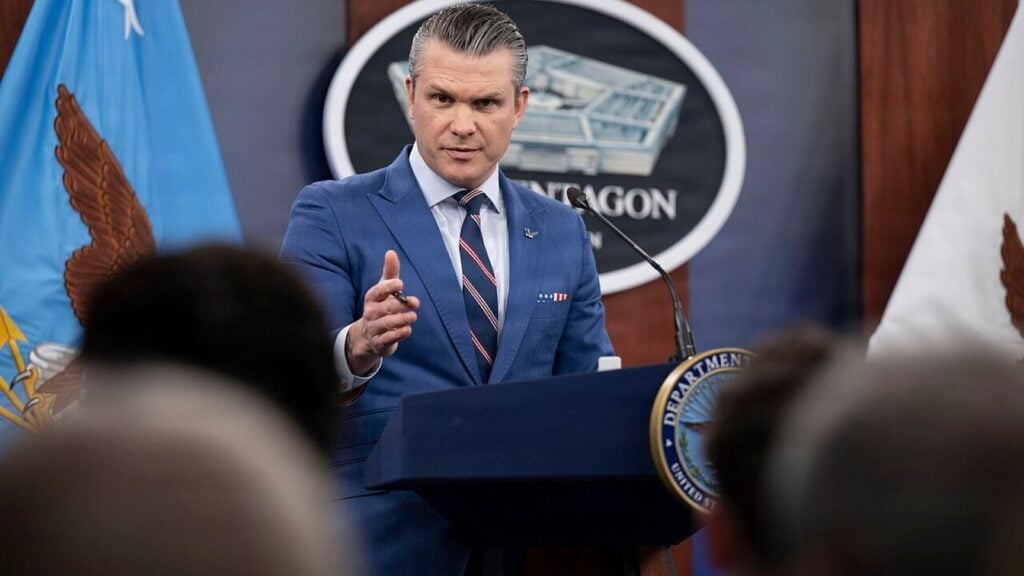
At that point, this stops looking like generic public religiosity and starts looking like faith riding shotgun with wartime state power. And on Palm Sunday, the Pope drew a line against exactly that.
The Vatican’s Answer Wasn’t Symbolic
The Vatican had already been saying no before Palm Sunday. In February, Reuters reported that the Holy See declined to participate in Trump’s “Board of Peace,” with Cardinal Pietro Parolin saying crisis situations should be handled by the United Nations, not a U.S.-led structure. That was not lofty words from a balcony. It was a refusal of the architecture of American wartime leadership.
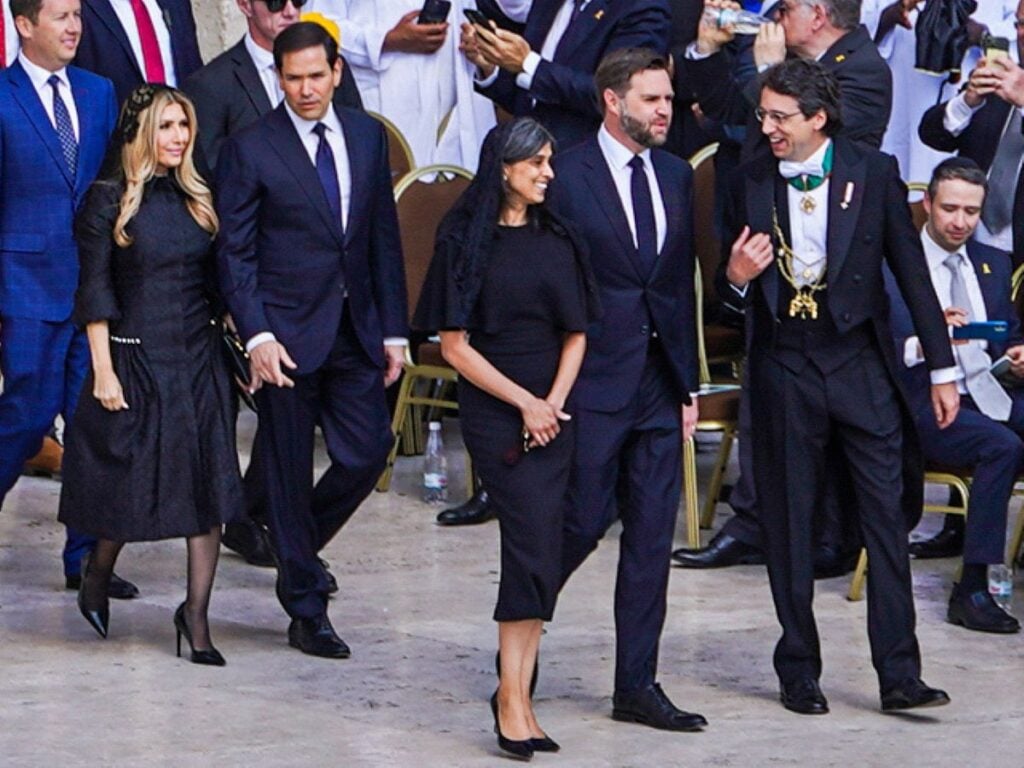
And Leo XIV is history’s first American-born pope. This is not a European cleric scolding an American president from across an ocean — it is an American challenging the spiritual infrastructure that another set of Americans has built around a wartime presidency. And it comes during Holy Week. Palm Sunday commemorates Jesus’ entry into Jerusalem as a king of peace, not a king of conquest. Leo described Jesus as someone who “remains steadfast in meekness, while others are stirring up violence.” Palm Sunday did not create that divide. It just exposed it in public.
The Real Split
One model of Christianity is operating in Trump’s orbit as court religion: close to power, affirming power, praying over power. The other is trying to recover Christianity as a limit on power, especially when power starts speaking too confidently in the language of providence and righteousness.
That question has haunted Christianity since Constantine. Neither side thinks it is betraying the faith. Both think they are defending it. But they are defending radically different ideas of what God is for in public life.
One side laid hands on the president and asked God to protect the mission. The other stood in St. Peter’s Square and quoted Isaiah about hands full of blood. Hegseth closed a press conference quoting Psalm 144 about hands trained for war. Leo described a God who rejects war entirely. Both answers were public. Both were deliberate. And both cannot be true at the same time. If those gestures can live under the same broad Christian banner, then the question is no longer whether they are reading the same Bible. It is whether American Christianity still knows the difference between ministering to power and baptizing it.