Donald Trump has a clean answer ready for anyone who asks why he would accept a potential taxpayer-funded settlement from his own government.
“I’d donate one hundred percent to charity,” he said in February. He mentioned the American Cancer Society. He acknowledged that a payout would “never look good,” then added that “nobody would care because it’s going to go to numerous very good charities.”
That is the sales pitch, not the whole transaction.
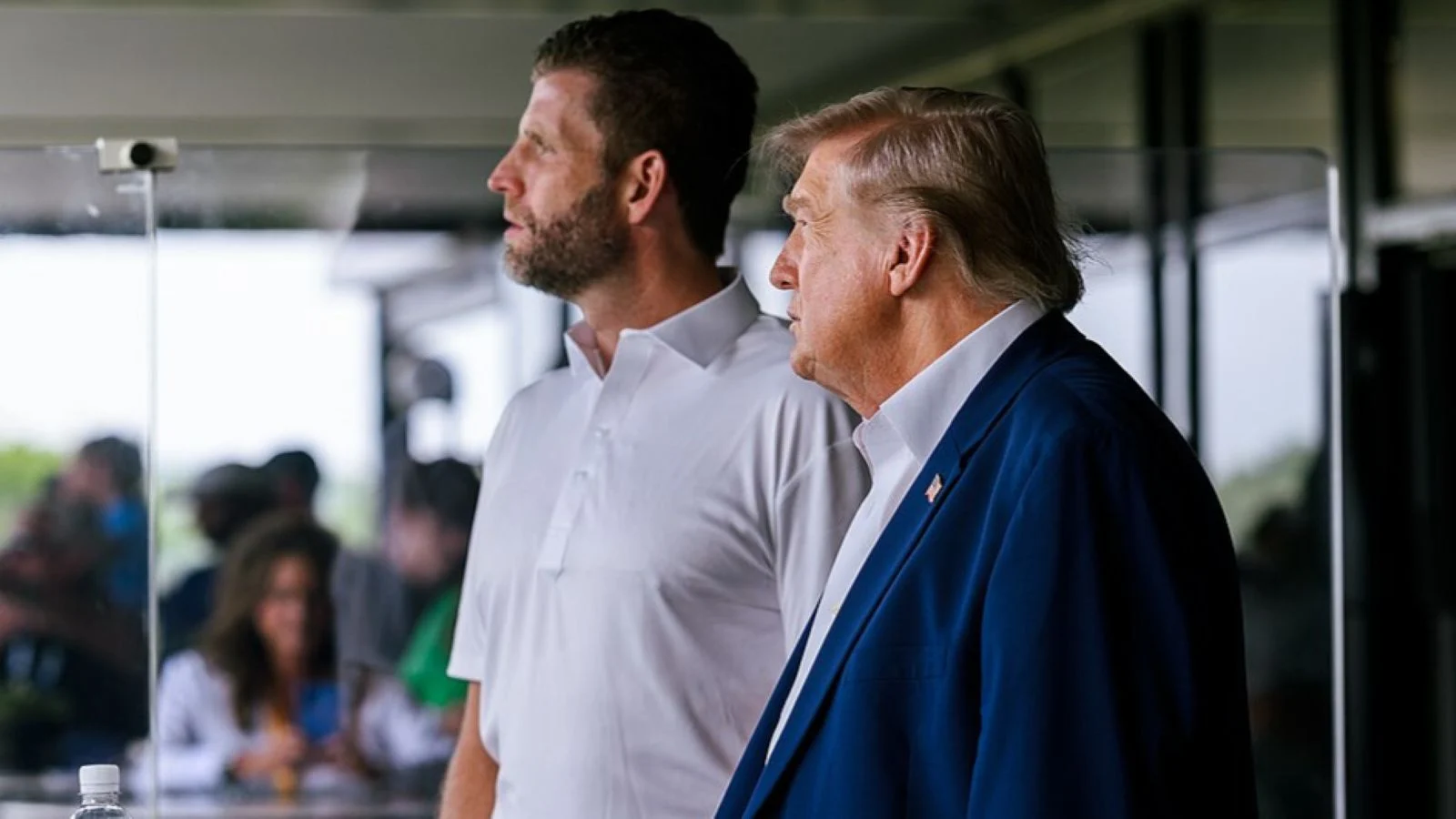
Donald Trump Jr. and Eric Trump are co-plaintiffs in the same lawsuit. So is the Trump Organization. They are suing alongside Trump for at least $10 billion. Trump has said what he would do with his portion. His sons have not made the same public pledge.
A settlement split among multiple plaintiffs is not a 100% charity donation. It is, at best, a donation of Trump’s share, with the rest potentially going to two of the president’s adult children and the family business.
The lawsuit is real. So is the family cut
Trump sued the Internal Revenue Service and the Treasury Department in January, accusing the agencies of failing to protect confidential tax records from an unauthorized leak during his first term. The lawsuit was filed in federal court in Miami.
The leak was real. A contractor named Charles Littlejohn, who had worked for Booz Allen Hamilton, stole copies of tax returns and provided Trump-related records to The New York Times. Prosecutors also said he leaked tax information from thousands of wealthy Americans to another news organization, identified in reporting as ProPublica. Littlejohn pleaded guilty and was sentenced to five years in prison.

What the returns showed, once published, was also real. The New York Times reported that Trump paid $750 in federal income taxes in 2016 and 2017, and no federal income taxes in 10 of the previous 15 years. Littlejohn broke the law obtaining them. The information they contained became part of the public record.
The cash may be the smaller prize
The Justice Department is now discussing how to resolve the case. One option is a monetary settlement. Another option reportedly under discussion is whether any deal could include the IRS dropping audits of Trump, members of his family and family businesses.
That is the part the charity promise does not answer.
Trump could donate his own cash share and still walk away with tax scrutiny reduced for himself, his sons and the Trump Organization. An audit provision does not look like a giant check. It does not produce a ceremonial handoff to cancer research. But for a family whose tax records showed years of minimal or zero federal income tax payments, ending or narrowing IRS scrutiny could be the more valuable prize.
Ethics watchdogs and legal experts have also argued that the charity pledge does not erase the constitutional problem. The concern is not simply whether Trump pockets money personally. It is whether a president can use the government he controls to direct taxpayer funds to recipients he chooses, without an independent process strong enough to protect the public interest.
Trump is suing the government he controls
Democracy Forward, joined by watchdog groups and former government officials, filed a friend-of-the-court brief in February asking the court to block what it described as an abuse of power. “This case is extraordinary because the President controls both sides of the litigation, which raises the prospect of collusive litigation tactics,” the brief stated.
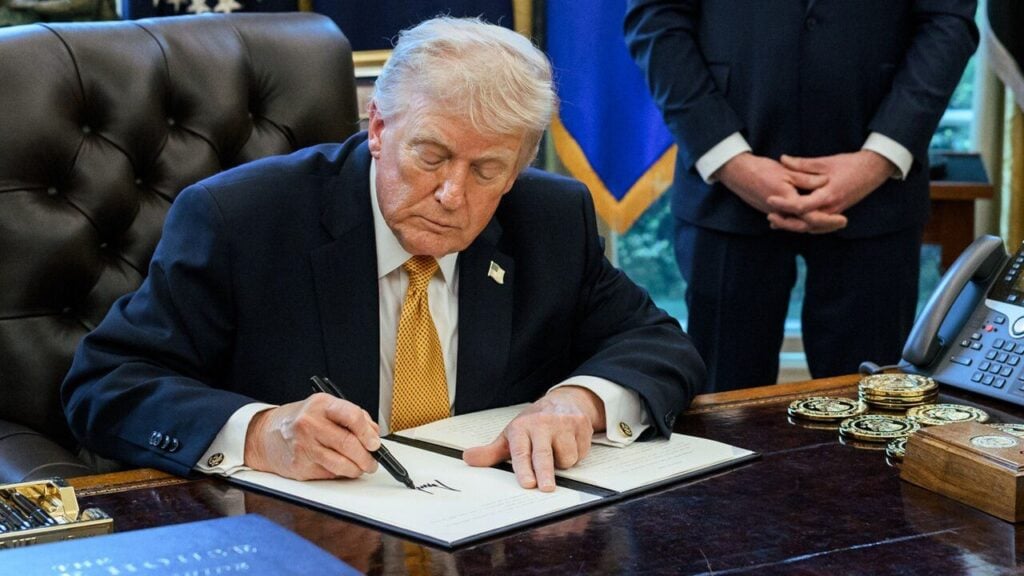
The argument is simple: Trump is suing the Trump administration. His Justice Department is deciding whether to pay Trump. The IRS and Treasury are defendants inside an executive branch he leads. Even if the original leak was illegal, the settlement question is happening in a structure built for conflict.
His allies have already been paid
The IRS lawsuit is not the first Trump-connected case the Justice Department has resolved since he returned to office. CNN reported in April that the department had recently settled two high-profile cases involving former Trump advisers: a more than $1 million settlement with Michael Flynn over his wrongful-prosecution claim, and a settlement with Carter Page over government surveillance tied to his Russian contacts in 2016.
Different claims. Same pattern. Trump allies sue the government. Trump’s Justice Department settles. Taxpayers pay.
In April, Senator Elizabeth Warren, Senator Chuck Schumer, Representative Jamie Raskin and Representative Dave Min introduced legislation that would bar sitting presidents, vice presidents, their spouses, children, trusts and controlled entities from collecting settlement payments from the government they lead.
Trump says the money would go to charity. His sons are also plaintiffs. The family business is also a plaintiff. And the audits may be part of the deal either way.