The media world moves in cycles of unrest and consolidation, but some names carry more weight than the brands they once built.
Watching the current state of CNN feels like witnessing a once-mighty cathedral being passed between landlords who can’t decide whether to renovate the pews or sell the stained glass for scrap.
For those who grew up on the “Most Trusted Name in News,” there is a deep, visceral ache in seeing it tethered to the fluctuating fortunes of corporate mergers.
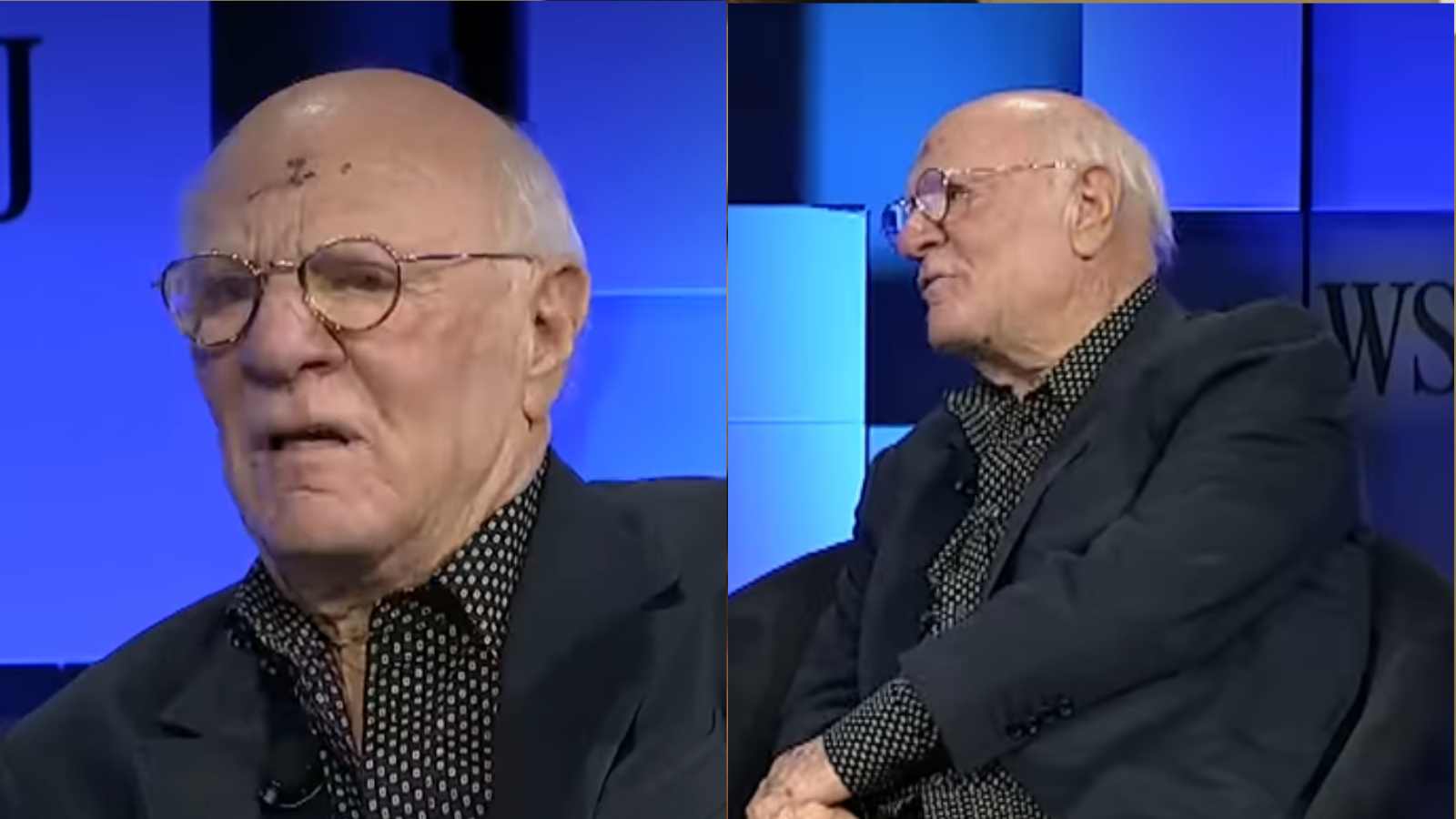
Then, here comes Barry Diller, the 84-year-old titan with a resume that reads like a history of Hollywood and the Internet combined. He is looking at a balance sheet, and at the same time… he’s looking at a legacy that he believes is being dismantled in real time.
Diller isn’t just a businessman with an itch to spend; he is a man who speaks about media with the protective, almost frantic energy of an architect watching his favorite building face a wrecking ball.
When he says he’d buy CNN “tonight and tomorrow night,” he isn’t making a bid alone… he’s also issuing a rescue plea for a brand he feels is on the verge of becoming a ghost of its former self.
A Rescue Mission in the Shadow of a Mega-Deal
The urgency in Diller’s voice at the Wall Street Journal’s Future of Everything summit in New York this Tuesday wasn’t just for show. CNN is currently caught in the gears of a massive $111 billion mega-deal in which Paramount Skydance is set to acquire Warner Bros. Discovery (WBD).
This deal, which WBD shareholders approved just last month, would place CNN under the same roof as CBS, creating a strange, crowded house of news divisions. Diller’s critique of the situation was sharp: he believes the network is “so ripe” for innovation that it hasn’t seen in nearly a decade.
His connection to the brand is personal, rooted in his mentorship under John Malone, the man who once helped save the network founded by Ted Turner. For Diller, seeing CNN struggle under the weight of declining ratings and revenue isn’t just a market trend; it’s a mismanagement of a global asset.
He specifically noted that while the digital side of CNN has seen investment, the on-air product has been left to wither. His fear isn’t just that the network will fail, but that it will be “ruined” beyond recognition before it even gets a chance to thrive under new ownership.
The Architect of the Fourth Network
To understand why Barry Diller is the person making these waves, you have to look at the man who built empires out of ideas others ignored. Diller didn’t start at the top; he famously began in the mailroom of the William Morris Agency, a classic Hollywood origin story that forged his “anti-conglomerate” philosophy.
He was the force behind Fox’s rise as a fourth major network and the architect of IAC, a digital powerhouse that birthed giants like Expedia and Match.com.
He is a master of the “seed-and-harvest” strategy… building up assets and then spinning them off once they are strong enough to stand on their own. This is exactly why his interest in CNN is so fascinating.
He doesn’t want to bury it in a corporate basement; he wants to liberate it. Diller has spent his career proving that you can turn an underdog asset into a market leader through technical and creative innovation.
His history with Paramount, the very company now trying to swallow CNN’s parent, is also layered with irony, as he once lost a legendary bidding war for Paramount to Sumner Redstone, a move he later admitted was a moment where he played it too safe.
The Reality of the Ratings Crater
The current state of CNN is a struggle for identity in a post-election vacuum. While Fox News dominated the first quarter of 2026, averaging 1.7 million total day viewers, CNN settled for 577,000. In primetime, the gap is even wider: Fox News averaged 2.6 million viewers compared to CNN’s 797,000.
While the network saw a massive spike during coverage of Artemis II’s return to Earth in April, the overall trend is a distant third behind Fox and MS NOW. This isn’t just about politics; it’s about a failure to adapt to a world where linear television is dying.
Despite internal projections showing that CNN is expected to generate $1.8 billion in revenue and $600 million in profit in 2026, the proposed Paramount-WBD merger adds significant complexity.
Diller warned that finding the promised $6 billion at a merged company could be a “savage process.” Journalists within the halls of CNN are reportedly wary that their editorial independence will be the next thing on the chopping block as the new owners look to service the mountain of debt associated with the $111 billion transaction.
The Perils of Professional Neutrality
Now, for a perspective that might ruffle a few feathers: what if CNN’s biggest problem isn’t the corporate owners, but the very “independence” it tries so hard to protect?
The common narrative is that CNN needs to return to its roots as a neutral news source to survive. But with hyper-polarization, “neutral” often reads as “boring” to the modern consumer.
While Fox and MS NOW have leaned into their respective corners and reaped the ratings rewards, CNN has wandered in a middle-ground wilderness that satisfies almost no one.
Diller’s suggestion that he would change it “tonight and tomorrow night” might actually mean leaning into a more provocative, personality-driven model that prioritizes engagement over the traditional, stoic news delivery that has become a relic of the 20th century.
If CNN continues to try to please everyone, it risks becoming a utility… something everyone knows exists, but no one actually wants to pay for or watch. Innovation doesn’t just mean a better app; it means a fundamental shift in how news is “performed” for a digital audience that demands a point of view.
A Legacy Waiting for a New Chapter
As this $111 billion deal edges closer to its expected close in the third quarter of 2026, the question remains whether Barry Diller will ever get his shot. He admitted at the summit that, while he has reached out to WBD executives, the company’s board of directors has taken no serious action.
CNN is currently an island in a very stormy sea, and Diller is standing on the shore with a very expensive life raft. Whether the current captains will let him on board is the multi-billion-dollar question.
For now, the network remains a pawn in a larger game of media chess, its future tied to the whims of debt-laden conglomerates and the shifting habits of a fickle audience.
Diller’s interest serves as a reminder that even in an age of algorithms, there is still value in the touch of a mogul who understands that media is, at its heart, about the story, and in this moment, CNN’s story is one of a legendary brand looking for a way to stay relevant before the lights go out for good.