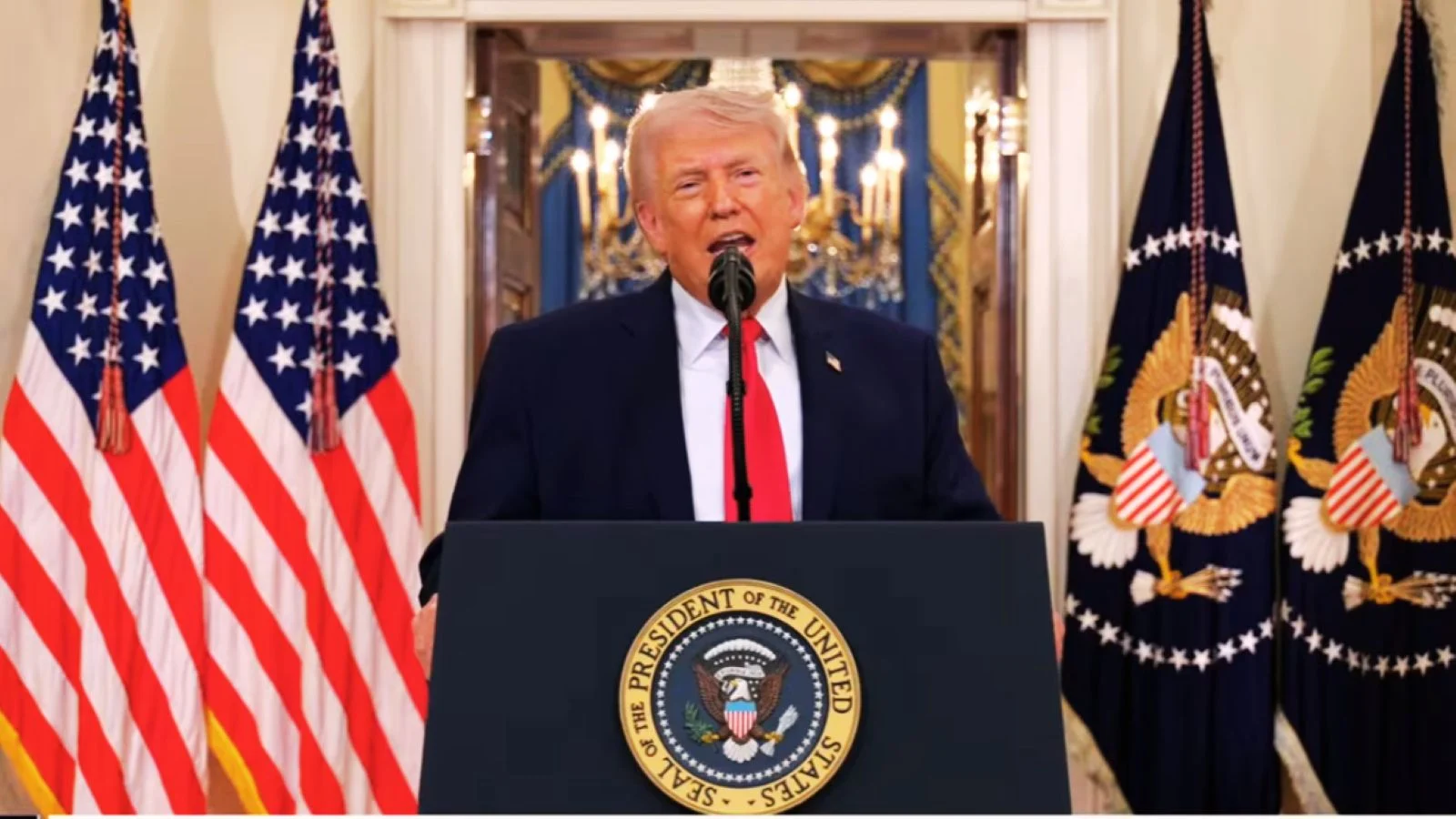
Trump’s latest line about the Strait of Hormuz was crafted to sound calming. America imports “almost no oil” through the chokepoint, he said in his first address to the nation since the war began, and “won’t be taking any in the future.” That is true enough to sound reassuring and misleading enough to matter. America may not rely heavily on direct Hormuz imports. Americans are still getting hit by Hormuz anyway.
A True Fact Doing Dishonest Work
This is the part the speech tried to skip. Oil is not priced like a neighborhood product. It is priced like a global panic. AP reported that the Strait’s disruption has already helped push U.S. gasoline to an average of $4.06 a gallon, with stopgap measures failing to plug a global shortfall of roughly 20 million barrels a day. So yes, Trump can say the United States does not personally drink much crude straight from the Hormuz fire hose. But the market does not care about his phrasing. When a chokepoint that normally carries a fifth of the world’s oil breaks down, the shock does not politely stop at the shoreline.
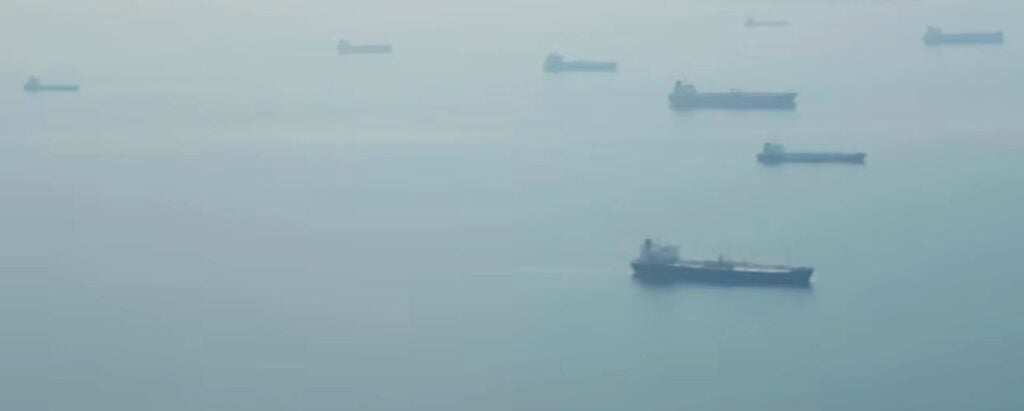
That makes this less of a fact-check than a bait-and-switch. Trump is selling energy independence as if it means price independence. It does not. The U.S. can pump a lot of oil and still pay more when global supply gets squeezed. It can export more fuel and still watch domestic pain climb. The address tried to turn a global price crisis into a narrow import statistic. That is spin.
The Hit Is Already Here
And the hit is not theoretical. Reuters reported that U.S. fuel exports hit a record in March as Europe, Asia, and Africa scrambled to replace disrupted Middle East supply. That sounds like strength until you hit the second half of the sentence. Those same exports are now becoming a political problem for Trump because gasoline is already above $4 a gallon, and diesel is approaching $5.50. So while he is telling Americans the country does not need Hormuz oil, the country is burning through the consequences anyway.
Trump is trying to sound untouched by a crisis that is already hitting drivers, truckers, and everyone who buys anything that has to be moved. The man who promised dominance is now relying on a technicality. We do not import much directly. Fine. But that does not mean families are insulated. It means the administration is hoping voters confuse routing with reality.

Hormuz Is Bigger Than Oil
The Strait of Hormuz is also no longer just an oil story. Reuters reported that the United Nations is trying to build a mechanism to safeguard trade through the waterway because disrupted fertilizer shipments could push millions deeper into hunger. AP separately reported a worsening fertilizer shortage that is already threatening food prices worldwide. That matters here because it expands the false sense of insulation. Trump’s line invites people to think this is a question about tankers and gas pumps. It is also about crops, grocery bills, and the cost of basic goods, months after the speech cycle moves on.
Reuters also reported that aluminum prices have hit a four-year high after Iranian attacks on Middle East smelters. So this is what the real map of exposure looks like: fuel, yes, but also metals, manufacturing, fertilizer, shipping, and food. America does not have to be a major direct importer through Hormuz to get dragged by a world economy that still runs through it.

This Is the Part the Speech Tried To Bury
The most revealing part of Trump’s argument is not that it is completely false. It is that it is selectively true in a way that hides the actual danger. That is usually the better political trick. He is taking one narrow point, direct U.S. crude dependence, and using it to imply a much bigger one, that America can shrug off the Strait without much pain. The last month has already blown that up. Prices are up. Exports are surging. The U.N. is scrambling. Europe is bracing. Food systems are wobbling. Americans are paying more.
And that is what makes the statement worth evaluating critically. It is not some tiny technical misstatement buried in an Oval Office speech. It is a warning about how this White House may try to sell the next phase of the war. First, tell people the country is independent. Then tell them the pain is somebody else’s problem. Then hope they do not notice they are already paying for it. The more useful question now is not whether Trump can say America does not need Hormuz oil. The question is whether voters will keep buying that line once the shock keeps showing up everywhere but the speech.