For the second time this week, President Donald Trump extended an ultimatum for Iran to completely open the Strait of Hormuz to international shipping traffic, saying peace talks “are going very well.”
The president has said in a social media post on Thursday afternoon that, upon a request from the Iranian government, he is “pausing the period of Energy Plant destruction by 10 days.” Trump said the new deadline imposed on Iran is April 6 at 8 p.m. ET.
Trump has given Iran the deadline to loosen its grip on the critical maritime passage for the oil and shipping trades after extending his initial deadline Monday evening by five days, citing progress in peace negotiations. The deadline was set to expire on Friday.

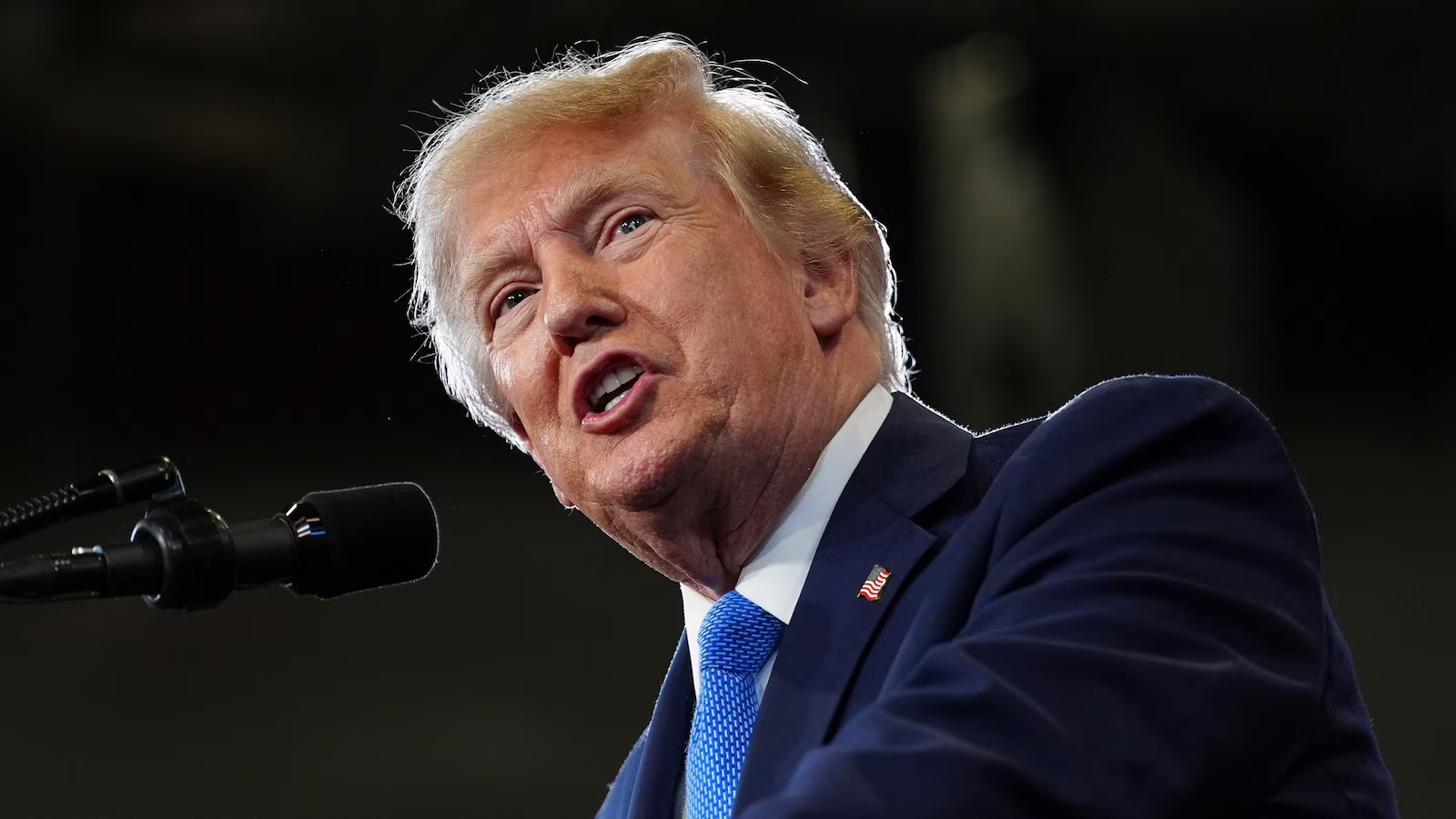
President Donald Trump speaks during a cabinet meeting in the Cabinet Room of the White House, March 26, 2026.
Alex Brandon/AP
During his first Cabinet meeting since the joint U.S.-Israel attack on Iran started on Feb. 28, Trump said whether he’ll push the deadline back further depended on how talks with Iran develop.
U.S. negotiators, including Vice President JD Vance and White House Special Envoy to the Middle East Steve Witkoff, briefed Trump during his Cabinet meeting on the status of the negotiations after the U.S. sent Iran a 15-point proposal for ending the conflict.
On Wednesday, Iran’s English-language state media, Press TV, quoted an Iranian official saying Iran has rejected the proposal after regime officials denied negotiations were happening.
In a separate interview, Iranian Foreign Minister Abbas Araghchi said on state TV that “Iran’s power is the Hormuz Strait.”

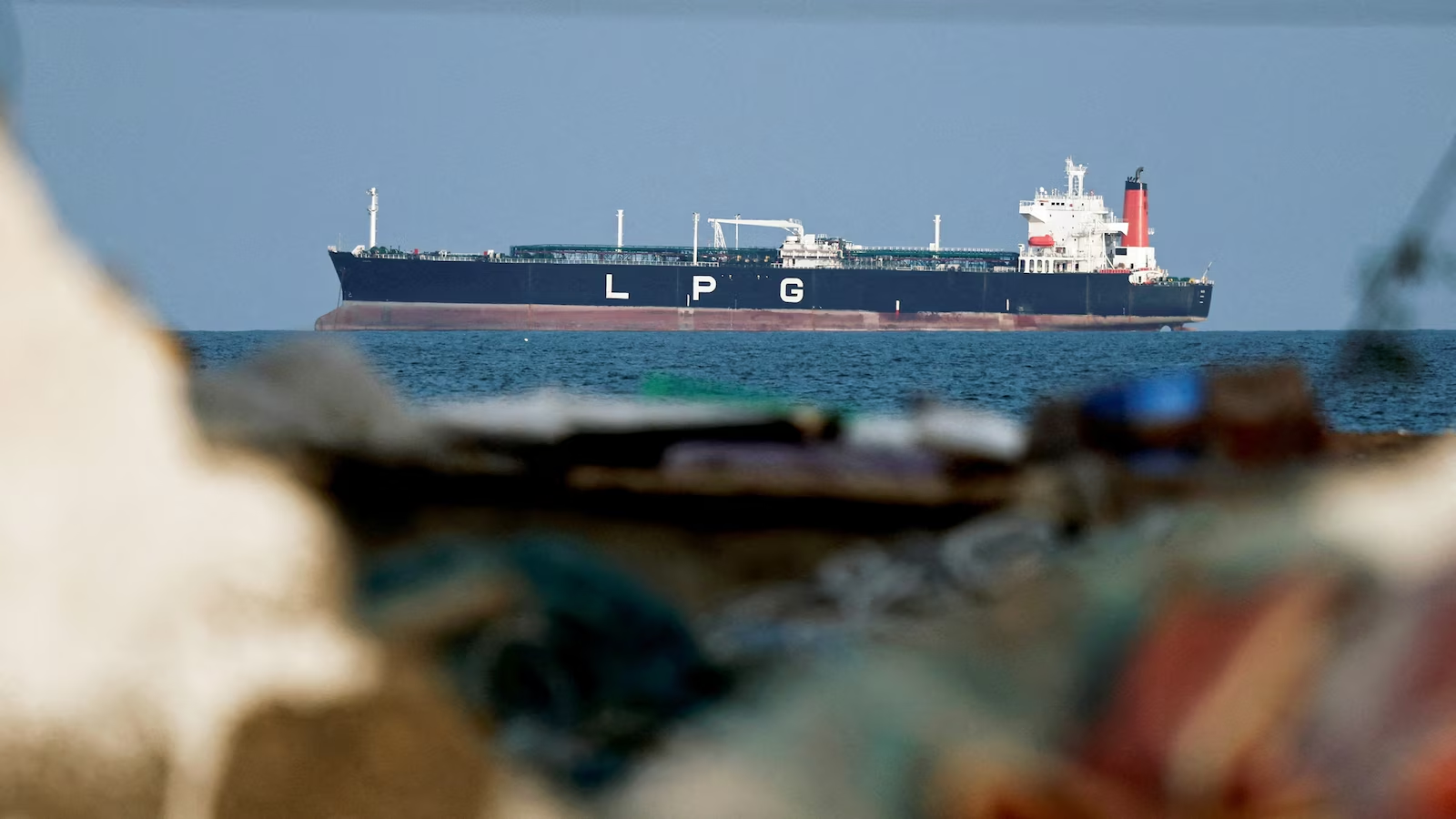
Cargo ships and tankers are seen off coast city of Fujairah, in the Strait of Hormuz in the northern Emirate, Feb. 25, 2026.
Giuseppe Cacace/AFP via Getty Images
“I also want to say here that, from our point of view, the Hormuz Strait is not completely closed; it is closed only to our natural enemies,” Araghchi said after Iran’s Ministry of Foreign Affairs claimed in a March 22 letter to the U.N.’s International Maritime Organization that the Strait of Hormuz is open to “non-hostile” vessels.
“We are in a wartime situation; the region is a war zone,” Araghchi said. “There is no reason to allow the ships of our enemies and their allies to pass, but it is free for the rest.”
Iran’s state-aligned Tasnim news agency, which is affiliated with Iran’s Islamic Revolutionary Guard Corps (IRGC), reported on Thursday that Iran responded to the Trump administration’s 15-point plan, citing “an informed source” saying the response was sent Wednesday night.

Map of the Strait of Hormuz
Anadolu via Getty Images
Tasnim reported that the source claims Iran’s reply outlines several conditions, including an end to attacks and assassinations, guarantees the conflict will not be repeated and compensation for war-related damages. The source, according to Tasnim, also said Iran considers sovereignty over the Strait of Hormuz a “natural and legal right.”
Earlier Thursday, Israeli Defense Forces announced on Thursday that Alireza Tangsiri, commander of Iran’s Islamic Revolutionary Guard Corps Navy, was “eliminated” in an overnight strike on senior IRGC Navy leadership. The IDF also claimed the strike killed the head of Iran’s naval intelligence, Behnam Rezaei.

Revolutionary Guard navy commander Alireza Tangsiri along with President Ebrahim Raisi visit an exhibition of the Revolutionary Guard navy capabilities in the southern port city of Bandar Abbas, Iran, Feb. 2, 2024.
Iranian Presidency Office via AP, Files
“Tangsiri was responsible for attacks on oil tankers and commercial vessels and personally threatened the freedom of navigation and trade in the Strait of Hormuz and the international maritime domain,” the IDF said in a statement.
The IDF said Tangsiri “led efforts to close the Strait of Hormuz and advanced terror attacks in the maritime domain, one of the primary figures responsible for disrupting the global economy.”

The Thailand-flagged cargo ship Mayuree Naree engulfed in black smoke in the Strait of Hormuz, March 11, 2026.
Royal Thai Navy/via Reuters
During Thursday’s Cabinet meeting, Trump said Iran is “begging to make a deal” to end the conflict.
Trump revealed that Iran made good on a promise to allow 10 boats of oil operating under the flag of Pakistan to pass through the strait this week as a “present.” He said the gesture communicated to him “that we’re dealing with the right people” in the peace negotiations.
“I don’t know if we’ll be able to do that,” Trump said of striking a peace deal with Iran. “I don’t know if we’re willing to do that. They should have done that four weeks ago. They should have done that two years ago, or they should have done it when we first came into office.”
Trump added, “We don’t want anything impeded. We want ships to go through.”
In recent days, the U.S. has sent the Iranian regime, through the Pakistani government, the 15-point proposal for ending the conflict.
Witkoff gave an update on the negotiations with Iran during Thursday’s Cabinet meeting.

White House Special Envoy to the Middle East Steve Witkoff speaks during a Cabinet meeting at the White House, March 26, 2026, in Washington.
Alex Brandon/AP
“I can say this, we will see where things lead and if we can convince Iran that this is the inflection point with no good alternatives for them other than more death and destruction,” Witkoff said. “We have strong signs that this is a possibility. And if a deal happens, it will be great for the country of Iran, for the entire region and the world at large.”
Witkoff told Trump during the Cabinet meeting that Iran is “looking for an offramp following your powerful threat on Saturday.”
In a post on his social media site on Saturday evening, Trump said, “If Iran doesn’t Fully OPEN, WITHOUT THREAT, the Strait of Hormuz, within 48 HOURS from this exact point in time, the United States of America will hit and obliterate their various POWER PLANTS, STARTING WITH THE BIGGEST ONE FIRST!”
But on Monday, Trump said he was extending the deadline for five days, citing “positive conversations” with the Iranians during the peace talks.
It was the first time the possibility of new talks was mentioned — just days before Trump said there was no one on the Iranian side to talk to.
“We’ll see how that goes. Otherwise, we’ll just keep bombing our little hearts out,” Trump told reporters on Monday.
The ongoing peace negotiations are apparently occurring as elements of the 82nd Airborne Division, including combat troops, are being deployed to the Middle East for a possible ground operation in Iran, a source familiar with the situation told ABC News.
On Wednesday, White House press secretary Karoline Leavitt said at a press briefing that the “remaining elements of the Iranian regime have another opportunity to cooperate with President Trump.”
“President Trump does not bluff, and he is prepared to unleash hell. Iran should not miscalculate again,” Leavitt said. “Their last miscalculation cost them their senior leadership, their navy, their air force and their air-defense systems. Any violence beyond this point will be because the Iranian regime refused to understand.”