The annual White House Correspondents’ Dinner is traditionally a night defined by the fragile balance of power, where the press and the presidency trade barbs under the glittering chandeliers of the Washington Hilton.
It is a spectacle of tuxedo-clad journalists, elaborate evening gowns, and the kind of forced conviviality that usually masks deep-seated friction. On April 25, 2026, however, that carefully constructed normalcy was shattered in an instant.
The evening didn’t end with the usual lighthearted roast or a diplomatic speech; it ended with the thud of gunfire, the frantic scramble of Secret Service agents, and a ballroom full of elite media figures diving under tables to shield themselves from an unpredictable threat.
While the physical danger was neutralized swiftly, thanks to law enforcement intercepting the shooter, Cole Tomas Allen, before he could breach the ballroom, a different, almost more insidious kind of chaos erupted online almost immediately.
Within hours, the digital ether was flooded with claims that the entire event was a choreographed production, a “fake” narrative designed to manufacture political sympathy or distract from other national woes.
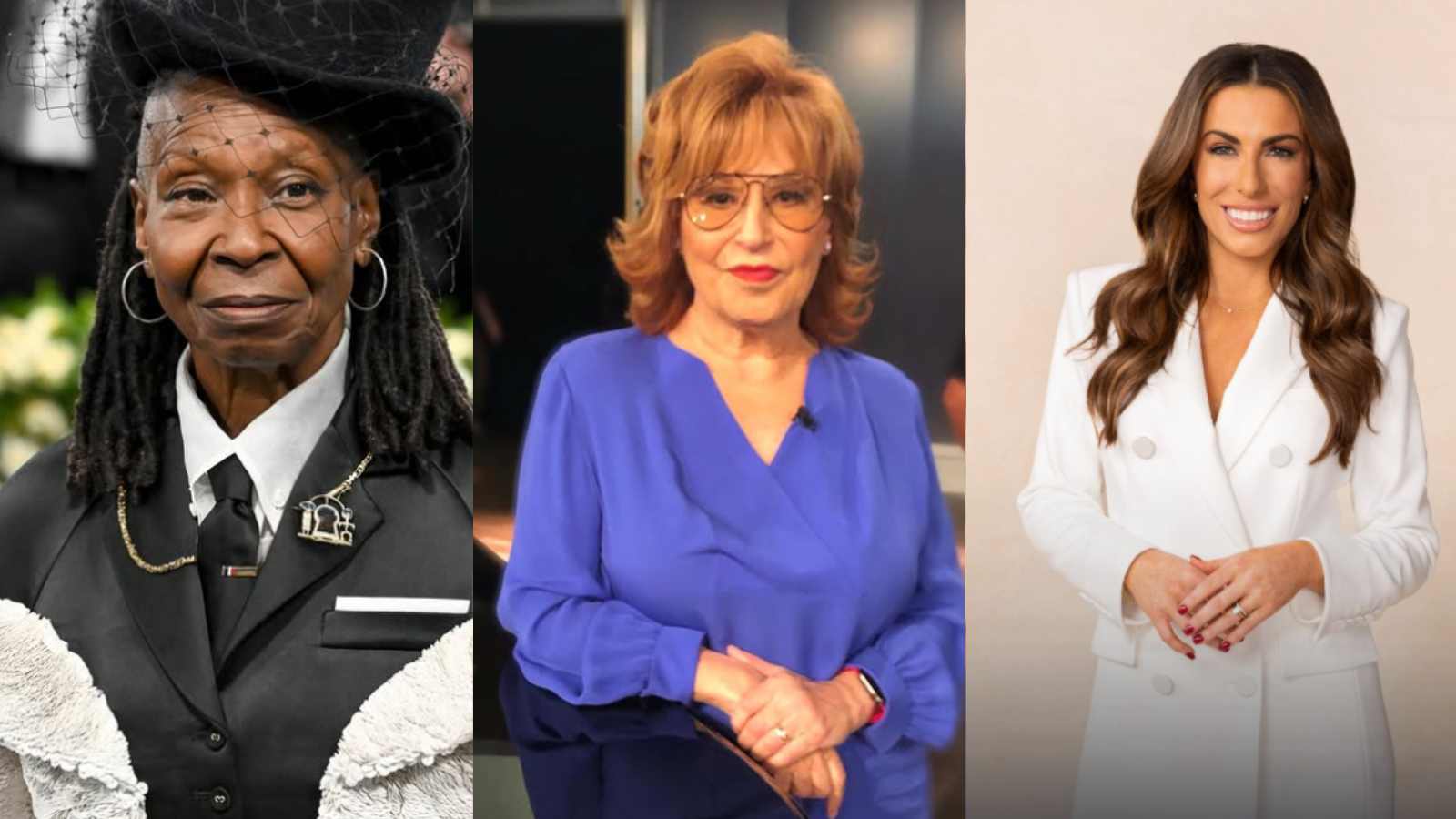
This bizarre pivot from trauma to conspiracy hasn’t just baffled observers; it has become the latest flashpoint on daytime television, with the hosts of The View visibly grappling with the sheer exhaustion of navigating a public discourse that seems to have completely abandoned reality.
The Collective Whiplash on The View
WHAT’S KNOWN ABOUT WHCD SHOOTING SUSPECT: ‘The View’ co-hosts discuss what has been reported about the shooting suspect and the conspiracy theories surrounding it. pic.twitter.com/yHWrwEUGUm
— The View (@TheView) April 27, 2026
The reaction on The View wasn’t just a simple recounting of the news; it was a masterclass in the frustration felt by those who are tired of debunking the impossible.
The hosts were clearly reeling, not just from the violence that took place in D.C., but from the persistent, sticky residue of conspiracy theories that now coat every major news event like permanent grime.
When you watch the broadcast, the tone isn’t one of casual punditry; it is a raw, unvarnished expression of disbelief at the sheer volume of people who are willing to ignore video evidence, witness accounts, and the reports of law enforcement to insist on a shadow narrative.
The hosts questioned the mental toll this level of cynicism takes on the American public. They pushed back against the bizarre notion that a shooting involving real bullets, a real injured officer, and a real suspect apprehended on site could somehow be “staged” for optics.
“Our country is a country that has more guns than people.”
Sunny Hostin reacts to the White House Correspondents’ Dinner shooting. pic.twitter.com/jdfb3trU7h
— The View (@TheView) April 27, 2026
It was a real, undiluted reminder that for many, the truth is no longer an objective destination but a flexible starting point, adjusted to fit whatever political lens they are currently wearing.
The panel’s collective weariness resonated with a large portion of the audience who find themselves asking the same question: how did we get to a point where a genuine assassination attempt becomes material for internet roleplay?
The Psychological Lure of the “Staged” Narrative
There is an almost seductive power to labeling an event as “fake,” and it is worth analyzing why this particular conspiracy theory gained such immediate traction.
When an event is too terrifying or too complex to process, claiming it is an orchestrated hoax offers a psychological escape hatch. If the shooting were a play, the viewer would be a critic, not a victim of a chaotic and dangerous world.
View this post on Instagram
It places the individual back in the driver’s seat. They are “in on the secret,” holding special knowledge that the “sheep” around them cannot see. This is the contrarian trap.
By rejecting the official account, people aren’t just expressing skepticism; they are exercising intellectual independence. They are rejecting the mainstream narrative because, in their minds, the mainstream is incapable of telling the truth about anything.
This phenomenon is a direct byproduct of the decades-long erosion of institutional trust. Whether it is the media, the government, or law enforcement, the bedrock of shared reality has been chipped away until it no longer supports the weight of a collective truth.
When that bedrock crumbles, people don’t just fall; they start building their own islands of reality, regardless of whether those islands are tethered to the actual world.
Navigating the Echo Chamber of Doubt
What makes this specific incident so particularly grueling is the speed at which the misinformation spread. It wasn’t just obscure corners of the internet; prominent voices, including some political figures, began floating the idea that the dinner was a setup.
When elected officials start entertaining the notion that a shooting was a hoax, they aren’t just participating in a conversation; they are legitimizing a dangerous detachment from reality.
The View hosts pointedly addressed this, noting that when leadership plays footsie with conspiracy theories, it gives the average person permission to discard facts in favor of vibes.
The danger here isn’t just that people believe the wrong thing; it is that the baseline for evidence has been permanently lowered. We are now in an era where photographic proof, police reports, and even the live testimony of anchors like Wolf Blitzer, who was feet away from the shooter, can be waved away with a dismissive comment about “optics.”
If you can convince someone that their own eyes are lying to them, you have won the battle for their worldview. The hosts of The View were essentially holding up a mirror to the audience, asking if we are content to live in a world where nothing is real, or if we are going to demand a return to a shared set of facts.
The Cost of Living in a Post-Truth Era
Ultimately, the debate over whether the White House Correspondents’ Dinner shooting was a “false flag” or a real, terrifying attempt at political violence misses the forest for the trees.
The real story isn’t the shooting itself, or even the absurd theories that followed; it is the collective trauma of living through a period where truth is entirely subjective.
The fact that the hosts of a daytime talk show have to spend time deconstructing the validity of a shooting, rather than discussing the policy implications of political violence or the state of our security apparatus, is a testament to how far the goalposts have moved.
We have reached a point where the noise is deafening, and the truth is struggling to find any oxygen. The reaction from The View serves as a poignant reminder that we are all exhausted.
We are tired of the constant cycle of outrage, the endless debunking, and the exhausting effort required to stay grounded when the world around us seems to be spinning off its axis. If there is a lesson to be taken from this, it is that cynicism is not a form of intelligence.
Questioning authority is healthy, but questioning the reality of a gunshot in a crowded room is just a symptom of a society that has lost its way, and we are paying the price for that disorientation every single day.