In American politics, money doesn’t just talk… it screams, often echoing through the halls of power in ways that keep the public guessing for years.
We’ve all been there: scrolling through social media, stumbling upon a headline that stops us dead in our tracks, making us wonder if the political machine is even more complicated than we ever dared to imagine. Recently, the whispers reached a fever pitch.
You’ve likely heard the explosive claim: that a massive, nine-figure donation from billionaire Miriam Adelson to Donald Trump wasn’t just a simple campaign contribution, but a strategic “down payment” on a policy shift concerning the West Bank.
It’s the kind of story that feels ripped from a political thriller, blending massive wealth, deep-seated ideological agendas, and the gray areas of campaign finance into a narrative that’s impossible to ignore.
But before we get swept up in the whirlwind of speculation, it is vital to peel back the layers and distinguish between concrete evidence from the campaign trail and persistent, unverified rumors that thrive in the shadows of the digital age.
The Financial Paper Trail
The core of this conversation stems from a very public, legally disclosed event: in 2024, Miriam Adelson, one of the most prominent donors in Republican politics, contributed a massive $100 million to the Preserve America super PAC, which supported Donald Trump’s presidential bid.
This isn’t a secret… it is a matter of public record, filed with the Federal Election Commission. For those watching the campaign finance landscape, this donation was, in itself, a historic headline.
It eclipsed other major donations, including Elon Musk’s $75 million contribution to his own pro-Trump PAC, firmly cementing Adelson’s role as a titan of the donor class.
However, translating a financial contribution into a “quid pro quo” policy agreement is a significantly different challenge. Adelson’s support for Trump is long-standing and well-documented.
She and her late husband, Sheldon Adelson, were instrumental figures in the shifting of the U.S. embassy to Jerusalem in 2017 and have consistently advocated for pro-Israel policies, including the support of settlement activity.
Because of this history, linking her donations to a specific policy agenda, such as annexation, is a path many observers take, but it’s important to note that her representatives have explicitly denied that her campaign contributions were conditioned on any such agreement.
While a donor’s intent can be inferred from their history, distinguishing between ideological alignment and a direct transactional deal remains the central friction point in this narrative.
The Charlie Kirk and Candace Owens Factor
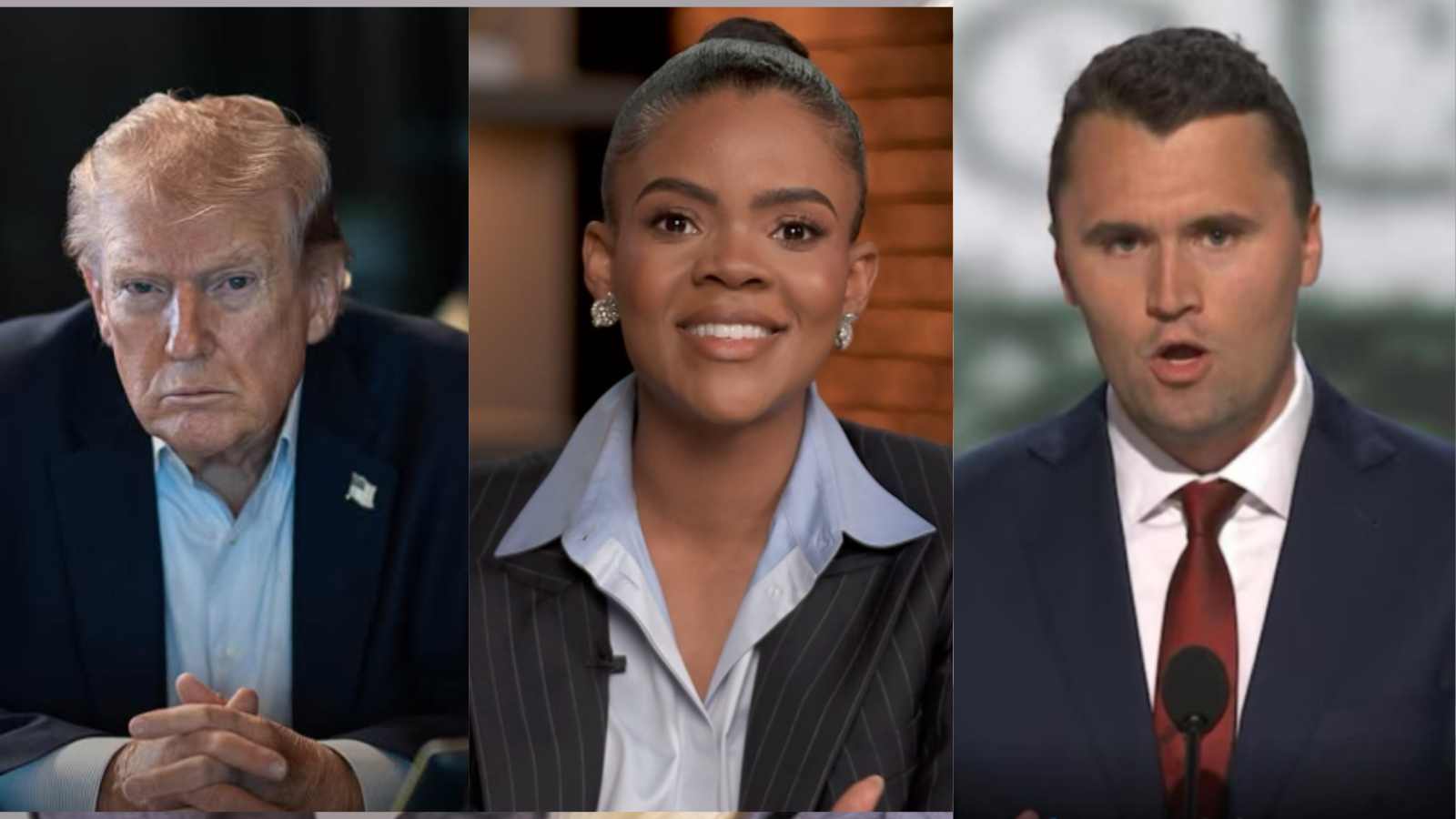
The rumor that this specific $100 million was tied to a “deal” for West Bank annexation gained significant traction after Candace Owens alleged that Charlie Kirk personally told her that Trump had accepted the funds in exchange for this exact commitment.
When it comes to influential media figures, such claims function like gasoline on an already burning fire. Yet we must consider the nature of this information.
This is a claim about a private, third-party conversation, a collection of different versions of reality that is impossible to verify through public documents or official statements.
When analyzing this, we have to grapple with a provocative angle: why does this specific narrative gain so much steam? Often, it’s not because there is a smoking gun, but because the claim mirrors the existing, deeply held beliefs of those on both sides of the aisle.
For critics of Trump, the idea fits neatly into a broader critique of the influence of money in politics. For supporters, the intense focus on this specific transaction can feel like a distortion of standard political lobbying.
Regardless of where you fall on the political spectrum, the claim remains an unverified assertion circulating in the media stratosphere, distinct from the objective facts of the donation itself.
Questions We’re Still Asking
🚨CANDACE OWENS Just Dropped a Bombshell Right On Donald Trump!
Charlie Kirk personally told Candace Owens that Trump took $100 MILLION from Miriam Adelson in exchange for allowing “them” to annex the West Bank. However, that’s not all!
While fixing his tie in the mirror, Trump… pic.twitter.com/2tHrVCJT7R
— Travis (@NihiloX) April 10, 2026
As we navigate the intersection of influence, policy, and public discourse, the lack of definitive answers leaves us with several lingering questions that go to the heart of how Washington really functions:
Are there any internal campaign documents or communications that confirm the existence of a “pre-agreed” policy deal linked specifically to this $100 million contribution?
How do super PACs, which are legally required to operate independently from the campaigns they support, effectively manage donor requests for specific policy outcomes?
Beyond the public statements of spokespeople, what specific evidence exists to bridge the gap between a donor’s known ideological goals and an alleged binding agreement with a candidate?
In the broader context of the 2024 election cycle, were there other major donors who requested specific policy guarantees, and how were those requests handled by the campaign apparatus?
What is the specific nature of the conversation between Charlie Kirk and Candace Owens that led to this claim, and is there any corroborating testimony from other individuals present?
How do legal standards for campaign finance violations account for the difference between a donor giving money to a candidate because they already agree on a policy versus paying for a new policy?
The intersection of massive personal wealth and federal policy is a murky space, and it’s no surprise that a $100 million check would spark intense debate. Whether that money was a formal “purchase” of a policy agenda or simply the business-as-usual exercise of a powerful donor supporting a candidate whose platform they already championed is the defining puzzle.
Until more than hearsay emerges, we are left with a snapshot of high-stakes influence that tells us as much about our collective anxiety about money in politics as it does about the mechanics of the 2024 election.
It’s a story that serves as a reminder that in the world of politics, the most impactful messages aren’t always found in the official filings, but in the stories we choose to believe about those who hold the checkbooks.