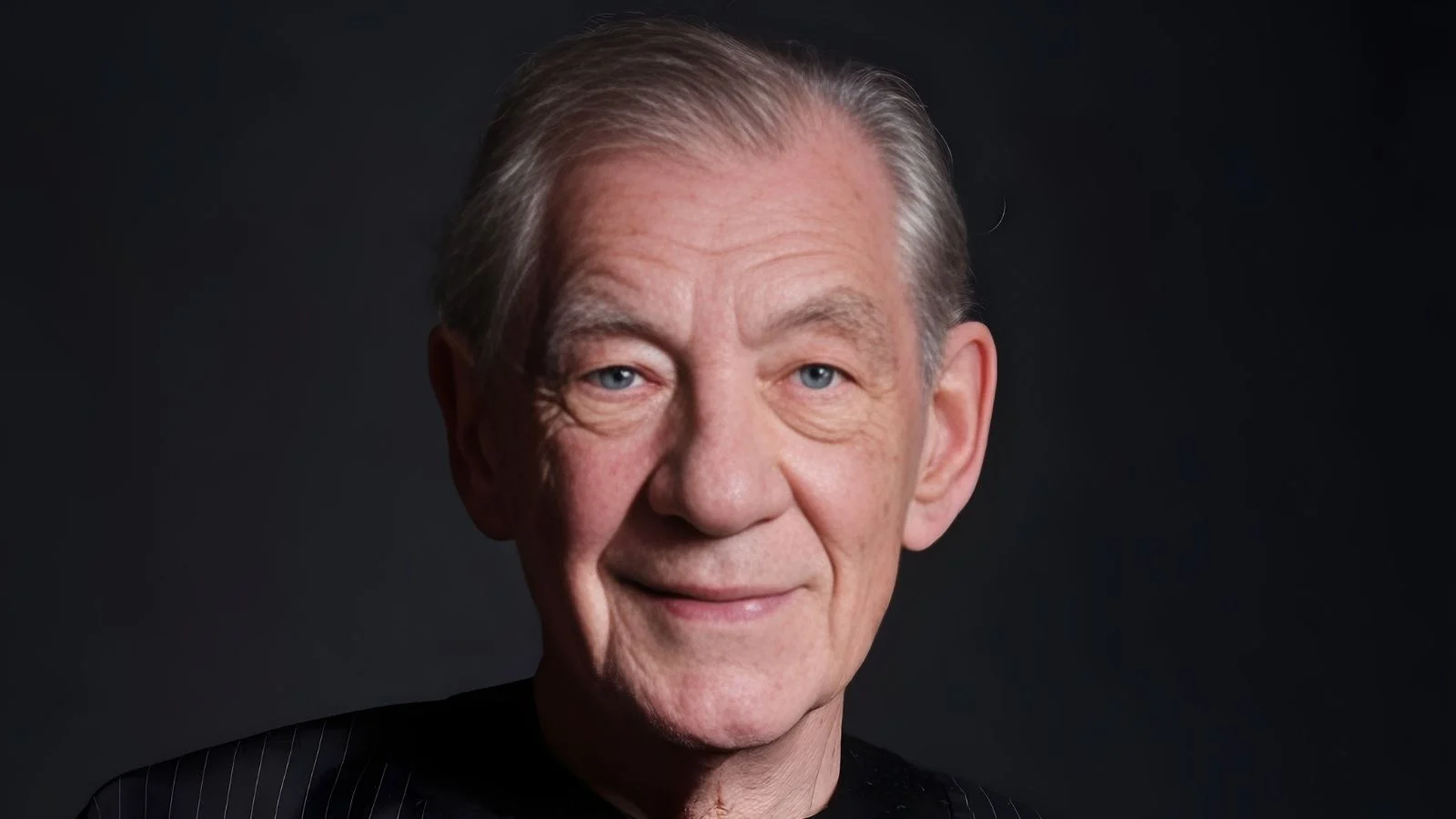
Sir Ian McKellen took the stage on The Late Show with Stephen Colbert on February 4, 2026, and delivered something unforgettable. The legendary actor, famous for Gandalf in The Lord of the Rings and Magneto in the X-Men films, performed a powerful Shakespearean monologue from the play Sir Thomas More.
The speech, written around 1593 with contributions from Shakespeare, speaks directly to the humanity of immigrants. McKellen first played the title role in the 1960s and revived the words live on TV to comment on current U.S. immigration debates and ICE actions. The moment went viral fast, with clips spreading across social media and sparking conversations about how old words still cut deep today.
The Monologue That Stopped the Room
McKellen joined Colbert for a wide-ranging chat about his career, including his upcoming return to Gandalf, his Magneto role, and his current mixed-reality production An Ark at The Shed in New York. The conversation shifted to Shakespeare when Colbert asked about lesser-known works. McKellen chose the scene from Sir Thomas More where a crowd in 16th-century London turns angry against arriving immigrants, referred to as “strangers.”
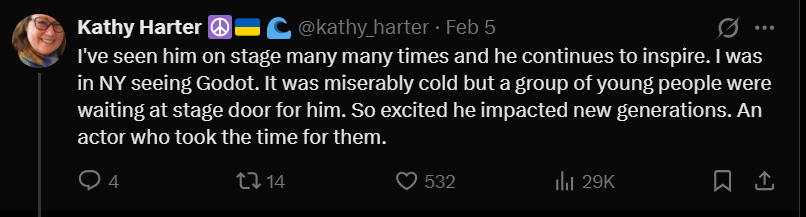
In the play, authorities send the young lawyer Thomas More to quiet the mob. Instead of simply ordering them to stop, More speaks to their shared humanity. McKellen recited the lines with quiet power: he asks the rioters to picture the “wretched strangers” with their children on their backs, carrying poor belongings, fleeing hardship. He questions whether any of them would accept being treated the same way if forced to leave their homes.
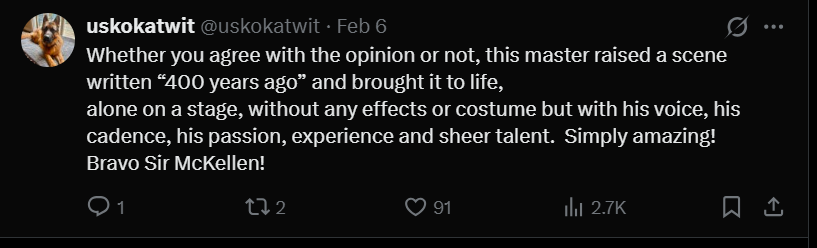
Goosebumps! People often ask, is Shakespeare still relevant? Here is a great example, from the Steven Colbert Show, in which Sir Ian McKellen delivers an extraordinary speech. Shakespeare’s words are timeless, urgent and important. #Shakespeare #ianmckellen #stevencolbert pic.twitter.com/YpLWi2MIHA
— Lee Brown (@leebrown2) February 5, 2026
The speech builds to a strong rebuke, calling out “mountainish inhumanity” for refusing compassion to those in need. The studio audience stayed completely silent during the delivery, then broke into loud applause when he finished. McKellen closed by noting the words date back centuries yet address the same fears and divisions people face now.
The 400-Year-Old Play: Sir Thomas More
Sir Thomas More is a historical drama from the early 1590s, co-written by several playwrights including William Shakespeare. The play focuses on the real-life figure Sir Thomas More, the English statesman and scholar executed in 1535 for refusing to accept Henry VIII as head of the church. While the full script covers More’s entire life and eventual downfall, the most famous section today is the one McKellen performed: the “Ill May Day” riot scene.
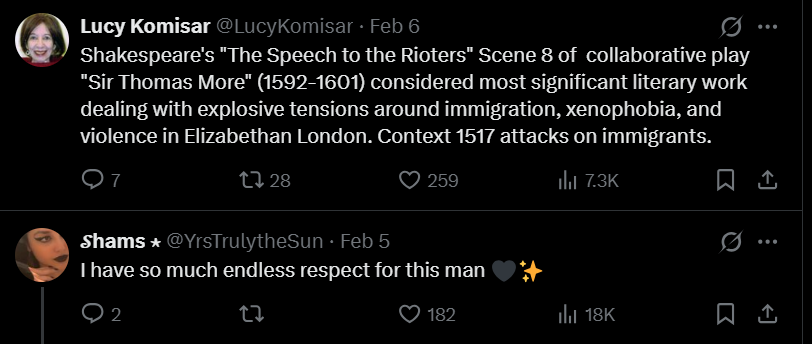
In 1517, real riots broke out in London on May Day against foreign workers and merchants, mostly from Flanders and other parts of Europe. The play dramatizes this event, showing English apprentices and locals attacking “strangers” they blame for taking jobs and causing economic strain. The authorities call in Thomas More, then a rising lawyer, to calm the situation. His speech succeeds in persuading the crowd to stand down by appealing to empathy rather than force.
Scholars believe Shakespeare contributed this specific scene, identified through handwriting analysis of the original manuscript held at the British Library. The play was never printed in Shakespeare’s lifetime and remained largely unknown until the 19th century. It was censored in its day because of its sensitive handling of riots and authority.
Modern productions are rare, but the immigration passage has gained attention in recent decades for its direct relevance to debates about migration, borders, and belonging.
The Timing and Immediate Impact
The recitation came during a period of intense discussion about U.S. immigration policies. Reports of ICE actions, including incidents involving citizens, had fueled protests and online arguments. McKellen’s choice to perform the monologue highlighted how anti-immigrant sentiment echoes across centuries. The speech urges people to see newcomers as fellow humans deserving of fairness, a message that landed strongly in the current climate.
Clips from the segment spread quickly across Instagram, TikTok, and other platforms. Viewers praised the delivery for its emotional weight and clarity. Many noted the eerie similarity between the 1517 London riots and modern fears about job competition or cultural change. The performance reinforced Shakespeare’s skill at capturing universal human struggles, turning a dusty historical text into a pointed commentary on 2026.
The Power of Words That Endure
Ian McKellen’s delivery shows why certain lines from the past refuse to fade. Shakespeare’s contribution to Sir Thomas More asks a timeless question: how do we treat people who arrive seeking safety or a better life? By speaking those words on national television, McKellen bridged four centuries in a few minutes, proving that empathy and reason remain the strongest responses to fear and division.
In an era of quick takes and heated debates, this moment stood out for its patience and depth. The play may be old, but its call to recognize shared humanity feels freshly urgent. When ancient words still make a room go quiet and then applaud, it reminds us that the best stories about who we are never really go out of date. They simply wait for someone like McKellen to bring them back into the light.
What do you think?