As the world awaits a resolution on the fate of the Strait of Hormuz — one of the most vital global trade routes — the seafarers who have been stranded for weeks aboard ships and tankers on either side of the waterway are desperate for answers.
Nearly 20,000 people on some 2,000 vessels are currently trapped in the Persian Gulf, waiting for a passage that may not come anytime soon, according to the International Maritime Organization.
“It’s been almost 50 days since the war started, and uncertainty is our biggest fear,” one seafarer told ABC News, speaking anonymously for their safety. “Not knowing if we are going to get out of this situation alive is our main concern — because it doesn’t matter where you are in the Gulf, there is no safe place here.”

Ships and boats in the Strait of Hormuz off the coast of Musandam, Oman, April 20, 2026.
Reuters
The seafarer said they have been waiting to cross since Feb. 28, the day the U.S.-Israeli war on Iran started and the moment vessel owners effectively halted traffic through the strait. Insurance companies stopped covering ships in the region almost immediately, bringing maritime traffic to a standstill on a waterway that normally carries as much as 20% of the world’s crude oil and refined petroleum products.
“There are several different dangers here,” the seafarer explained. “This is a very narrow, enclosed strait. There are reports of sea mines — we don’t know if they’re real or not, but it doesn’t really matter. Once the idea takes hold that mines might be there, no ship wants to pass. That’s the first issue. The second is that in such a confined space, we’re talking about the possibility of drones, unmanned vehicles, ballistic missiles — there are so many ways we could be attacked that I don’t think the U.S. military or any other military can realistically protect us.”
The fallout on global markets has been severe. The longer the strait remains closed, the deeper the energy crisis will cut, particularly across Asia, which depends heavily on Gulf oil exports.
High-stakes negotiations between Iran and the United States continue, with both sides debating the waterway’s reopening, but the only fact that matters to those waiting is that the Strait of Hormuz is still closed, and the threat of attack is likely to keep it that way.

A tanker sits anchored in the Strait of Hormuz off the coast of Qeshm Island, Iran, on April 18, 2026.
Asghar Besharati/AP
“I’ve seen missiles passing over our heads,” the seafarer said. “I’ve seen drones and planes fly by every day, and we never know their intentions. I’ve watched vessels get hit with my own eyes.”
The seafarer’s experience has been echoed by others in the shipping industry.
“I gave my notice exactly one month ago,” another seafarer recently told The Guardian. “I’ve informed the master, I’m not willing to sail through the strait. It’s about safety, it’s all about safety.”
“I think a vessel owner or operator is going to feel extremely vulnerable considering the disconnect between diplomatic communication and military actions,” Joshua Hutchinson, chief commercial officer at maritime risk agency Ambrey, told ABC News.
He said the industry expects the strait to remain under the control of Iranian authorities while the United States intensifies operations against Iranian vessels. “This will put continued strains on new ceasefire and peace talks,” Hutchinson said.
Hutchinson said the industry needs “clear communication” in order for vessels to safely leave the Persian Gulf and clear the backlog. He forecasts it could take three weeks for all vessels to clear the strait.
The seafarer who spoke to ABC News described a grim scene currently of ships drifting with little direction, and listening on the ship-to-ship communication systems called the VHF line — accounts of crews growing desperate for basic provisions, and some begging to go home.
“There are vessels in this area right now rationing food and water. Crews aren’t getting paid properly, and crew changes are still extremely difficult to arrange,” the seafarer said. “You can hear other crew members talking about their situations — people saying they haven’t been paid, that food is running out. The worst part, for me, is hearing someone say they have no water.”
Since the conflict began, the International Transport Workers’ Federation (ITF) said it has received roughly 1,900 inquiries from seafarers across hundreds of vessels. About 20% were requests for repatriation; others raised concerns about dwindling supplies of fuel, food, and water.

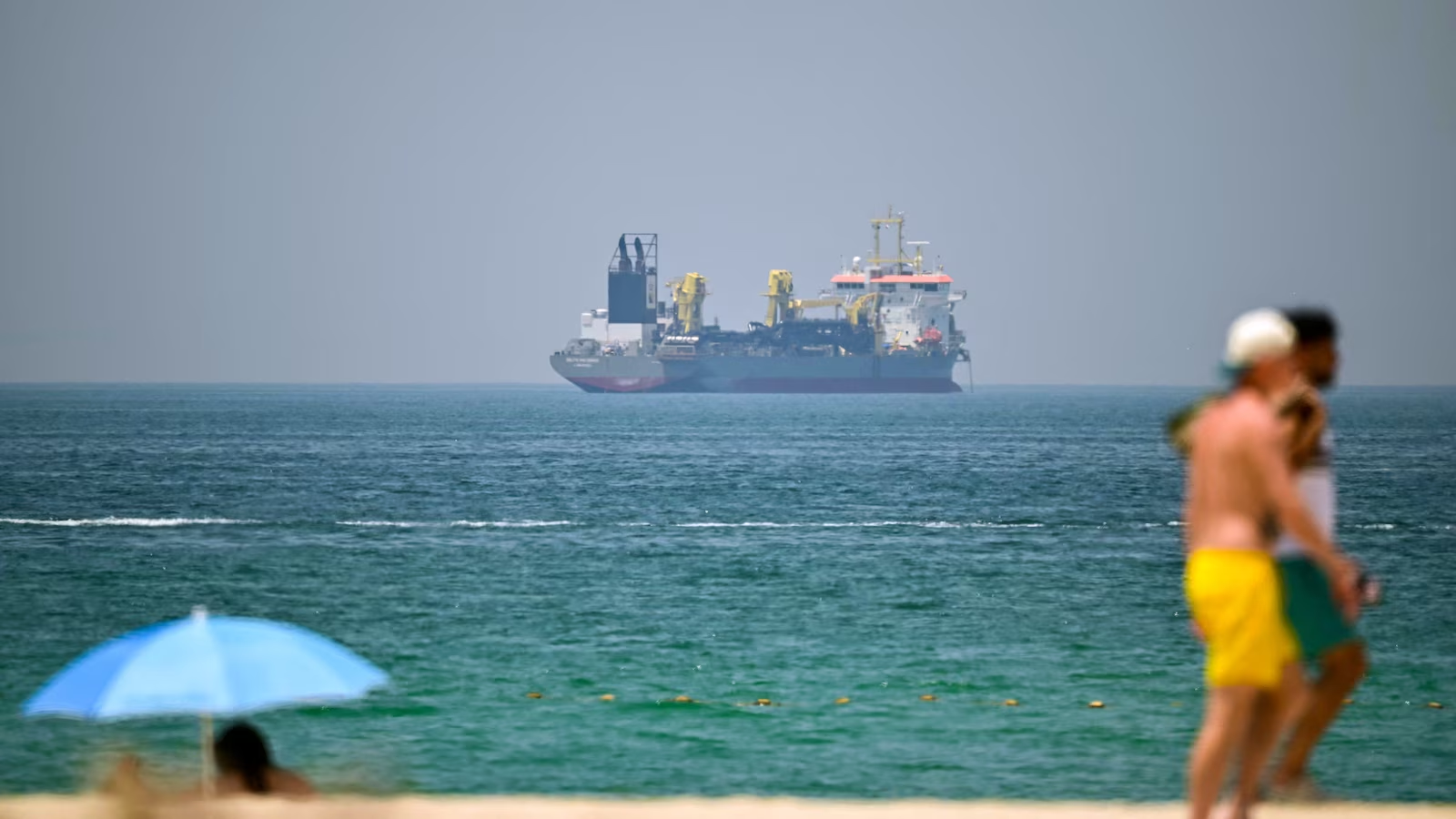
A commercial vessel is seen off the coast of Dubai on April 20, 2026.
AFP via Getty Images
“Civilian seafarers have already lost their lives, and tens of thousands more trapped near the Strait of Hormuz are spending every waking moment consumed by anxiety about how — or whether — they will make it home,” ITF Maritime Operations Coordinator John Canias said. “While many watching from afar see this through the lens of an energy or economic crisis, make no mistake: this is also a humanitarian crisis. Seafarers transport 90% of everything we rely on in our daily lives — food, medicine, fuel. They deserve far better than this.”
So far, the ITF says it has helped repatriate 450 seafarers from the region. For the thousands still waiting, relief has not come.
“We feel trapped — like we’re in a prison,” the seafarer who spoke to ABC News said. “The only way out is through the Strait of Hormuz, and right now, that’s not possible.”