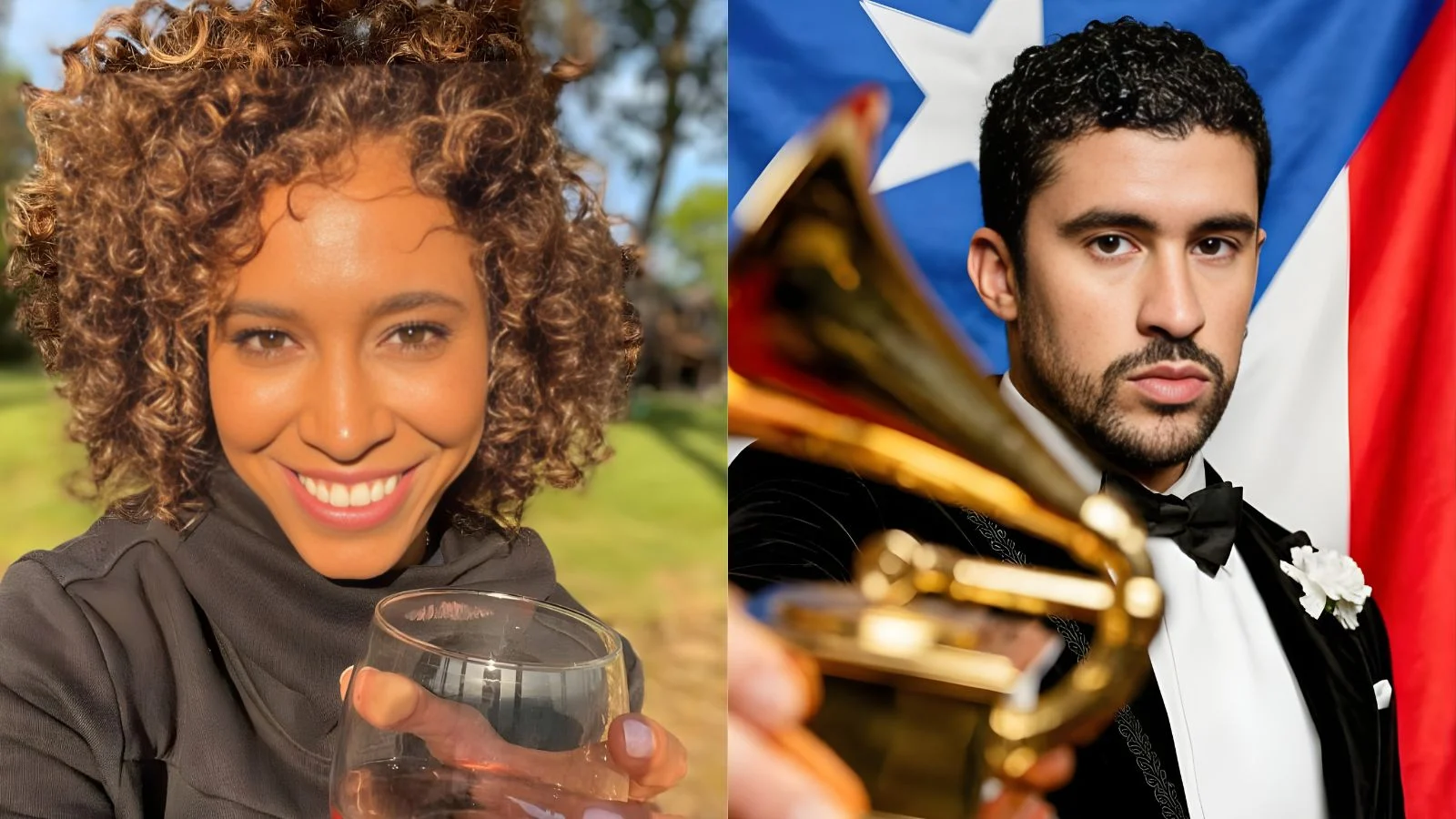
Sage Steele has joined a growing chorus of critics questioning the NFL’s decision to feature Bad Bunny as the headliner for the Super Bowl 60 halftime show. The former ESPN anchor did not hold back, expressing both disappointment and concern over what she views as the implications of the league’s choice.
Steele framed her criticism not as a matter of entertainment quality, but as a reflection of ideological influence. She described Bad Bunny as “full of hate” and “basically anti-American,” emphasizing that it is this perceived messaging that makes his selection problematic in her eyes. She noted that her concern extends beyond music, touching on the broader cultural impact of elevating a performer with controversial political stances on one of the nation’s largest stages.
For Steele, the issue is not about Bad Bunny’s talent or popularity. She acknowledged the artist’s broad appeal, particularly among younger audiences and international fans, but stressed that the halftime show is more than a performance—it is a moment watched by millions of Americans and a platform that carries symbolic weight.
Choosing a performer whose views she finds divisive, she argued, could send the wrong message about the values the NFL seeks to represent.
🚨NEW: @sagesteele on Bad Bunny Super Bowl Halftime Show:
“I’m just sad and disappointed that they chose someone who is so full of hate, who spews hate — and he is basically anti-American. And I think that’s the part that bothers me.”@DailyCaller pic.twitter.com/vfZoUzzMex
— Jason Cohen 🇺🇸 (@JasonJournoDC) February 7, 2026
Reaction Focused on Ideology, Not Heritage
In her statement, Steele made a point to clarify that her criticism is directed at ideology, not heritage. She emphasized, “It’s nothing against where he comes from, Puerto Rico, you know?” This distinction is significant in a climate where discussions around race and identity often dominate reactions to cultural critiques.
By highlighting this point, Steele preempted accusations that her comments were racially motivated, positioning her remarks firmly as a critique of ideology rather than ethnicity. She underlined that her objection is about the ideas being promoted on a national stage, not the personal identity of the performer. This nuance has been key in shaping the public discourse around her statements.
Her clarification also underscores a broader debate in American entertainment: the tension between celebrating diverse voices and assessing the ideological implications of who is given access to mass platforms. For Steele, the Super Bowl stage is not neutral—it is a national showcase, and the performers chosen carry implicit cultural and political influence.

NFL Halftime Show Sparks Broader Debate
The backlash against Bad Bunny’s selection illustrates how the halftime show has evolved from a simple entertainment spectacle to a cultural touchstone with political resonance. Steele’s comments are part of a larger conversation about the role of celebrities and entertainers in shaping public perception, especially during highly visible national events.
Critics of Steele argue that the halftime show has always been a space for artists to express themselves, including politically charged messages. They point to previous performances where social commentary was central, noting that challenging mainstream narratives has long been part of the Super Bowl’s entertainment landscape.
However, Steele and like-minded critics maintain that there is a difference between artistic expression and promoting messages they view as unpatriotic or divisive.
For Steele, the concern goes beyond individual performances to the message it sends about national values. In her view, the NFL’s platform reaches millions of viewers who may interpret the selection of certain artists as an endorsement of their beliefs. This concern taps into ongoing debates about how sports, politics, and culture intersect in modern America.
Super Bowl 60 Becomes a Stage for Culture Wars
The halftime show has always been more than just a musical interlude. With global broadcast reach and enormous commercial stakes, it has become a flashpoint for debates about identity, representation, and cultural influence. Bad Bunny’s booking has intensified these discussions, highlighting the growing intersection of sports, entertainment, and politics.
Steele’s criticism points to a broader trend in which cultural and political expectations are projected onto live events. The Super Bowl halftime stage is no longer purely about spectacle; it carries symbolic meaning for viewers and stakeholders. For Steele, Bad Bunny’s selection raises questions about what messages are being elevated and who benefits from these national platforms.
Her concerns also highlight generational and ideological divides. While younger audiences may celebrate Bad Bunny’s popularity and innovation, older and more conservative viewers may perceive the choice as emblematic of broader cultural shifts they do not support. Steele’s comments serve to articulate that perspective, offering a counterpoint to celebratory coverage of the performance.
Continued Debate Likely as Event Approaches
As Super Bowl 60 nears, the conversation around the halftime show is unlikely to quiet. Steele’s remarks have contributed to an ongoing debate about artistic freedom, political messaging, and national values in entertainment. The controversy demonstrates how decisions made by the NFL are scrutinized not just for commercial appeal, but for cultural and ideological implications.
Ultimately, Steele’s commentary underscores a key tension in contemporary media: balancing entertainment value with public perception and the broader social impact of who is elevated on national stages. Whether or not viewers agree with her assessment, her statements ensure that the Super Bowl halftime show remains a subject of debate well before the first note is played.
The conversation sparked by Steele’s criticism reflects a larger trend in which live entertainment events are inseparable from cultural commentary, demonstrating that the choices made by leagues, networks, and producers carry weight far beyond the immediate audience.
Super Bowl 60 is poised to be a cultural moment, and the discussion surrounding it will continue to resonate long after the halftime performance concludes.
What do you think about her comment?