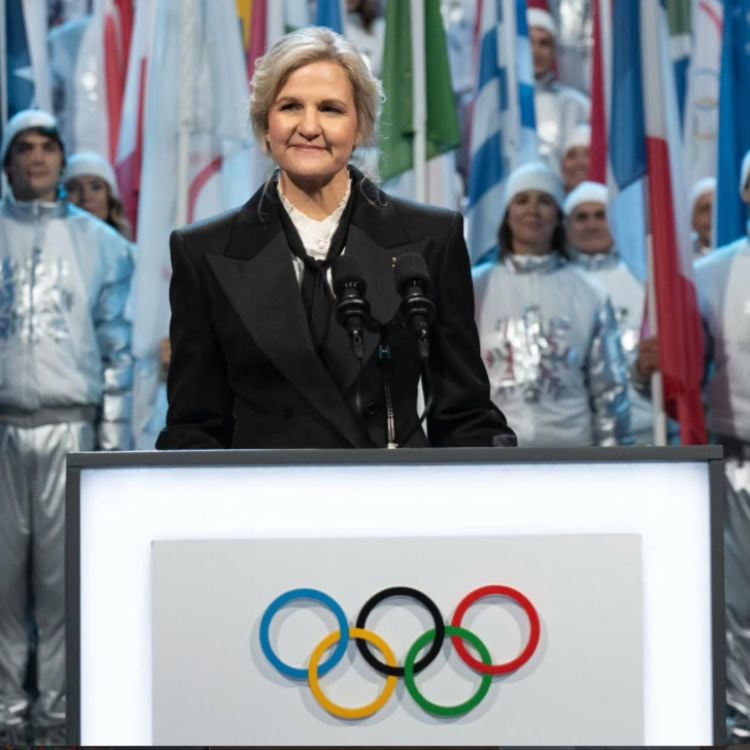
On Thursday, the International Olympic Committee announced that transgender women will be barred from competing in women’s events at the Olympics from LA28 onward. Eligibility in any female category will be limited to biological females, determined by a one-time SRY gene screening. IOC President Kirsty Coventry said the decision was about fairness and safety. “It is absolutely clear that it would not be fair for biological males to compete in the female category,” she said.
Most of the coverage stopped there. The transgender ban is the headline. But the IOC’s 10-page policy document also pulls a different group of athletes into the same eligibility net. One of them has two Olympic gold medals.
Born Female. Raised Female. Still Not Female Enough.
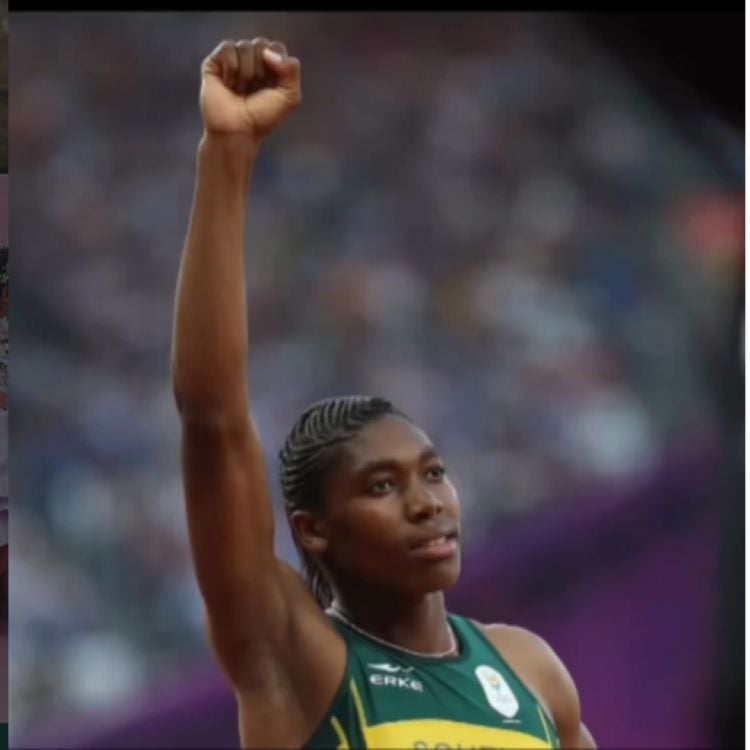
Caster Semenya was assigned female at birth in South Africa. She has never transitioned. She competed in women’s track and field from her teens, and she won gold in the 800 meters at both the 2012 London Olympics and the 2016 Rio Olympics.
What she also has is a naturally occurring condition known as a difference in sex development, or DSD. Her body produces testosterone at levels higher than the typical female range. She did not choose this.
The IOC policy does not just exclude transgender women. It also restricts some DSD athletes described as SRY-positive. So Semenya is back in the same argument. Not because she is transgender, but because elite sport keeps trying to define “female” in a way that some female athletes cannot satisfy.

She Already Fought This. She Already Won. It Didn’t Matter.
Semenya has been battling eligibility restrictions for over a decade. In July 2023, the European Court of Human Rights ruled that Switzerland violated her rights in her challenge to World Athletics rules. In July 2025, the Grand Chamber upheld that she was denied a fair hearing. The ruling did not overturn the regulations.
Read that again. A human rights court found a violation, but the rules stayed in effect anyway.
Now the IOC has codified the same logic at the Olympic level. The message to Semenya is plain. You were raised female, you compete as female, you are treated as female — but a framework that uses SRY as the gatekeeper can still put you on the wrong side of the line.
The Question Neither Side Wants To Sit With
If you support the ban, the case of Semenya complicates your position. The IOC’s own document says the performance gaps are not small — 10 to 12 percent in most running and swimming events, and over 100 percent in some explosive-power sports. That is the IOC’s stated rationale, not a culture war talking point.
But Semenya is not a transgender woman. She was not born male. She did not go through male puberty in the way the IOC’s own research describes. Treating her situation as interchangeable with transition is how you end up with policies that sound clean in a press release but look messy in practice.
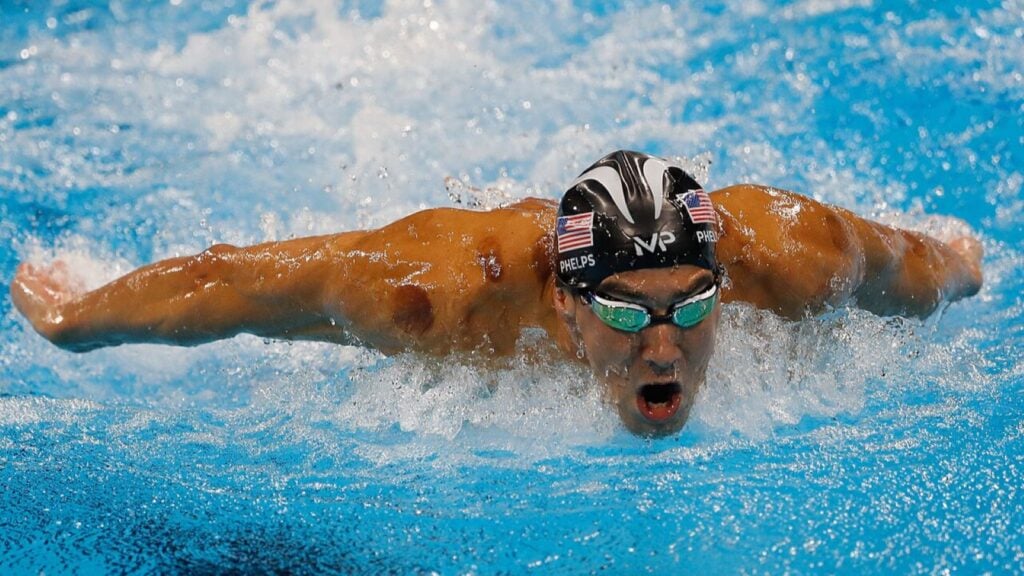
Her advantage, if it is one, comes from a naturally occurring medical condition — the same kind of genetic variation that gives Michael Phelps a wingspan longer than his height, or Eero Mäntyranta a mutation that boosted his red blood cell count by 25 percent. Nobody banned Phelps for his body. Nobody made Mäntyranta take medication to level the field. The difference is that Semenya’s advantage involves testosterone, and testosterone is the line the IOC chose to draw. Not wingspan. Not lung capacity. Not muscle fiber composition. Testosterone.
And if you oppose the ban, Semenya’s case should sharpen your argument. The strongest objection to this policy is not only that it is discriminatory but also that it is imprecise. It claims to draw a clean line between male and female, then immediately builds in a second category of women it knows will not fit neatly into the binary.
What “Protecting Women” Actually Looks Like
Coventry said the policy was about protecting fairness, safety, and integrity in the female category. Those are reasonable goals. But Semenya did not cheat. She did not game a system. She ran faster than everyone else. Twice. At the Olympics. And the institutions that celebrated that are still building rules that say her body is the problem.
Nobody who watched Semenya cross the finish line first in London or Rio doubted they were watching a woman compete. The question was always whether they were watching the right kind of woman. That question did not get answered on Thursday. It got codified.
So the question is not whether the Olympics should have eligibility standards. Of course they should. The question is whether a standard that cannot handle athletes like Caster Semenya cleanly is actually a standard, or just a blunt instrument dressed up as science. And if a biological female with a natural condition can’t satisfy the IOC’s definition of female, the problem isn’t the athlete. It’s the definition.