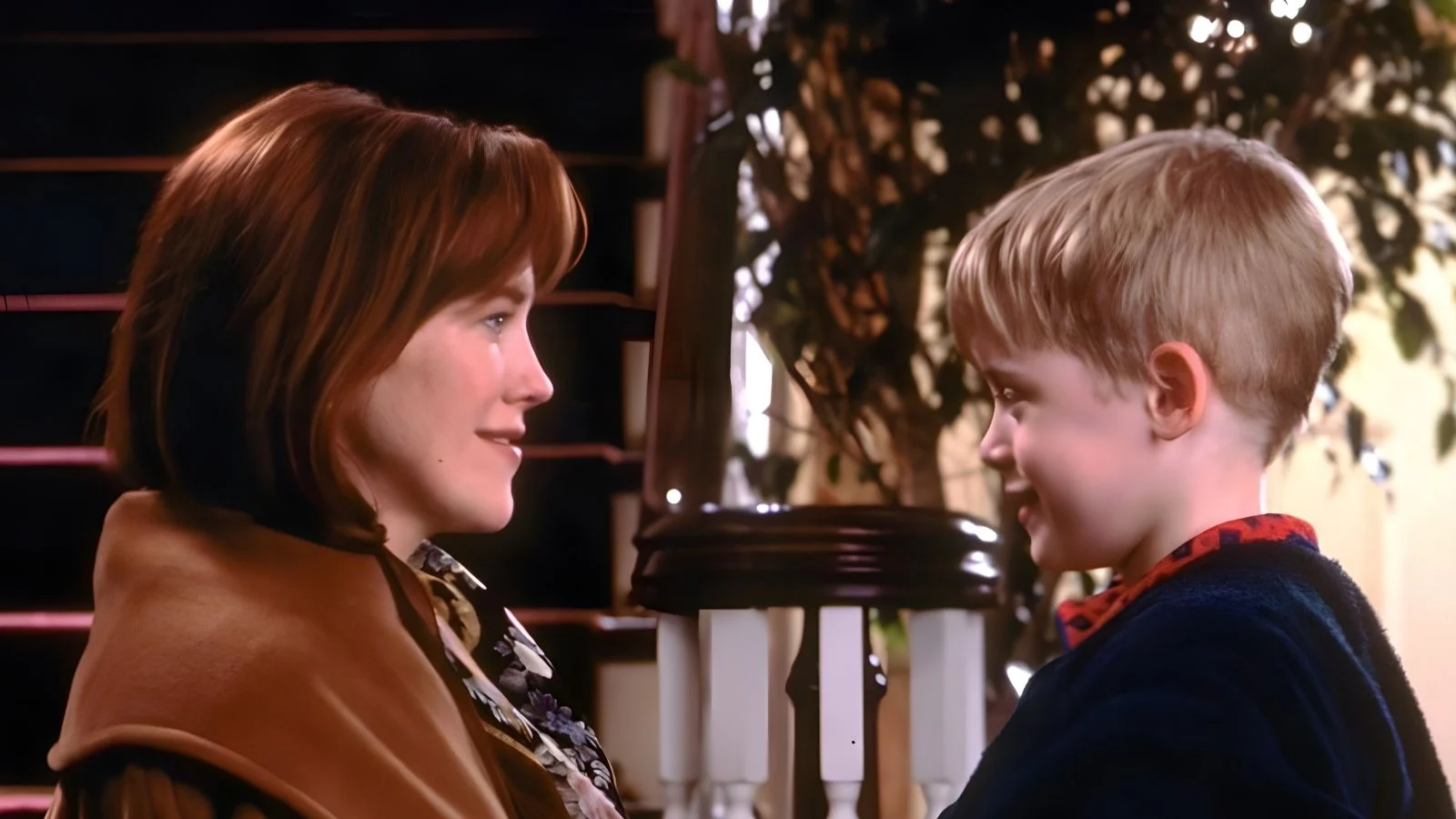
When news broke that Home Alone and Schitt’s Creek star Catherine O’Hara had died at age 71 after a brief illness, reactions poured in from fans and fellow actors around the world. Among the most heartfelt was a post from her former co‑star Macaulay Culkin, who played her son Kevin McCallister in the iconic Home Alone films.
Culkin’s message was simple but deeply affecting. On Instagram, he wrote, “Mama. I thought we had time. I wanted more. I wanted to sit in a chair next to you. I heard you. But I had so much more to say. I love you. I’ll see you later.”
Those words have struck a chord with fans because they show a genuine, vulnerable side of a man we’ve watched grow up on screen. This was not just a co‑worker. For many people, Catherine represented a comforting maternal presence in a movie so embedded in holiday traditions. And to Culkin, she clearly felt like more than just a costar.
People have been sharing screenshots of his post online, highlighting how those few lines capture a universal feeling many of us have experienced when someone we love passes away before we’re ready. People are calling his tribute “raw,” “unfiltered,” and “shockingly personal.”
This reaction speaks to the power of their on‑screen relationship. Home Alone may be remembered for its slapstick humor and adventurous kid hero, but the emotional core of the movie was the family. And for so many fans, Kevin and his mother’s bond was unforgettable. Seeing Culkin publicly mourn O’Hara reminds us why that connection mattered so much.
The Legacy Behind “Mama”
Catherine O’Hara had a long, celebrated career, but for several generations, her role as Kate McCallister was the first time many people truly saw her magic. Her warmth and comedic timing helped give Home Alone its emotional punch, turning a slapstick holiday comedy into something audiences hold dear every Christmas.
Fans have pointed out that the bond between Culkin and O’Hara extended far beyond the set. The two reunited in 2023 when O’Hara stood alongside Culkin as he received his star on the Hollywood Walk of Fame. She spoke about their connection and praised his resilience and humor, noting that audiences around the world still love Home Alone because of him.
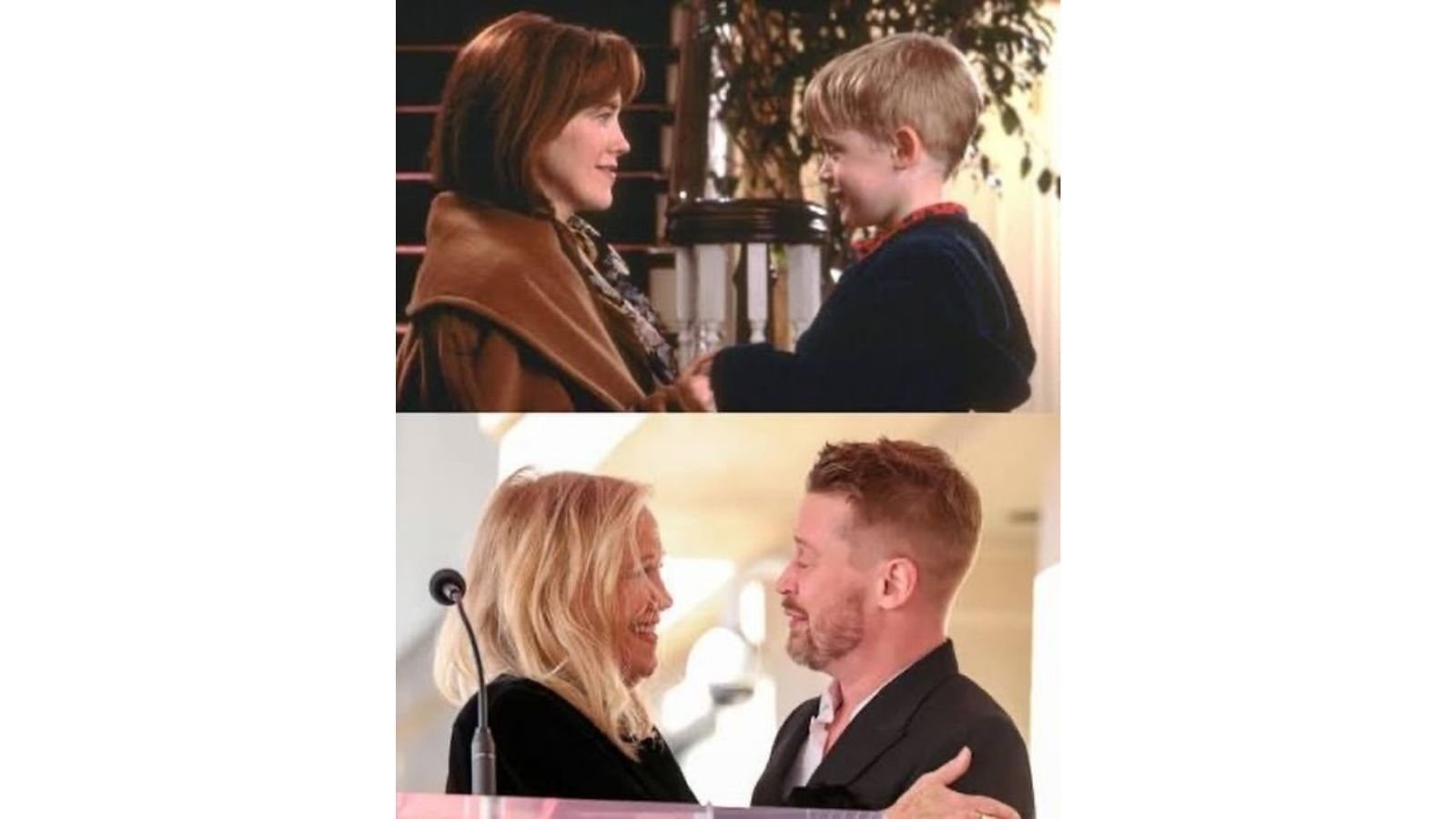
When O’Hara spoke that day, she paid homage to not just the character she played, but to the bond they built over years. That makes Culkin’s tribute especially poignant. It’s not just mourning the loss of someone he worked with. It’s mourning someone he clearly cared about, respected and saw as a guiding presence.
That relationship matters to fans because so much of Culkin’s early life and career was shaped by his time in the spotlight as a child actor. For many people who grew up watching Home Alone, O’Hara’s character was the emotional anchor of the story. And now hearing Culkin reflect on her life and their connection brings all of that into sharper focus.
Why Fans Are Feeling This So Deeply
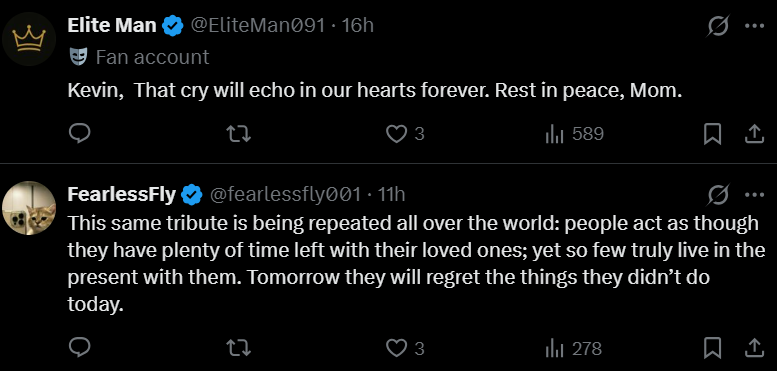
The reaction online shows that people are connecting with Culkin’s grief on a deeper level. Comments on social posts range from simple expressions of sympathy to reflections on what Catherine O’Hara meant in their own holiday traditions. Some people say they feel like they’ve lost a part of their childhood. Others talk about how the movie shaped their memories of family and holiday time.

Part of why Culkin’s tribute registers so powerfully is that it doesn’t feel scripted. He didn’t post a long, polished statement. What he shared feels real and unguarded. That vulnerability is rare for celebrities who grew up in the spotlight at a young age.
For many fans, this moment has also reopened conversations about the impact of nostalgia and how deeply connected we are to the stories and people who shaped our youth. Home Alone isn’t just a movie. For millions of people around the world, it’s part of family traditions, holiday dinners, and annual rituals. The way Culkin’s tribute resonates with fans reflects that cultural attachment.
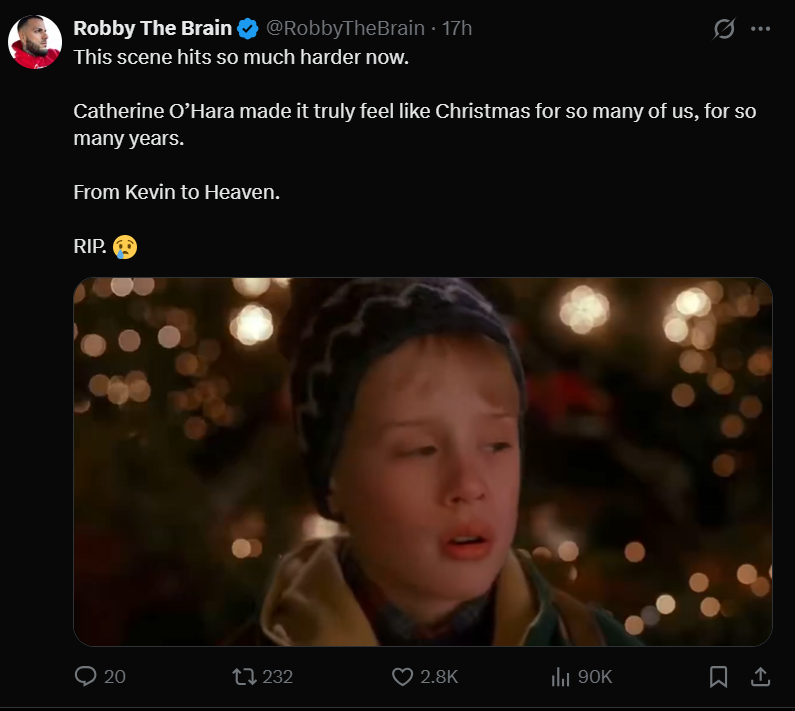
As tributes continue to circulate online, fans are posting favorite scenes, sharing memories, and expressing gratitude for the joy O’Hara brought into so many homes. It’s become clear that her influence wasn’t just confined to the screen. It extended into the lives of people who grew up with her work.
What do you think?