The world feels a little quieter today, doesn’t it? There is a specific kind of silence that follows the departure of a person who spent fifty years making us loud…loud with laughter, loud with gasps of awe, and loud with the kind of joy that felt personal, even when it came through a screen.
When Catherine O’Hara passed away on January 30, 2026, at the age of 71, the collective intake of breath could be felt from Toronto to Hollywood. We weren’t just losing an actress; we were losing the woman who taught us how to pronounce “bebe,” how to find our way home on Christmas, and how to embrace the delightful absurdity of being alive.
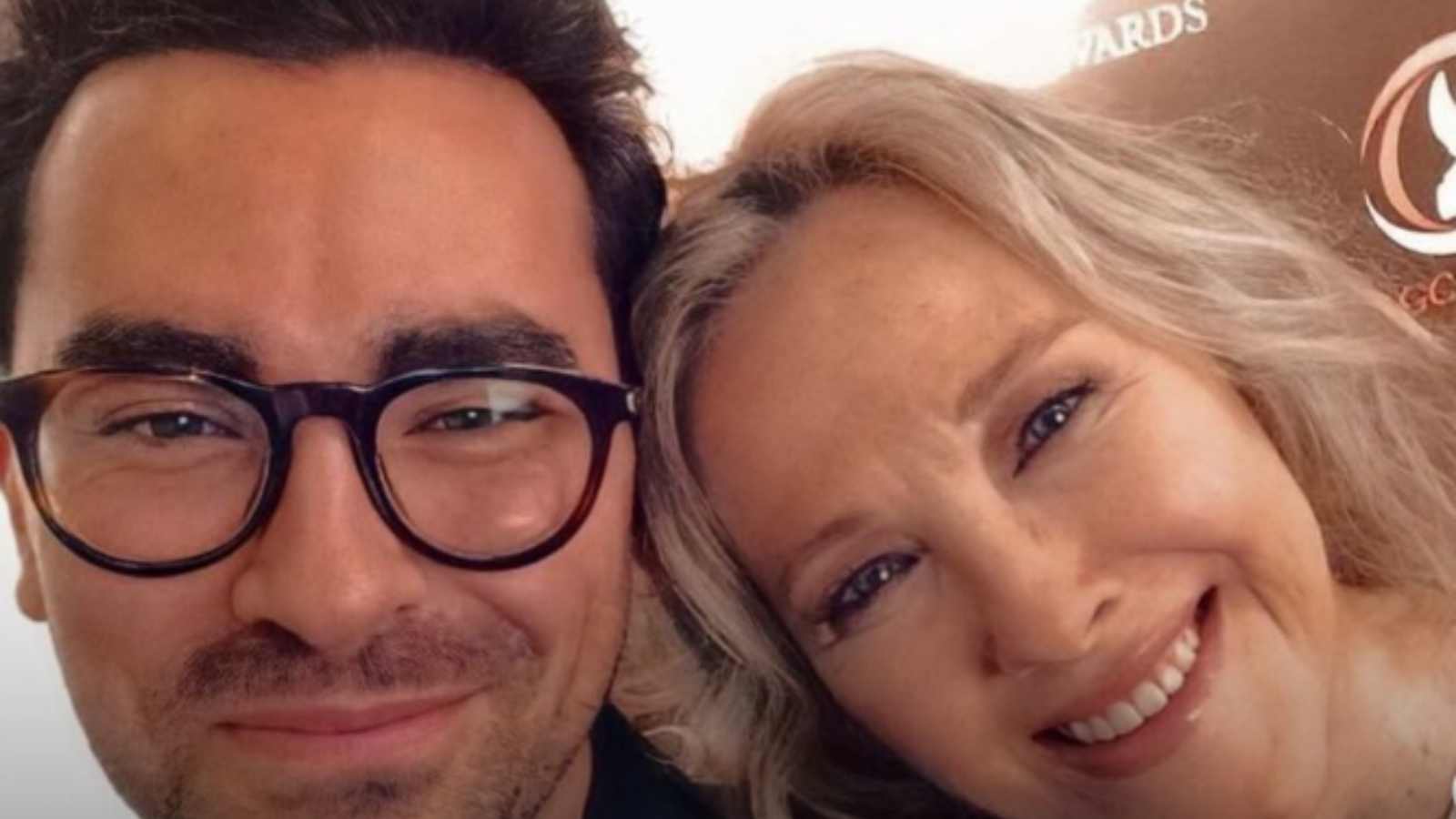
But for Dan Levy, the loss wasn’t just the passing of a legend. It was the loss of a second mother, a mentor, and the woman who helped him build a Rose garden out of a Schitt-filled creek.
The Quiet After the Storm

Sitting down for a recent appearance on The Tonight Show Starring Jimmy Fallon just hours ago, Dan Levy looked like a man who had been through the wringer but had somehow found a way to press his own suit. There’s a certain poise to Dan… a David Rose-esque armor of impeccable tailoring, but beneath the glasses, the grief was palpable.
“It’s all like a collective loss, I think,” Dan told Fallon, his voice carrying that familiar, gentle cadence. “She was the greatest. She’s unbelievable, she’s irreplaceable.”
But Dan didn’t just offer platitudes. He shared the specific, small light that has been guiding him through the dark: the sheer, overwhelming volume of love the world had for her. “I think the great comfort for me has just been to see how loved she was,” he noted. “Everyone felt like they kind of knew her.”
It’s a sentiment that rings true for anyone who grew up watching her transform from the frantic Kate McCallister in Home Alone to the eccentric, wig-clad Moira Rose. Catherine didn’t just play characters; she invited us into their madness.
Beyond the Wigs

While we all know the iconic roles, the “real, factual” Catherine was a woman of profound depth and a work ethic that would make a marathon runner sweat. One of the less-discussed facts of her final years was her quiet battle with rectal cancer. She fought it with the same grace she brought to the screen… privately, without fanfare, and with a sense of humor that never wavered.
According to reports, her official cause of death was a pulmonary embolism, a sudden and sharp ending to a life that had been lived in a beautiful, long-form crescendo.
What many don’t realize is how much of a “writer’s actor” she was. Long before Schitt’s Creek swept the Emmys, Catherine was winning them for her writing on SCTV in the early 80s. She wasn’t just a performer; she was an architect of comedy. Dan emphasized this on Fallon, calling her the “great queen” of improvisation. He shared that on the set of the Rose family’s motel, Catherine didn’t just say the lines; she breathed life into the spaces between the lines.
A Posthumous Victory

Even in her absence, Catherine is still winning. Just this past weekend at the 2026 Actor Awards, she was posthumously honored with an award for Outstanding Performance by a Female Actor in a Comedy Series for her role as Patty Leigh in Seth Rogen’s The Studio.
Seth Rogen, accepting on her behalf, shared a sentiment that gives us a glimpse into the “true” Catherine: “She had the ability to be generous and kind and gracious, while never minimizing her own talents.”
Think about that for a second. In an industry that often demands women shrink themselves or play small to be “likable,” Catherine O’Hara took up space. She was big, she was loud, she was “too much,” and she was utterly beloved for it.
Why We Should Stop Calling Her a “Comedy Legend”
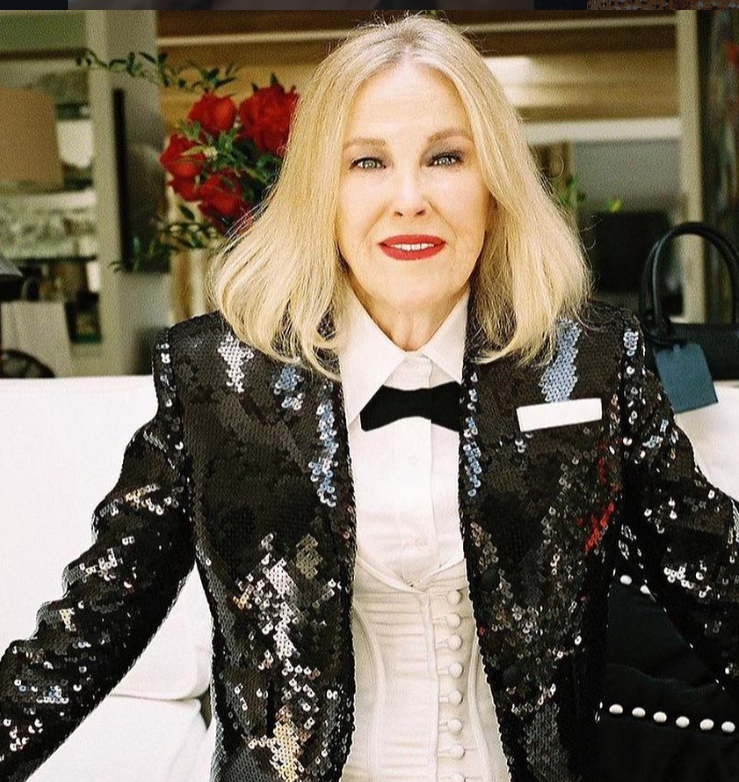
Now, here is where things get a bit prickly. In the wake of her passing, every headline has used the phrase “Comedy Legend.” And while that’s undeniably true, I want to argue that calling her a comedy legend actually does her a massive disservice.
By pigeonholing her into the “comedy” box, we ignore the fact that Catherine O’Hara was one of the most gifted character actors of our generation, period. If you look at her work in the HBO drama Six Feet Under or her more recent turns in The Last of Us and The Studio, you see a woman who understood the human condition, the tragedy, the loneliness, the desperation… just as well as she understood the punchline.
The truth is that Catherine O’Hara wasn’t a comedian who could act; she was a master dramatist who chose to use humor as her primary tool. We often treat comedy as the “lesser” sibling of drama, but as Catherine proved, it is much harder to make someone laugh while their heart is breaking. To call her only a comedy legend is to miss the shadow that made the light so bright.
How Dan is Moving Forward

So, how does one move on when your “great queen” is gone? For Dan Levy, the answer lies in the work. He is currently gearing up for the premiere of his new crime thriller Big Mistakes, set to hit Netflix on April 9.
It’s a departure from the sunny, optimistic world of Schitt’s Creek, and perhaps that’s exactly what he needs. Grief isn’t a straight line; it’s a zig-zag through new genres and new challenges. Dan is taking the lessons Catherine taught him, the importance of “unbelievable” improvisation and the courage to be “irreplaceable,” and carrying them into a new chapter.
Ultimately, Dan’s journey proves that the most profound way to honor a mentor is to keep evolving. By stepping into the shadows of a thriller, he isn’t leaving Catherine behind; he’s taking the “brave” approach to performance she always championed.
Whether he’s delivering a punchline or navigating a high-stakes heist, the spark of her influence remains… a reminder that while the person may be gone, the creative fire they ignited is permanent.
The Legacy of the Laugh

Catherine O’Hara once said in a 2024 interview that she and her husband, Bo Welch, laughed all day long. “My parents were blessed; they laughed until the end. That’s the best way to live, because there’s so much sadness.”
She knew the sadness was coming. She knew the “rectal cancer” and the “pulmonary embolism” were part of the script eventually. But she chose the laugh.
As Dan Levy navigates this “collective loss,” he’s reminding us that the best way to honor Catherine isn’t just to mourn her. It’s to find the small light in the grief. It’s to watch the reruns, to quote the “bebes,” and to remember that even when the world feels quiet, we still have the gift of the laughter she left behind. Rest in peace, Catherine. You were, and always will be, our favorite season.