
Sinners made history Thursday with 16 Oscar nominations — more than any film ever. The Ryan Coogler vampire horror obliterated the record of 14 held by All About Eve, Titanic, and La La Land.
The recognition was sweeping: Michael B. Jordan, Delroy Lindo, and Wunmi Mosaku all secured acting nods, while Ryan Coogler picked up nominations for both Director and Original Screenplay. The film earned a spot in nearly every category the studio campaigned for.
But there’s one performance almost entirely absent from the awards conversation: Jack O’Connell‘s Remmick, the Irish vampire who serves as the film’s main antagonist.
It’s not that O’Connell’s performance was forgettable. Ryan Coogler himself has called Remmick his favorite antagonist he’s ever written. The 34-year-old British actor doesn’t appear until halfway through the film, but his presence dominates the final act — traditional Irish stepdancing, a spine-chilling rendition of “The Rocky Road to Dublin,” and what Screen Rant called an “incredible” ability to make audiences “empathize” with a vampire terrorizing a Black community in 1930s Mississippi.
Christopher Nolan says that the ‘SINNERS’ river dance scene (“Rocky Road to Dublin”) is “the most spectacular musical inversion since Kubrick’s “Singin in the Rain” from ‘A CLOCKWORK ORANGE’pic.twitter.com/HrnJAoXUT7
— cinesthetic. (@TheCinesthetic) December 20, 2025
At a time when Oscar voters claim to value cultural impact, O’Connell’s “Rocky Road to Dublin” scene became one of the film’s most shared moments online. TikTok exploded with recreations and reactions. The Hollywood Reporter described his “charming, bloodsucking” turn, and Collider called him “charismatic when he isn’t grinning with a mouth of shark-like fangs.”
Yet in the weeks of Sinners awards coverage, his name has been conspicuously absent. So why the silence?
One could blame the horror genre; Oscar voters have historically ignored villain performances, with Heath Ledger’s Joker remaining a rare exception. Others might point to name recognition, noting that while O’Connell is a BAFTA winner, he lacks the American profile of his castmates. It could even be simple campaign strategy by Warner Bros. to avoid splitting votes.
But those explanations feel insufficient. The omission suggests something else entirely.
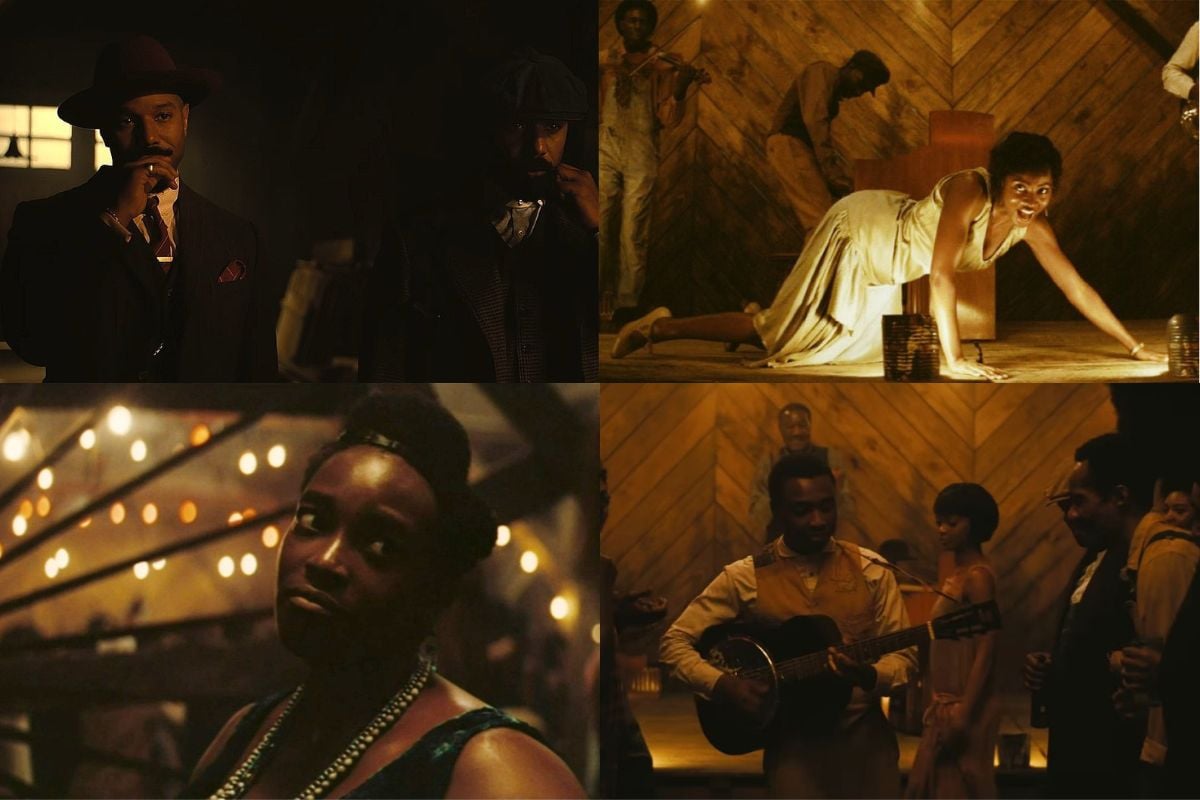
Sinners is a film about Black resilience, Black culture, and Black survival in Jim Crow Mississippi. It’s a story where the blues becomes a weapon, where a juke joint becomes sanctuary, where Michael B. Jordan plays twin brothers reclaiming their hometown. The film’s 16 nominations are being celebrated — rightfully — as a triumph for Black cinema.
But does celebrating a white actor’s performance in that story feel uncomfortable? Does spotlighting O’Connell risk centering whiteness in a narrative that isn’t about him? Is there a quiet understanding among critics and awards pundits that praising the white villain in a predominantly Black film reads wrong, even when the performance delivers?

O’Connell told Interview Magazine that reading the Remmick role felt like “this is written for me” — partly because he’d done Irish dancing as a child in Derby, England. Coogler wrote Remmick as a layered exploration of how the Irish and Black communities in America were pitted against each other, despite both facing oppression. The character has thematic weight. The performance has technical skill. The cultural impact is measurable.
Yet in dozens of articles about Sinners‘ historic Oscar haul, O’Connell’s name appears rarely, if at all. Trade publications list the nominees. Entertainment outlets celebrate the records. Film critics analyze Coogler’s vision and Jordan’s dual performance. But the main villain who Coogler called his favorite? Near silence.
Maybe it’s a coincidence. Maybe it’s strategic. Maybe it’s uncomfortable. Maybe no one wants to be the first to say it.
The 98th Academy Awards air March 15 on ABC. Whether Jack O’Connell’s performance is finally acknowledged—or remains quietly omitted—will reveal less about the quality of the film, and more about who we are allowed to praise within it.