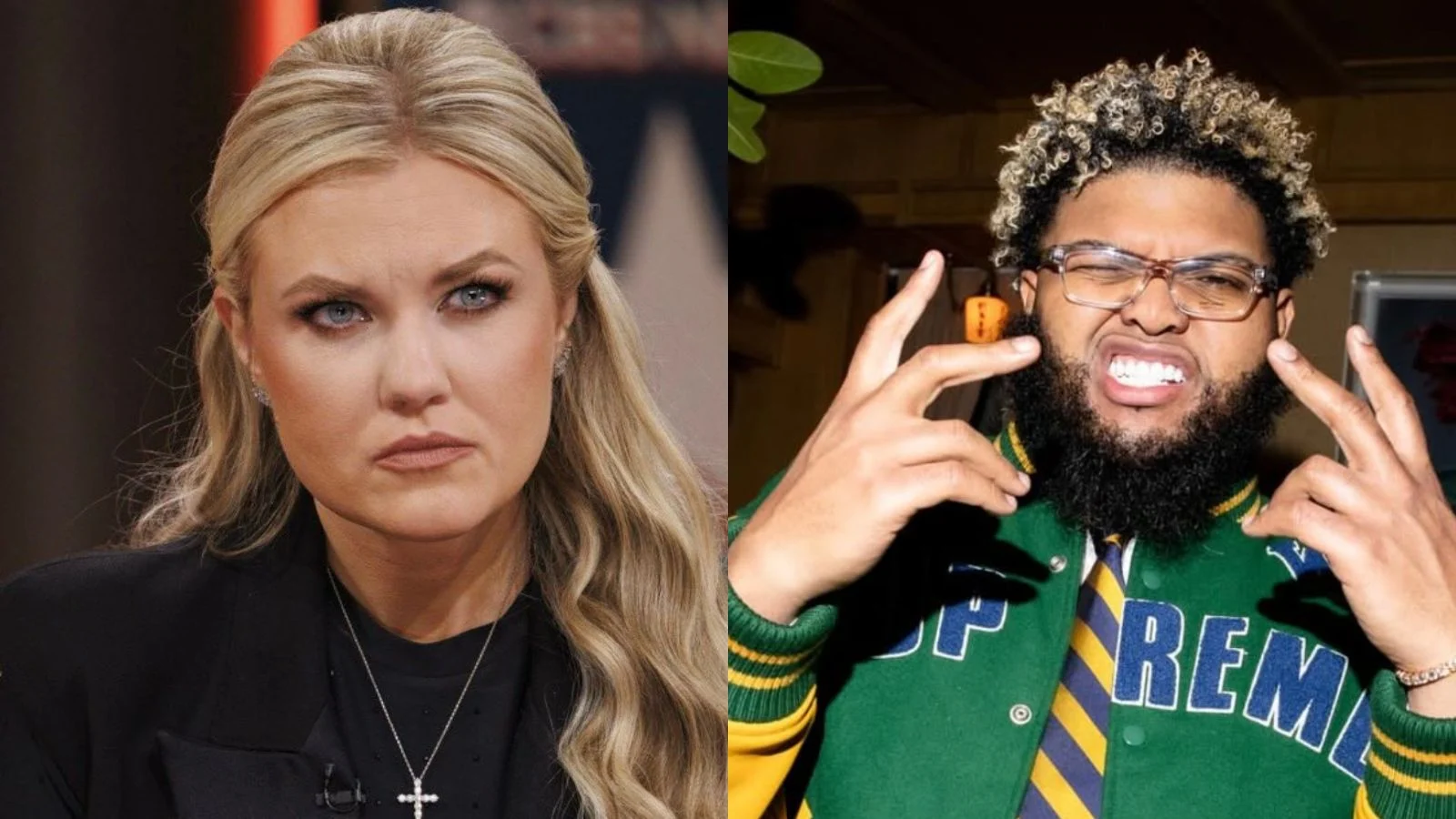
On Wednesday evening, comedian Druski posted a two-minute sketch to X. By Thursday morning, it had 22 million views. By Thursday night, 80 million. By Friday, 121 million. By Saturday, 163 million — on X alone. Instagram added another 3.4 million likes in under 24 hours. A U.S. senator weighed in. A fake lawsuit went viral. Newsweek had to fact-check a cease-and-desist letter that never existed.
All of that, for a skit captioned “How Conservative Women in America act.”
But 163 million views don’t just happen because something is funny. Funny content dies on the internet every hour. Something else was going on here.
How Conservative Women in America act 😂🇺🇸 pic.twitter.com/4DQesE0gBg
— DRUSKI (@druski) March 25, 2026
The Audience Was Already in the Room
Erika Kirk has been one of the most discussed figures on the internet since her husband’s assassination in September 2025. Not steadily — in waves. A speech would surface, go viral, get memed, fade. Then another clip would land a few weeks later and the cycle would restart, bigger each time. By March 2026, the pattern had repeated so often that Kirk’s name had become a kind of standing search query — always one new clip away from trending again.
Two things happened in the weeks right before Druski’s skit that made the timing razor-sharp. On March 11, Kirk told an audience in Arkansas not to let anyone “disenfranchise you because you’re a young man, especially a young white male man.” The clip exploded. Then, five days before the skit dropped, Joe Rogan called Kirk an “odd duck” on his podcast — putting her name in front of an audience of millions who may not have been following the earlier cycles at all.
Druski didn’t build the character from scratch. He stepped into a role the internet had been casting for six months.
The Skit Nobody Just Watched
Druski never says Erika Kirk’s name. Not once. The caption says “conservative women.” The blonde wig, white suit, Bible in hand, and a speech about protecting “all white men in America” say something more specific.
Druski vs. Erika Kirk 🇺🇸🎇
(we labeled them so you can tell them apart) pic.twitter.com/7y6PpBHj1F
— WatchMojo (@WatchMojo) March 27, 2026
That gap — between what the skit officially is and what 163 million people understood it to be — is where everything happened. Viewers didn’t watch this sketch. They decoded it. They posted side-by-side comparisons with Kirk’s Arkansas footage. Someone asked Grok — X’s own AI chatbot — to identify the person in the video. Grok didn’t hesitate: Erika Kirk. The chatbot couldn’t tell the difference between the parody and the person. That single exchange pulled over 700,000 views.
Recognizing the target was the punchline. Sharing that recognition was the distribution.
The Backlash Was the Marketing
Within 48 hours, the condemnations started stacking. Senator Ted Cruz: “beneath contempt.” Conservative commentator Jon Root: “a despicable human being.” Meghan McCain: some people were “literally birthed in hell.”
Then came the fabricated cease-and-desist letter — a screenshot that racked up nearly a million views on X before the post was deleted and Newsweek debunked it. The outrage had done its job.
Every condemnation put the skit in front of an audience that hadn’t seen it yet. The people trying hardest to bury the sketch became its most effective promoters.
A Format, Not a Fluke

This is Druski’s third viral prosthetics sketch in seven months. The NASCAR skit at Talladega drew accusations of “whiteface” and millions of views. The megachurch parody — the fictional “Collect & Praise Ministries” — crossed 250 million views and prompted real pastors to respond from their pulpits.
Same structure every time: elaborate transformation, no named targets, and enough visual detail that the audience does the naming for him. Complex named him the No. 1 Funniest Person on the Internet last year. Rolling Stone ranked him No. 2 Most Influential Creator of 2025.
By Wednesday evening, Druski wasn’t just posting a video. He was delivering the next installment of a format the internet had already learned to treat as an event.
Funny Alone Doesn’t Get You Here
Controversial content floods the internet every day and vanishes by morning. This didn’t — because four things landed at the same time: a subject the internet had spent six months turning into a character, a sketch that made the audience do the work, a backlash machine that doubled as a distribution engine, and a comedian the internet already trusted to deliver a moment.
Take away any one of those and the skit is still funny. It’s just not 163 million views funny.
The conversation didn’t start when Druski posted. It started in September. He just knew exactly when to walk into the room.