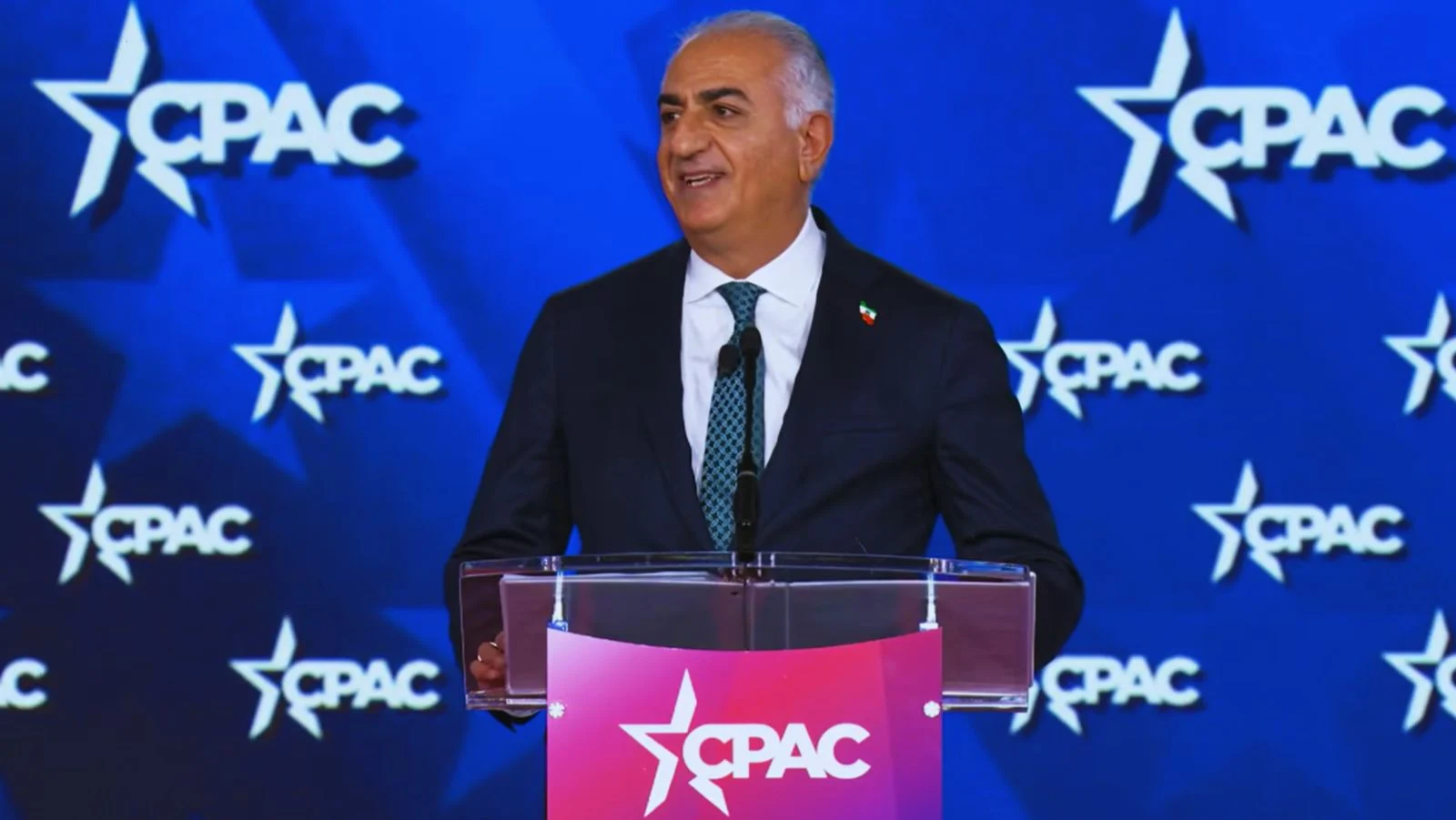
On Saturday, Reza Pahlavi walked onto the main stage at the Conservative Political Action Conference in Grapevine, Texas, to a standing ovation and chants of “Javid Shah” — Long live the king. He delivered a speech titled “Make Iran Great Again.” The room was at capacity. Security stopped allowing people in. Iranian flags were everywhere.
“Close your eyes for a moment and imagine a free Iran,” Pahlavi told the crowd. “No more nuclear threats, no more terrorism, no more hostage taking, no more closing of the Strait of Hormuz.”
It was a vivid picture. It was also being painted inside a convention center in suburban Dallas while most of the country Pahlavi wants to lead likely could not hear it. According to internet monitor NetBlocks, Iran has been under a self-imposed internet blackout for 28 days, with connectivity still severely limited. Only users on a state-approved whitelist can get online.
CPAC just gave a roaring ovation to a future for Iran that most Iranians could barely watch, weigh in on, or help shape.
The Borrowed Slogan
“President Trump is making America great again,” Pahlavi said. “I intend to make Iran great again.” The crowd loved it. He got some of his loudest applause when he praised Trump as “the only president of the United States who has the courage and the character to see this mission through.”
Pahlavi is the eldest son of Iran’s last shah, who was overthrown in the 1979 Islamic Revolution. He has lived in exile ever since — 45 years outside the country he says he is ready to lead through a democratic transition. He says millions of Iranians have called on him to serve as interim leader.
What he does not yet appear to have is Trump’s endorsement. Reuters has reported that Trump has repeatedly expressed skepticism about Pahlavi as a potential leader, suggesting that someone from inside Iran might be better. And at least one Iranian-American attendee at CPAC itself declined to watch his speech. “He is just the son of the Shah,” Mona Jam told the Washington Examiner. “He’s been in exile for many years. He has no boots on the ground.”
A Liberation Pitch Delivered to the Wrong Room
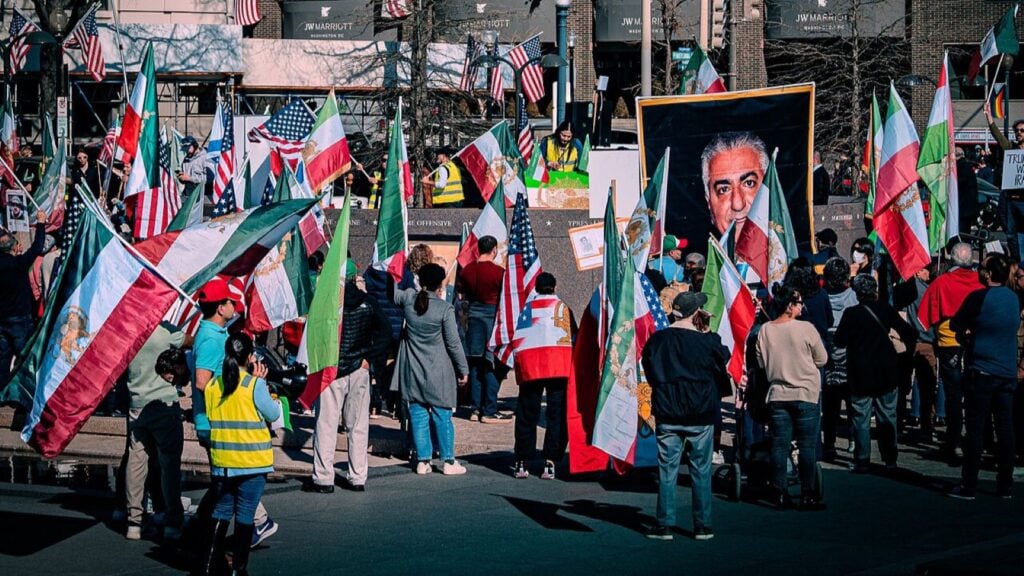
Pahlavi’s speech was a liberation pitch. He described a free Iran as “the single largest untapped economic opportunity of the 21st century” and said 2026 could be “the year of Iran’s rebirth.”
But a liberation pitch only has weight when the people being liberated can hear it, respond to it, and be part of it. Right now, most of them cannot. The internet blackout means ordinary Iranians are locked out of the global conversation about their own country’s future. The speech was delivered to a ballroom of American conservatives, not to the population Pahlavi says he represents. The cheers came from Texas, not from Tehran.
At one point, Pahlavi asked the room: “Can you imagine Iranians going from ‘Death to America’ to ‘God Bless America’?” The crowd began chanting “USA.” It was a powerful moment — inside a convention center with full Wi-Fi and a live stream. In Iran, where connectivity has been at roughly 1% of normal for nearly a month, most people could not have watched it happen, let alone answered the question.
The Split CPAC Wouldn’t Name
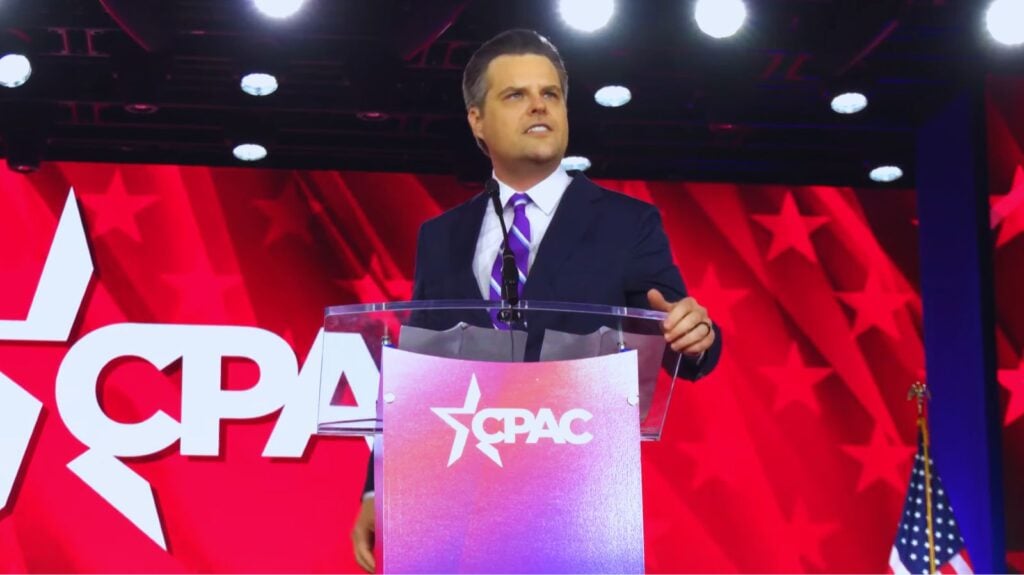
Pahlavi’s speech was the emotional peak of a convention that spent three days projecting unity on a war that has visibly divided the conservative coalition. At the same CPAC, Matt Gaetz warned that escalation could “make our country poorer and less safe.” Steve Bannon and Erik Prince, both war skeptics, were also on the schedule.
But onstage, the messaging was triumphant. Pahlavi received a reception that the Washington Examiner described as the kind Trump himself would have gotten if he had shown up. Trump did not attend.
So the convention presented two realities at once. In one, Iran’s liberation is imminent, and the man to lead it just got a standing ovation. In the other, the war is unpopular with a growing share of the Republican base, and the Iranian people whose future was being designed in a Texas ballroom were living through a weeks-long communications blackout imposed by the regime Pahlavi says is already crumbling.
What the Ovation Couldn’t Deliver
Pahlavi closed with a line that drew loud applause: “Great civilizations outlast even the most vicious occupiers.” He may be right. Iran’s history is long, and the Islamic Republic’s grip has weakened under sustained military pressure and internal unrest.
But a standing ovation at CPAC is not a mandate. It is not a coalition inside Iran. It is applause from a room of Americans for a vision of a country most of them have never visited, delivered by a man who has not set foot there for 45 years, while the people who actually live there could barely get online to hear what he was proposing.
“Make Iran Great Again” got the biggest cheer of the weekend. Whether it reaches the people it was meant for is a question CPAC did not ask and could not answer. The applause filled the room. It did not reach Tehran.