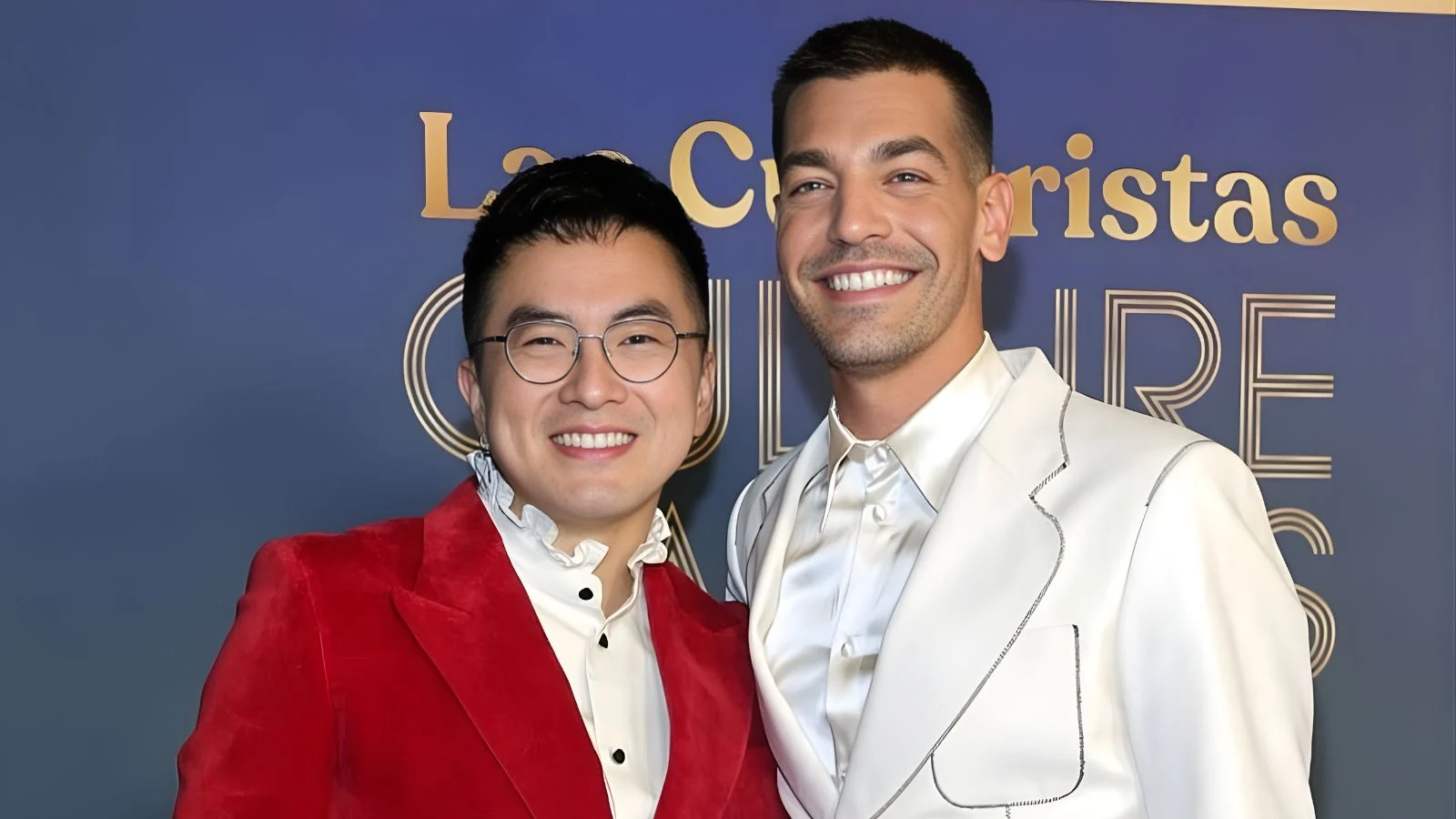
Bowen Yang and Matt Rogers are best known for pop culture commentary and celebrity interviews on their podcast Las Culturistas. Their tone is usually loose, funny, and irreverent. Politics comes up often, but rarely with this level of fallout.
That changed during a recent episode.
What started as a reflective segment about past political choices quickly turned into a viral controversy after the hosts urged listeners not to donate money to Congresswoman Jasmine Crockett. Within hours, social media lit up with anger, disappointment, and accusations of political gatekeeping.
Revisiting 2016 and Old Regrets
The moment unfolded during the podcast’s recurring “I Don’t Think So, Honey” segment. The conversation drifted into politics and hindsight.
Bowen Yang admitted he now regrets how strongly he supported Hillary Clinton in 2016. He framed it as a reflection shaped by time and outcomes. Matt Rogers disagreed.
He said he does not regret supporting Clinton, explaining that at the time, defeating Donald Trump felt urgent. He added that some Bernie Sanders supporters, in his view, engaged in misogynistic behavior that weakened Democratic unity during that election. That disagreement set the stage for what came next.
Why Rogers Brought Up 2028 and Jasmine Crockett
Rogers shifted the conversation forward, speculating about the future of the Democratic Party. He said he does not believe California Governor Gavin Newsom will be the Democratic presidential nominee in 2028.
His reasoning was blunt. Any politician who appears too focused on themselves is, in his words, a nonstarter. Then came the line that set off the backlash.
Rogers told listeners not to donate money to Jasmine Crockett, saying it would be a waste. Bowen Yang immediately co-signed the statement. The comment landed hard.
The Explanation That Followed
Rogers tried to clarify his position.
He said he has nothing personal against Crockett. His argument centered on electability. According to him, Democrats need candidates who are less “defined” in the public mind if they want to win in places like Texas or on a national stage.
To illustrate his point, he pointed to James Talarico, who is running for the same Senate seat. Rogers described Talarico as a rising Democratic figure who can appeal to the middle and has not yet been boxed into a rigid political identity.
He grouped Crockett and Newsom together, arguing that both are already too well-defined to succeed electorally. Bowen Yang did not push back.
Social Media Responds With Anger and Disbelief
The reaction online was swift and unforgiving. Listeners expressed shock that Rogers would tell people how to spend their money politically. Others were stunned that Yang agreed without challenge.
Several critics pointed out that neither Rogers nor Yang lives in Texas, questioning why they felt qualified to discourage donations to a Texas candidate. Others highlighted Crockett’s work during the 2024 election cycle, noting that she traveled extensively to support other Democratic candidates, often paying her own way.
The criticism cut deeper than simple disagreement. Many framed the comments as dismissive of Black women in politics and echoed a familiar pattern where candidates are labeled “unelectable” before voters have a chance to decide.
Accusations of Repeating Old Mistakes
A recurring theme in the backlash was history. Commenters compared the “too defined” argument to past narratives used against Kamala Harris and other Democratic women. Some warned that chasing vague, undefined candidates has backfired before, pointing directly to Trump’s rise.
Others accused Rogers and Yang of benefiting from civil rights and LGBTQ activism while undermining the very political organizing that made their careers possible. The tone online was not measured. It was furious. And deeply personal.
Why This Hit a Nerve
This controversy goes beyond a podcast soundbite.
It touches on who gets to shape political narratives, whose voices carry weight, and how casually influence can be exercised. When public figures tell fans where not to put their money, it crosses from commentary into intervention.
For many listeners, the issue was not disagreement. It was authority. Who gets to decide which candidates deserve support? Who defines “electable”? And who is always deemed too visible, too loud, or too known?
Silence After the Storm
As criticism mounted, Bowen Yang limited comments on his social media accounts. That move only intensified backlash, with critics saying it confirmed how badly the comments had landed.
Neither host has issued a formal apology or clarification beyond what was said on the podcast. The conversation, however, is not fading.
A Bigger Conversation About Power and Politics
What happened on Las Culturistas reflects a broader tension in progressive spaces. Media personalities now wield real political influence, even when they claim they are just talking.
This moment forced listeners to ask hard questions. Are these discussions harmless opinion-sharing? Or are they shaping political outcomes without accountability?
For now, the internet has made its stance clear. People are listening.
And they are pushing back.