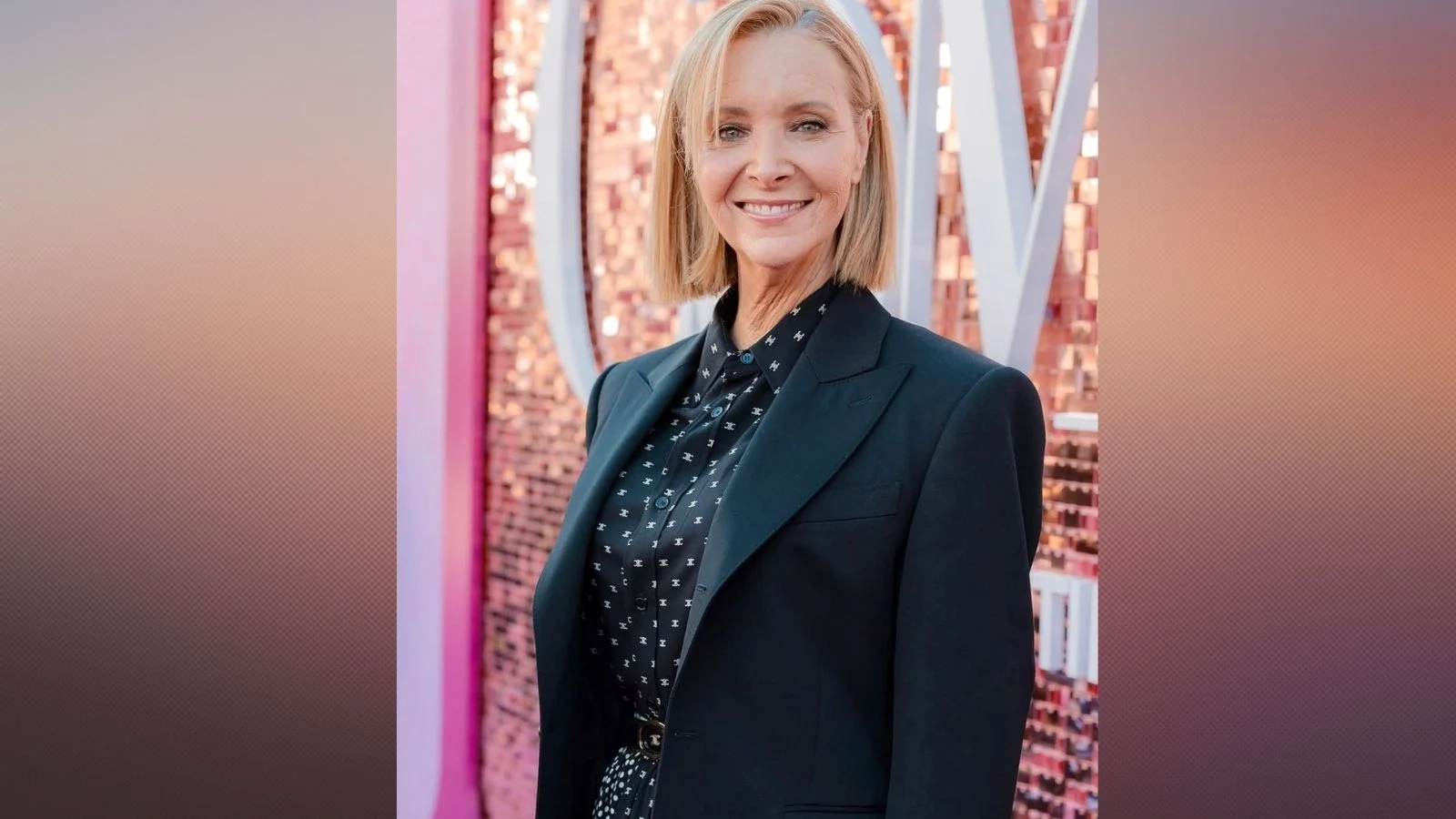
At the height of Friends mania, Lisa Kudrow was everywhere. As Phoebe Buffay, she delivered some of the show’s most unpredictable and memorable moments, turning an eccentric character into a cultural staple. From quirky songs to offbeat wisdom, Phoebe stood out in a cast already bursting with chemistry. To audiences, Kudrow was not just part of the ensemble; she was essential to it.
Yet behind that success, Kudrow’s recent reflections reveal a quieter, less glamorous reality. In an interview with The Independent published April 4, she shared that during her decade on the show, she often felt overlooked by the very industry that celebrated the series.
According to her, parts of her own talent agency did not position her as a breakout star but instead referred to her as the “sixth Friend.” It is a label that sounds almost harmless at first, until you consider what it implies about perceived value and long-term potential.
What makes this especially striking is that Kudrow was not lacking in recognition. She won a Primetime Emmy Award for Outstanding Supporting Actress in a Comedy Series in 1998, a clear acknowledgment of her talent and impact. The show itself was a global phenomenon, dominating ratings and shaping pop culture throughout its run.
On paper, everything pointed to an actress at the top of her game. But Kudrow’s experience suggests that visibility and validation do not always translate into confidence from within the industry. Even at the peak of Friends, she recalls feeling as though no one was particularly invested in what her career might look like once the show ended.
When the Industry Applauds but Does Not Plan
That disconnect between public success and private uncertainty sits at the center of Kudrow’s story. While millions of viewers tuned in each week and critics recognized her work, she describes an environment in which her professional future was not actively considered.
In her interview, Kudrow noted that there were no clear strategies or long-term plans being developed for her beyond the lifespan of Friends. It was as though her path began and ended with the show, with little thought given to what could come after.
This absence of direction is revealing. It suggests that even within a massively successful ensemble, not every performer is viewed through the same lens. Kudrow’s account points to an industry tendency to categorize actors narrowly, often based on the roles that made them famous.
In her case, Phoebe Buffay was so distinctive and singular that it may have overshadowed broader perceptions of her range. Rather than being seen as an actor capable of evolving into new spaces, she was, in some circles, treated as someone fortunate simply to have landed the role.
The phrase “sixth Friend” carries a subtle but significant weight here. It implies hierarchy within what was publicly presented as an equal ensemble. More importantly, it reflects a mindset that has limited expectations.
Kudrow is not describing overt mistreatment or dramatic conflict. Instead, she is pointing to something quieter but equally impactful: a lack of imagination about what she could become. That kind of limitation can shape opportunities, influence decisions, and ultimately affect how a career unfolds.
Redefining Success Beyond the Ensemble
Faced with that reality, Kudrow eventually took a different path. Rather than waiting for the industry to redefine her, she began to do it herself. In the years following Friends, she shifted toward projects that allowed her greater creative control. One notable example is Web Therapy, a series she co-created and produced, which showcased her comedic instincts in a new format. It was a deliberate move away from relying solely on traditional casting structures and toward building her own opportunities.
This transition speaks to a broader theme in Kudrow’s reflections: the importance of self-direction in an industry that often fails to provide it. By stepping into roles behind the camera, she expanded how her talent could be expressed and recognized. It was not just about staying visible; it was about staying relevant on her own terms. In doing so, she challenged the narrow expectations that had once been placed on her.
Now, as she promotes the final season of The Comeback in London, those earlier experiences take on new meaning. The show itself, which follows an actress navigating the unpredictable terrain of television, feels almost meta in this context. Kudrow is not just portraying a character dealing with industry challenges; she is drawing from a career that has included them. The line between performance and perspective blurs, adding depth to both.
The Tone the Headlines Missed
One of the more intriguing aspects of Kudrow’s recent comments is how they have been interpreted. Much of the coverage, particularly in the United States, has framed her remarks as somber, sad or even confessional. Headlines have leaned into a narrative of sadness, emphasizing the idea that she felt ignored or undervalued during a defining period of her career.
But the original interview tells a slightly different story. According to The Independent, Kudrow delivered her comment that “nobody cared” with a laugh. It is a small detail, but an important one. That laugh suggests a level of distance from the experience, an ability to look back with irony rather than frustration. It reframes the narrative from one of quiet suffering to one of reflective humor.
This difference highlights how easily tone can be lost in translation. When interviews are condensed into headlines or short excerpts, nuance often disappears. In Kudrow’s case, the self-aware, slightly amused perspective she brings to her past has, in some instances, been replaced with a more dramatic framing. It is not inaccurate, but it is incomplete. And in a media landscape that thrives on emotional hooks, that distinction matters.
A Career Defined on Her Own Terms
What ultimately emerges from Kudrow’s reflections is not a story of missed opportunity, but one of gradual reclamation. By speaking about her experiences, she is not revisiting them out of regret. She is contextualizing them. She is explaining how a period of limited expectation led to a more self-directed phase of her career.
Over time, she has built a body of work that extends well beyond her role on Friends. Through producing, writing, and selectively choosing projects, she has maintained a presence in an industry that is constantly evolving.
By 2026, Kudrow’s perspective carries the weight of experience. She is no longer navigating the uncertainties of a breakout moment. She is reflecting on them with clarity. The “sixth Friend” label, once a quiet limitation, now reads almost like a footnote in a much larger story. It is something she has moved beyond, not by waiting for perceptions to change, but by actively rewriting them.