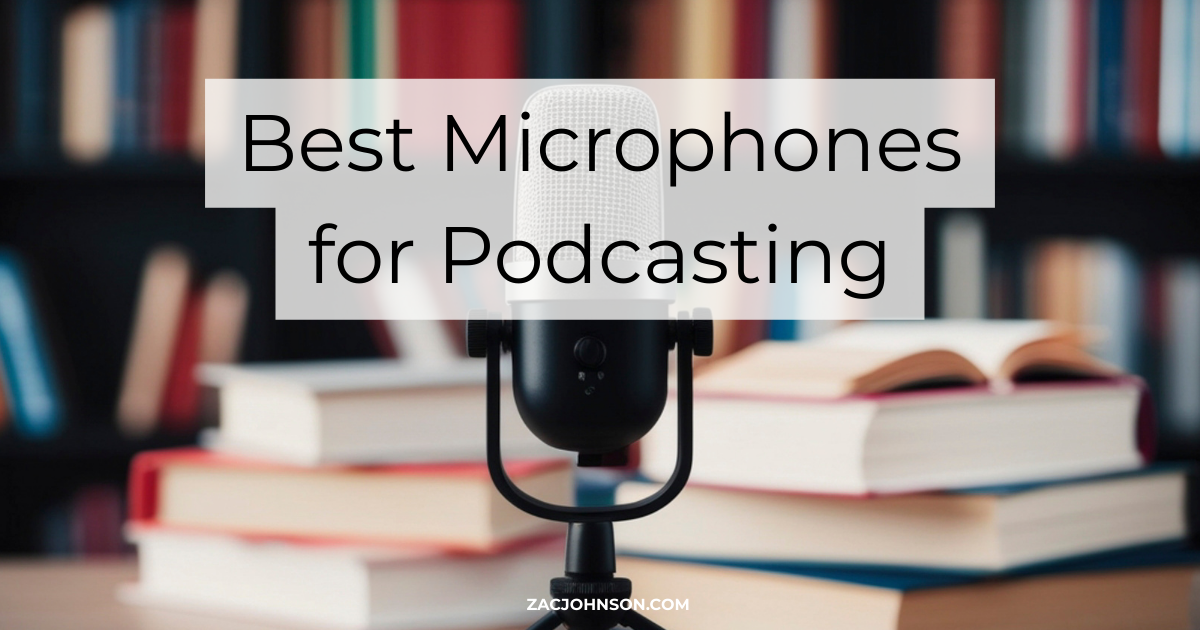
Starting a podcast or upgrading your audio setup? The right microphone makes the difference between amateur recordings and broadcast-quality sound. Here are the best podcast microphones across every budget and skill level.

What to Look For
- Connection type — USB mics plug directly into your computer for simplicity; XLR mics require an audio interface but offer more control and professional-grade sound
- Dynamic vs. condenser — Dynamic mics reject background noise and work well in untreated rooms; condenser mics capture more detail but pick up more ambient sound
- Polar pattern — Cardioid patterns focus on sound from the front while rejecting side and rear noise, ideal for solo podcasting
- Headphone monitoring — A built-in headphone jack lets you hear yourself in real-time without latency
- Build quality — Metal construction withstands daily use; plastic housings save weight but sacrifice durability
Top Picks
Shure MV7+ — Best Overall
The most versatile podcast microphone available, combining USB convenience with XLR flexibility and built-in DSP processing.
The MV7+ builds on Shure’s legendary SM7B heritage while adding features modern podcasters need. Auto Level Mode adjusts gain automatically as you move, and the real-time denoiser removes background noise without post-production work. The LED touch panel provides instant muting and visual level monitoring.
Pros:
- Dual USB-C and XLR connectivity for any setup
- Built-in DSP with reverb, noise reduction, and digital pop filter
- Voice isolation technology rejects room noise effectively
- All-metal construction feels premium and durable
Cons:
- Higher price point than basic USB mics
- Requires MOTIV Mix app for full feature access
Best for: Podcasters who want professional sound with minimal setup complexity.
We earn a commission if you make a purchase, at no additional cost to you.
Shure SM7dB — Best Premium XLR
The broadcast industry standard, now with a built-in preamp that eliminates the need for external gain boosters.
The SM7dB delivers the iconic warm, smooth vocal tone that made the SM7B famous on countless professional broadcasts. The integrated preamp provides up to +28dB of clean gain, solving the original’s notorious gain-hungry reputation. Built-in bass rolloff and presence boost switches let you shape your sound.
Pros:
- Legendary broadcast vocal quality trusted by professionals worldwide
- Built-in preamp eliminates need for Cloudlifter or similar devices
- Excellent electromagnetic shielding blocks computer interference
- Rugged construction built to last decades
Cons:
- Requires XLR interface or mixer
- Premium pricing reflects professional-grade quality
- Heavy weight requires sturdy boom arm
Best for: Serious podcasters investing in a long-term professional setup.
We earn a commission if you make a purchase, at no additional cost to you.
Rode PodMic USB — Best Hybrid Dynamic
A broadcast-style dynamic mic with both USB and XLR outputs, built-in DSP, and rugged all-metal construction.
The PodMic USB combines the noise-rejecting benefits of a dynamic microphone with modern USB convenience. The APHEX digital processing includes the legendary Aural Exciter and Big Bottom effects for broadcast-ready tone. An integrated pop filter and internal shock mount keep recordings clean.
Pros:
- Dual USB-C and XLR connectivity grows with your setup
- Tight cardioid pattern rejects keyboard and mouse noise
- Zero-latency headphone monitoring with dedicated volume control
- Includes external pop filter in the box
Cons:
- Requires boom arm for optimal positioning
- DSP features require Rode Central software
Best for: Podcasters who want dynamic mic benefits with USB simplicity.
We earn a commission if you make a purchase, at no additional cost to you.
Rode NT-USB+ — Best USB Condenser
A studio-quality large-diaphragm condenser that records directly to your computer with professional-grade clarity.
The NT-USB+ brings Rode’s studio microphone expertise to USB format. The Revolution Preamp technology delivers high-gain, low-noise performance that rivals XLR setups. Built-in APHEX processing through Rode Connect software adds compression, EQ, and broadcast effects without additional hardware.
Pros:
- Large-diaphragm condenser captures rich vocal detail
- High-resolution 24-bit/48kHz audio quality
- Includes pop filter and desktop stand
- Works with computers, tablets, and smartphones via USB-C
Cons:
- Condenser pickup requires quieter recording environment
- No on-mic gain control or mute button
Best for: Home studio podcasters in acoustically treated spaces.
Samson Q2U — Best Budget
The entry-level podcasting workhorse with both USB and XLR outputs at an unbeatable price point.
The Q2U has launched countless podcasts with its combination of solid sound quality and complete accessory package. The dynamic capsule handles untreated rooms well, and the dual USB/XLR connectivity means you can upgrade to an interface later without buying a new mic. Everything you need is in the box.
Pros:
- Complete kit includes stand, cables, and windscreen
- Dual USB and XLR outputs for upgrade flexibility
- Headphone jack with zero-latency monitoring
- Excellent value for beginning podcasters
Cons:
- Plastic construction feels less premium
- Sound quality trails higher-end options
Best for: First-time podcasters who want quality gear without overspending.
Audio-Technica ATR2100x-USB — Best Budget Alternative
A versatile handheld dynamic mic with high-resolution USB recording and XLR output for live performance.
The ATR2100x-USB delivers Audio-Technica’s professional sound quality in an affordable USB/XLR package. The 24-bit/192kHz converter captures more detail than most budget mics, and the cardioid pattern keeps focus on your voice. The handheld form factor works equally well on a stand or in your hand for interviews.
Pros:
- High-resolution 24-bit/192kHz digital conversion
- Dual USB-C and XLR connectivity
- Includes tripod stand and both cable types
- Smooth frequency response suits voice recording
Cons:
- Handheld design may require adapter for some stands
- No built-in DSP processing
Best for: Budget-conscious podcasters who also do interviews or live events.
Blue Yeti — Best for Versatility
The iconic USB condenser with four polar patterns for solo recording, interviews, roundtable discussions, and stereo capture.
The Blue Yeti remains a podcasting staple thanks to its pattern switching flexibility. Cardioid mode handles solo episodes, bidirectional works for two-person interviews, omnidirectional captures group discussions, and stereo mode adds ambiance. Blue VO!CE software provides broadcast effects and noise reduction.
Pros:
- Four selectable polar patterns handle any recording situation
- On-mic gain, mute, and headphone controls
- Blue VO!CE software adds professional vocal effects
- Proven reliability with millions of units sold
Cons:
- Condenser pickup is sensitive to room noise
- Heavy desktop stand takes up desk space
- USB-A connection feels dated
Best for: Podcasters who need flexibility for different recording formats.
Rode NT-USB Mini — Best Compact
A surprisingly capable USB condenser in a minimal footprint, perfect for desk setups with limited space.
The NT-USB Mini packs Rode’s studio microphone quality into a compact form factor. The magnetic desktop stand detaches easily for boom arm mounting, and the built-in pop filter handles plosives without external accessories. Rode Connect software unlocks DSP processing when you need it.
Pros:
- Compact design fits small desk setups
- Studio-quality sound from a miniature package
- Magnetic detachable stand for flexible mounting
- Connect up to four units for multi-host recording
Cons:
- No on-mic controls beyond headphone volume
- Requires closer mic positioning than larger condensers
Best for: Podcasters with limited desk space or travel recording needs.
FIFINE K688 — Best Ultra Budget
A surprisingly capable USB/XLR dynamic mic with touch-mute, headphone monitoring, and solid build quality at a fraction of the price.
The K688 punches well above its weight class with features typically found on mics costing twice as much. The touch-sensitive mute button provides silent operation during recordings, and the all-metal construction feels sturdy. The dynamic capsule handles noisy environments without picking up every keyboard click.
Pros:
- Touch-to-mute button operates silently
- Dual USB and XLR connectivity
- Real-time headphone monitoring with volume control
- All-metal construction at a budget price
Cons:
- Lower output requires higher gain settings
- Sound quality trails established brands
- No included accessories beyond windscreen
Best for: Podcasters on tight budgets who still want XLR upgrade potential.
Shure SM7B — Best for Pro Studios
The legendary broadcast microphone that has defined professional vocal recording for decades.
The SM7B remains the gold standard in broadcast studios worldwide. Its flat, wide-range frequency response captures natural-sounding vocals, while electromagnetic shielding eliminates computer monitor interference. Bass rolloff and presence boost switches let you tailor the sound to your voice.
Pros:
- Industry-standard broadcast sound quality
- Exceptional electromagnetic interference rejection
- Built-in air suspension shock isolation
- Virtually indestructible construction
Cons:
- Requires interface with 60dB+ gain or external preamp
- XLR only with no USB option
- Premium investment for serious podcasters only
Best for: Professional podcasters with dedicated studio setups and audio interfaces.
Verdict
For most podcasters, the Shure MV7+ offers the best combination of professional sound quality, built-in processing, and setup flexibility. On a budget, the Samson Q2U delivers everything you need to start podcasting without compromise, with room to grow into an XLR setup later.