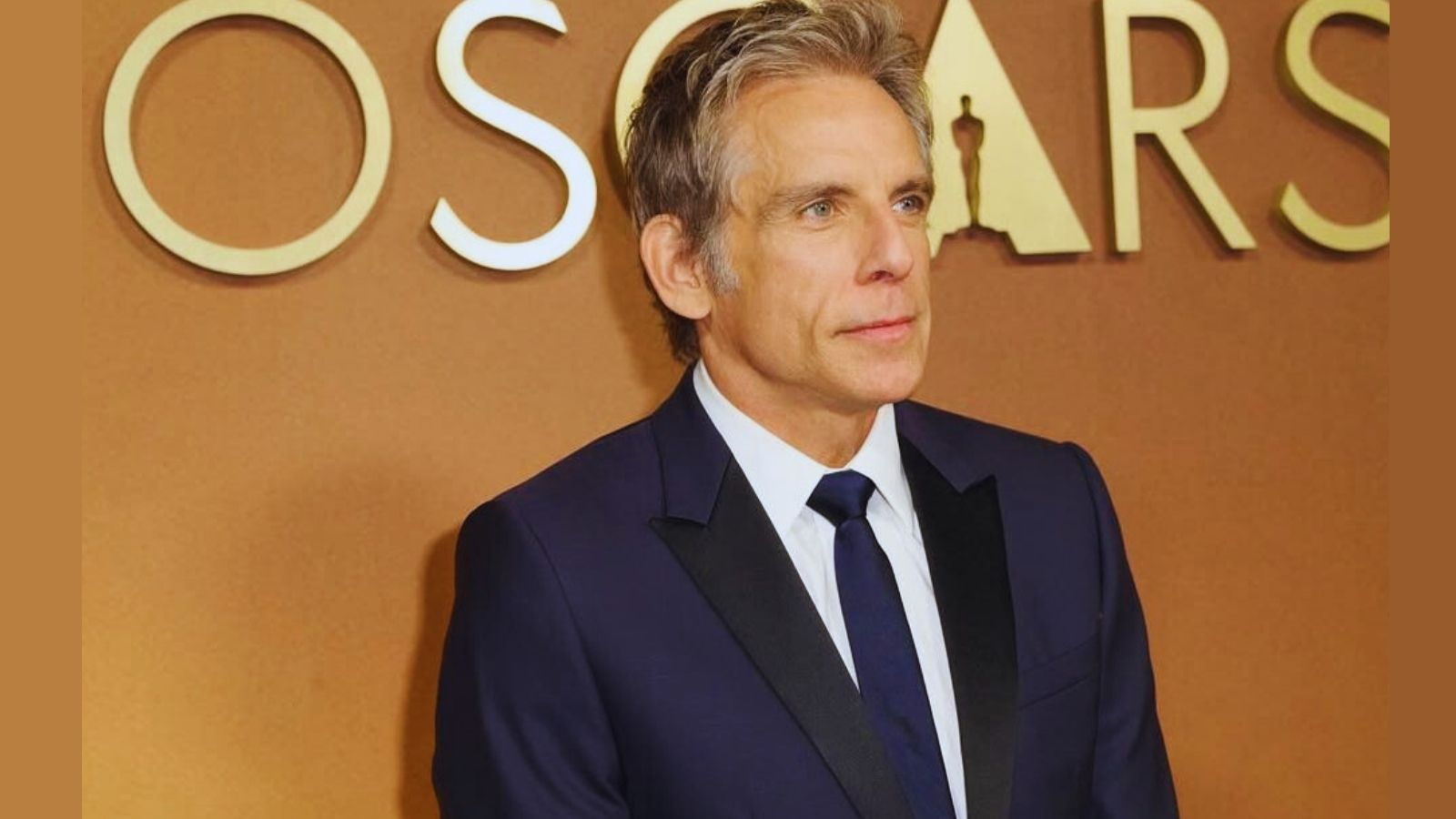
Ben Stiller has officially entered the ring against the White House after an official social media video used a clip from his 2008 film Tropic Thunder to promote American military power. The director and star took to X on Friday, March 6 to publicly demand the removal of the footage from a high-production mashup that has already racked up over 50 million views. This clash marks a clear line in the sand for A-list creators who are increasingly unwilling to see their art repurposed as a recruitment tool or government messaging.
While the administration aimed for a cinematic display of strength, Stiller is making it very clear that Hollywood make-believe has no business being used to sell the reality of war.
The tension started when a 42-second video appeared on the official White House X account featuring unclassified missile strikes spliced with blockbuster movie scenes. You know the vibe: big explosions, fast cuts, and a heavy dose of cinematic adrenaline meant to make real-world combat look like a summer premiere. Among these high-stakes shots was a brief clip of Tom Cruise in his role as Les Grossman dancing in Tropic Thunder.
The post was captioned “JUSTICE THE AMERICAN WAY,” followed by a fire emoji, effectively turning a satire about Hollywood ego into a mascot for the American war machine. Stiller was not amused, and he wasted no time in framing the video as part of the state “propaganda machine” he never signed up to support.
Satire Meets the Propaganda Machine
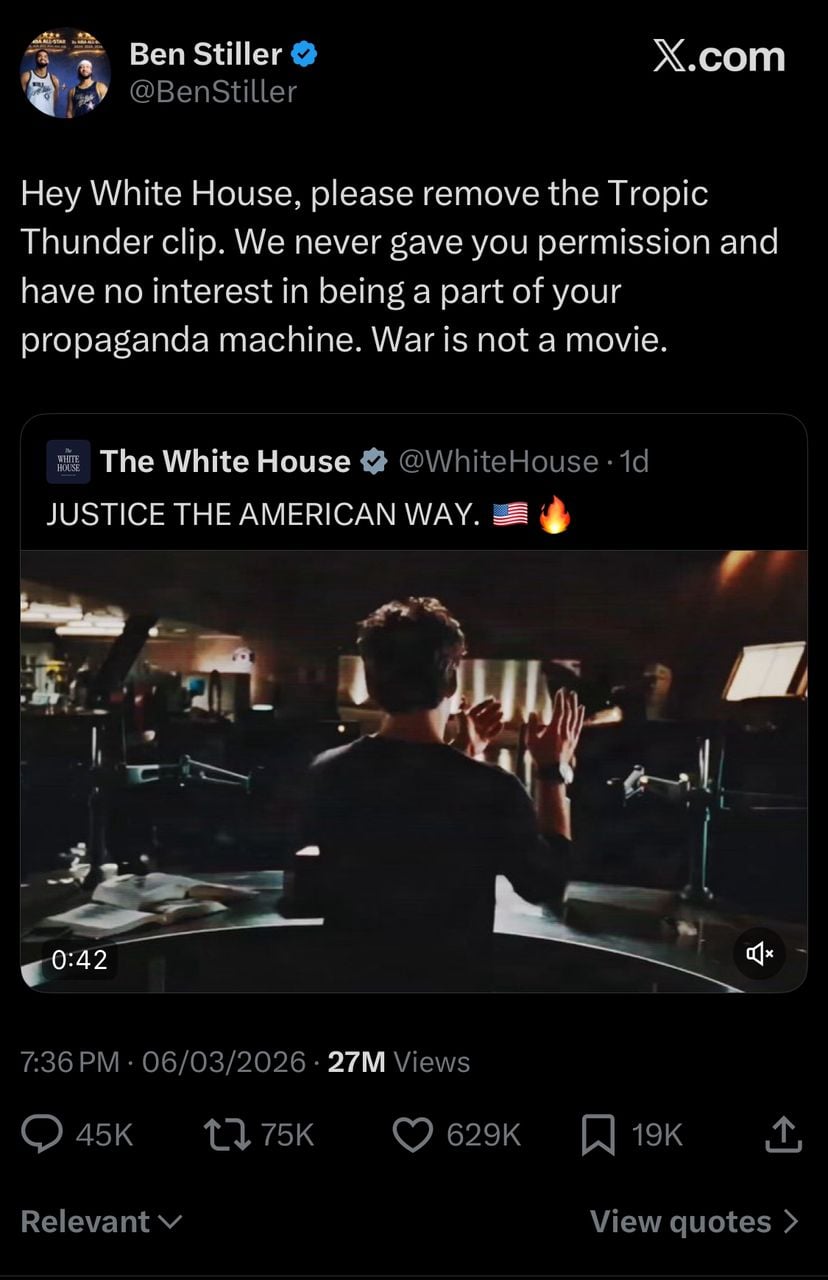
Stiller was very specific in his critique, stating that the White House lacks permission to use Tropic Thunder and that he has “no interest in being part of your propaganda machine”. The director emphasized his point with a final sentence that cut through the stylized editing of the military montage, simply stating that “war is not a movie”.
It is a bold move that highlights a weird irony because the original film was a meta-satire designed to mock the industry’s obsession with glorifying conflict. Now the government is using that very satire to do the exact thing it was mocking, which Stiller clearly views as a bridge too far. Watching a character meant to lampoon industry excess being used to celebrate literal military lethality has created a unique friction between the creator and the state.

Beyond the Grossman clip, the White House video also drew on a massive list of other franchises, including Top Gun, Braveheart, Transformers, and Star Wars: The Last Jedi. Moments from Superman, Iron Man, and even Breaking Bad were woven into the pro-war messaging to create a slick trailer-like experience for the public. While the video presents these heroes as symbols of American justice, the artists behind them are frequently the first to object to such associations.
TMZ reports that the White House has not yet responded to requests for comment regarding the specific legal or licensing basis for using these copyrighted works in an official capacity. It is the ultimate “use now, ask later” strategy, and it is rubbing the creative community the wrong way.
The Legal Gray Area of Government Mashups
The timeline of this fallout moved quickly after the video was posted on Thursday and went viral on social media. Following Stiller’s public rebuke, multiple major outlets, including Variety and People, began documenting a pattern of celebrities who have faced similar issues with official government posts.
This is not just a one-off celebrity flare-up because names like Celine Dion and Bruce Springsteen have famously pushed back when their music or imagery was used without consent. In at least one prior instance reported by People, a video was deleted after significant backlash from the original artist. This suggests that Stiller is joining a broader movement of creators demanding control over how their work is contextualized.

Despite the high view count and the direct demand for removal, there is no confirmed report yet on whether the administration plans to edit the video or take it down entirely. Current reporting suggests that federal agencies often operate under unique legal frameworks that make it difficult for private creators to stop the use of their work in real time.
While the public sees a viral video, the industry sees a potential shift in how government communication strategy leverages fictional bravery to build consensus for real-world actions. This specific incident highlights a power imbalance in which a message can reach millions of people and do its job before a creator even has a chance to say no.
What Happens When the Credits Roll
The focus now shifts to whether the White House will acknowledge the criticism or if the video will stay live as an official record of the administration’s messaging. Stiller is joined by a growing chorus of filmmakers and musicians who view these unauthorized digital mashups as a breach of their artistic and moral boundaries. If the footage remains up, it could signal a new era in which pop culture is viewed by the state as a public resource for domestic persuasion, regardless of the creator’s intent.

Industry experts are watching closely to see if the studio or other rights holders involved in the various movies mentioned will take their own formal action. It is a classic Hollywood drama where the prize is access to our most sensitive cultural symbols.
The standoff between a Hollywood heavyweight and the highest office in the land suggests that the days of the government quietly using movie magic for messaging is just beginning. Stiller’s refusal to let a comedy character stand in for military might reminds us that the context of art matters just as much as the images themselves.
As digital platforms allow for the instant blurring of fiction and reality, the fight for creative control is moving from the courtroom to the public feed. How the government navigates these intellectual property boundaries will likely define the aesthetic of state communication for the foreseeable future.