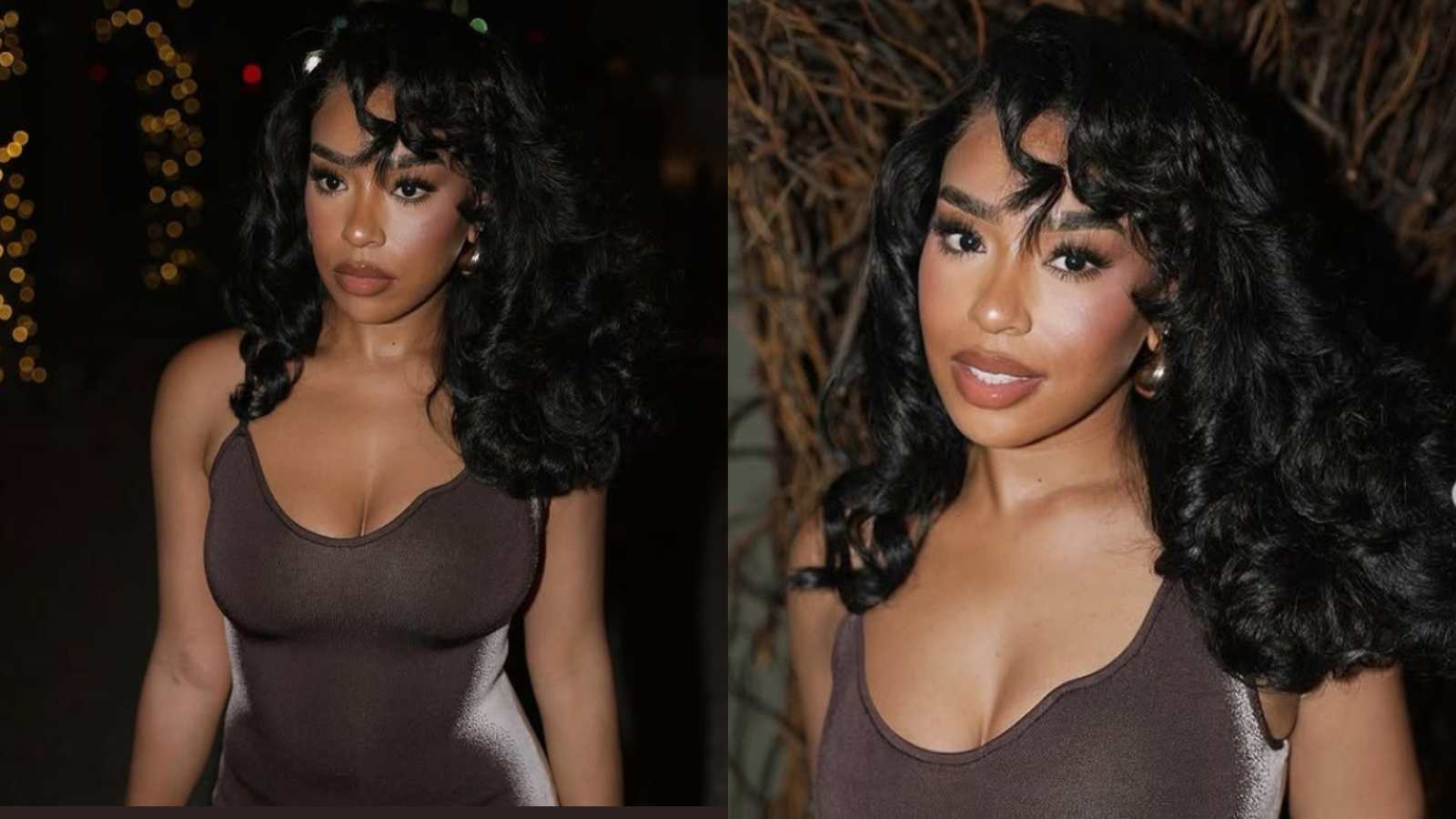
There are celebrity “fall from grace” stories, and then there’s what B. Simone openly described in a recent interview: a financial freefall that would make even the most seasoned entrepreneur do a double-take.
In a candid sit-down with the Earn Your Leisure podcast, the comedian, actress, and social media personality revealed that after facing social media backlash, her income went from what she called “a $1 million month” to just $10,000 the very next month.
“Why?” she asked rhetorically, “Because I was canceled on social media.” That blunt confession underlined a chilling truth about the modern creator economy: followers don’t equal guaranteed income.
But there’s far more to this story than a big number and a dramatic drop. It touches on brand versatility, the context behind the backlash, what she was actually earning, and how personal brand volatility can rewrite someone’s financial life in real time.
Who Is B. Simone? More Than Funny Posts

Born Braelyn Simone Greenfield on April 5, 1990, in Dallas, Texas, B. Simone initially gained attention for comedy, music, and online personality work. Many viewers first recognized her from MTV’s Wild ’n Out, the sketch comedy and improv battle rap show where she appeared across multiple seasons starting in 2017.
But her hustle didn’t stop at comedy. She released music, built a strong Instagram presence with millions of followers, and launched entrepreneurial ventures, including her own “B. Simone Beauty” vegan cosmetics line, which generated significant buzz (and reportedly sold six-figure amounts during Black Friday promotions).
In 2020, she partnered with Footaction by Foot Locker to launch her own capsule clothing line, showcasing that her brand had commercial currency beyond performance art. In other words, Simone wasn’t just a viral personality. She was a multi-platform creator and entrepreneur who diversified her income streams long before the blowup.
So Where Did the $1 Million Come From? Digging Under the Hood

When Simone says she once had a $1 million month, most people assume it came from fast money from viral posts or social media fame alone.
The real picture is more nuanced. Her revenue likely came from a mix of brand deals, merchandise, appearances, collaborations, content monetization, and product lines.
Early in her career, she monetized music, tours, retail partnerships, digital content, and speaking engagements, and she leveraged her authenticity to drive multiple revenue streams at once. That approach isn’t uncommon among newer influencers, but few have blended comedy, fashion partnerships, commerce, and personality as cohesively as she did.
Simone often talked publicly about “manifesting” money, prosperity,, and opportunity, and her real-world earnings sometimes reflected that. But she was not solely reliant on social media ad revenue or YouTube checks, which notoriously fluctuate wildly. Instead, she monetized brand collaborations, product partnerships, exclusive digital experiences, and podcast revenue, all of which are far more volatile than they look.
That means income differences of $1 million per month could have been driven by one or two big deals or major drops, rather than by stable, recurring revenue.
What Backlash Triggered the Drop? It Wasn’t One Thing

A major piece of this puzzle isn’t simply “she was canceled.” It’s that Simone has faced multiple public controversies over the years, which have slowly eroded goodwill among a portion of the online audience. For example:
Charging for Instagram “Close Friends” content. Simone faced heavy criticism for offering premium access to her personal life for $9.99, a move some fans likened to monetizing intimacy in an uncomfortable way.
Accusations of monetizing grief. In 2023, Simone drew intense backlash for offering grief-processing access in her paid Instagram content shortly after losing a close friend, prompting comments that she was exploiting a painful moment for profit.
Past plagiarism allegations. In 2020, pages from her self-help book were found to mirror others’ work, prompting Simone to pause sales and apologize as a legal matter.
B. Simone was almost brought to tears as she revealed she’s so broke now that she has to shop at H&M instead of Bloomingdale’s. 👀
pic.twitter.com/2W7Yntx1L3— My Mixtapez (@mymixtapez) June 22, 2025
Emotional comments about shopping downgrades. In 2025, she drew flak for discussing shifting from Bloomingdale’s to H&M due to budget constraints, a point many deemed out of touch.
None of these alone would necessarily remove income, but together they created a pattern where parts of her audience and some brand partners began to question her image, especially when combined with how rapidly influencer loyalty can shift online.
In short, Simone’s blocked income month wasn’t about a single cancelation event. It was the cumulative impact of controversies and audience fatigue that made some opportunities, sponsorships, collaborations, product drops, temporarily harder to secure.
Why Followers Don’t Equal Earnings

One of the most enlightening parts of Simone’s candid interview was this line:
“Followers don’t equate to money.”
And that gets to the heart of influencer economics. A huge follower count doesn’t automatically translate into revenue unless followers engage and convert into paying customers or sponsors back deals with you.
Brands sponsor influencers based on consistent engagement, reliable audience perception, and positive association, all of which can quickly decline when controversy hits. Okay, but $1 million to $10,000?
That is a fast and dramatic change, and it underscores how unpredictable creator income can be. Some months may include major brand deals or product launches that bring in huge checks. Other months may feature gaps in collaborations.
Social backlash, especially when public opinion shifts against a creator, can make companies hesitant to attach their name, meaning revenue disappears even if the audience remains sizable.
Was This “Cancel Culture” or the Price of Influence?
This story touches on a cultural argument we see across media: Should online criticism affect real income?

Some fans will call Simone’s income drop a classic case of cancel culture at work, that vocal corners of the internet turned against her, making brands nervous and reducing opportunities.
But another perspective is worth considering: Influencer work is fundamentally a brand reputation game.
In business, brand perception affects revenue. For decades, companies have pulled ads from celebrities over controversies not because of “cancel culture,” but because advertisers believe negative association equals lower returns. This isn’t new; it’s just real marketing logic in the influencer age.
Simone discovered the hard way that brand equity can be fragile. A viral tweet, a criticized monetization tactic, or an emotional moment taken out of context can ripple into fewer paid deals.
From this angle, it isn’t just “internet backlash.” It’s the market responding to shifting sentiment.
Simone’s transparency about the drop is rare, because most influencers never publicly disclose how volatile income actually is. Her revelation gives a behind-the-scenes look at how rapidly earnings can swing.
Personal Growth and Lessons Learned

What makes Simone’s account unusual, and almost reassuring, is how she framed the experience.
She didn’t sound defeated. She didn’t blame “haters.” Instead, she pointed out how inconsistent consumer loyalty can be, and how quickly the narrative can flip.
That’s a less often told truth in influencer culture: Millions of followers don’t shield creators from financial risk. Many influencers live month to month, relying on deals and deals alone.
Simone also leaned into the lessons of entrepreneurship: ups, downs, volatility and resilience. She laughed at the shock, but also used the story as a teachable moment, a rare twist of self-awareness in an industry often derided for superficiality.
Final Takeaway

B. Simone’s story isn’t just about a wild income drop. It’s a vivid look at how personal brand, public perception, controversy, and commerce all interact in the influencer era.
She didn’t just lose money because people trolled her online. She saw how audience sentiment affects brand trust and revenue opportunities, and she was honest enough to put the numbers on record, something most creators never do.
For anyone interested in the business of influence, this isn’t just a sob story. It’s a lesson in brand resilience, reputation risk, and the unpredictable economics of social media fame.
And if one thing’s clear, it’s this: being famous online doesn’t guarantee stability, no matter how many followers you have.