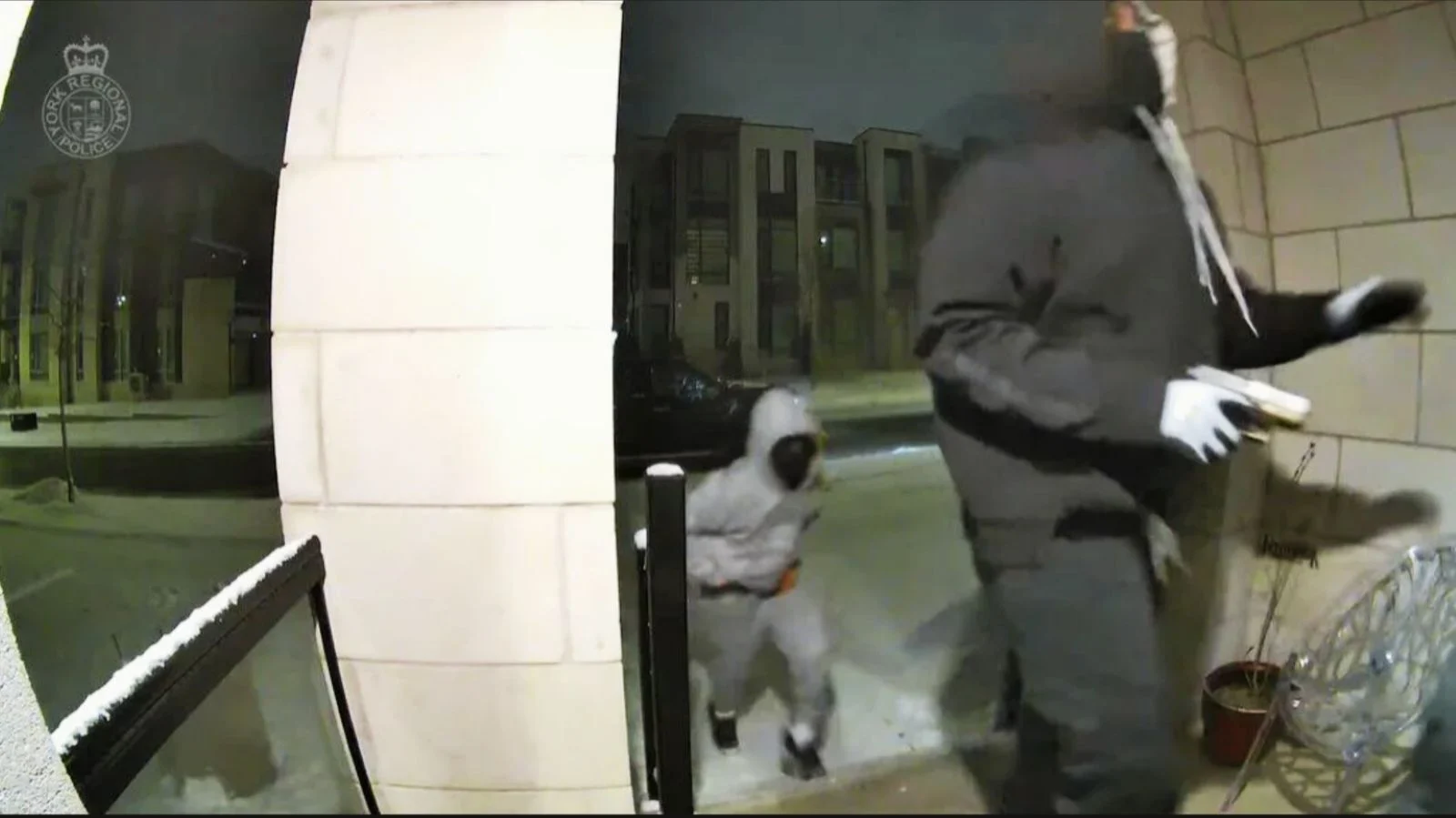
Early Tuesday morning, multiple masked suspects — at least one armed — forced their way into a home in Vaughan, Ontario, just north of Toronto. A middle-aged man and an elderly woman were inside. The homeowner, using a legally owned firearm, shot one of the intruders. The suspects fled to a waiting pickup truck. One later turned up at a Toronto-area hospital with a gunshot wound.
York Regional Police released surveillance video of the break-in. Then they did something that, by Canadian standards, qualified as breaking news: they didn’t charge the homeowner.
Acting police chief Cecile Hammond said the immediate threat to life was paramount in situations involving armed intruders, before also warning that homeowners can still be held liable depending on the circumstances. Even when Canada gets it right, it still reaches for the asterisk.
If you’re an American reading that, you might be wondering why any of this is newsworthy. Armed intruders kicked in a door. The homeowner had a legal gun. He defended his home. In much of the United States, that is closer to routine than scandal. In Canada, it still feels like a landmark.
What Used To Happen
In January 2019, Cameron Gardiner was watching a movie in his Collingwood, Ontario, townhouse when three masked men kicked in his door. One had a sawed-off shotgun. They zip-tied the couple and ransacked the house. Gardiner’s son saw it on a surveillance camera, raced over, and intervened. During the struggle, Gardiner grabbed the intruders’ own shotgun. Two of them were killed.
Gardiner was then charged with second-degree murder. He spent six months in jail awaiting bail. The Crown did not withdraw the case until 2021. In a saner self-defence culture, that sequence would read like satire. In Ontario, it became a precedent in the public imagination.

Last summer, it happened again. Jeremy David McDonald, 44, in Lindsay, Ontario, was charged with aggravated assault and assault with a weapon after using a knife against a home intruder who allegedly carried a crossbow and was already wanted on unrelated offences. Premier Doug Ford said “something is broken.” The Crown dropped the charges in February 2026. By then, McDonald had already spent months in the legal system for defending himself in his own apartment.
Leave Your Keys Out for the Criminals
If you want to understand the mentality the Vaughan homeowner was operating against, consider what Toronto police were telling residents in 2024. In March, Const. Marco Ricciardi told homeowners at a community meeting to leave their car key fobs by the front door so armed thieves would not have a reason to come further inside. “They’re breaking into your home to steal your car,” he said. “They don’t want anything else.”

Premier Ford’s response: “We might as well leave cookies and milk at the front door along with a note. ‘Dear Mr. Criminal, the keys are in the mailbox.’”
The advice was mocked internationally. But Toronto police backed the officer’s remarks in a statement while also saying there were better ways to prevent auto-theft-motivated home invasions. The force said home invasions and break-ins linked to auto theft had risen 400 percent in 2023. The message homeowners heard was simple: make the encounter easier for the robber.
Meanwhile, South of the Border
In much of the U.S., homeowners facing an armed intruder get broader legal protection inside the home. Castle Doctrine rules vary by state, but in most states, there is no duty to retreat from your own residence.
Canada has no formal Castle Doctrine statute. Section 34 of the Criminal Code allows force in self-defence, but only where the person believes on reasonable grounds that force is being used or threatened, acts for a defensive purpose, and the response is “reasonable in the circumstances.” That last phrase is where everything gets litigated after the fact.
Is Canada Finally Changing?
Maybe. On March 12, Conservative MP Sandra Cobena introduced Bill C-270, the Stand on Guard Act, to change Section 34 so that force against an illegal home intruder is presumed justified. It is the closest thing Canada has seen to a Castle Doctrine-style push in years.
The legal establishment is not convinced it is necessary. McGill law professor Noah Weisbord called Canada’s current self-defence law “extremely permissive” and argued the burden is already on the Crown to disprove self-defence.
Tell that to Cameron Gardiner, who spent six months in jail. Or Jeremy McDonald, who spent months in court. The law on paper and the law in practice are two different things.
According to Toronto police data cited by Global News, residential robberies in Toronto rose 49.7 percent in 2024 compared with the year before — the sharpest jump in recent years.
The Vaughan homeowner did what many Americans take for granted and what some Canadians have learned can still carry enormous risk: he treated his home as if it were his. The fact that it made national news tells you everything about where Canada has been. Whether it signals where Canada is going is a much harder question.