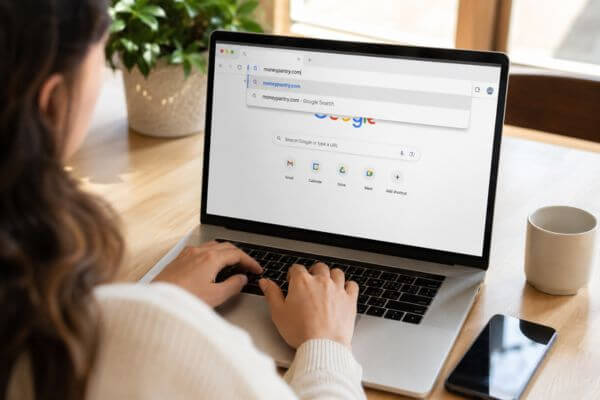
Did you know you can make money just by searching the web?
Microsoft Rewards pays regular Bing users about $2 to $4 a month just for searching the web.
And it’s not the only company doing it.
I tested these search reward programs myself to see how they work, how much you can realistically earn, and which ones are actually worth your time.
In this post, I’ll show you legit sites and apps that pay you to search the web.
You’ll also learn how the Microsoft Rewards system works, how much you can expect to earn, and whether Google pays you to search.
And if you’re looking for something that pays more than pocket money, I’ll also show you a legitimate search-related job that pays $21 to $35 an hour.
So Why Do Companies Pay You to Search?
Search engines and market research firms don’t hand out rewards out of generosity.
They pay because your search behavior (data) is worth money.
Every time you type a query into a search box, you show companies what you want to buy, what products you like, and how you use the web.
Companies use your search data in three main ways:
- Better Ad Targeting: Brands want to know what people search for right before buying something. This helps them show you ads you’re more likely to click.
- Training AI & Search Engines: Tech companies use real human searches to train their algorithms and fix inaccurate AI answers.
- Market Research Reports: Companies like Nielsen collect anonymous browsing trends and sell high-level reports to major brands.
So basically getting paid to search is a win-win. You earn rewards, and companies get the data they need to grow.
8 Best Sites That Pay You to Search the Web
These are the sites and apps currently paying people to search the web or share their browsing data.
All 8 are free to join.
| Site | How You Earn | Pays Via | Typical Earnings |
|---|---|---|---|
| Microsoft Rewards | Searching on Bing | Gift cards, Xbox credit | $2 to $4 a month |
| Swagbucks | Using its search engine | PayPal, gift cards | Small random wins |
| InboxDollars | Qualified searches | Cash, gift cards | Cents per week |
| Qmee | Clicking sponsored results | PayPal, gift cards | $0.05 to $0.15 per click |
| Nielsen Panel | Sharing browsing data | PayPal, gift cards | Up to $60 a year |
| SavvyConnect | Sharing browsing data | Monthly cash rewards | $9 monthly (for 3 devices) |
| MobileXpression | Sharing mobile data | Gift cards | About $5 a month |
| Brave Browser | Viewing private ads | BAT cryptocurrency | A few dollars a month |
As you can see, the first four pay you for the act of searching.
The next three pay you for letting them track your browsing in the background.
Let’s start with the biggest one.
Microsoft Rewards
If you want the most reliable way to get paid to search the web, Microsoft Rewards is hard to beat.
Unlike many reward sites, this program comes directly from Microsoft and rewards you for using its Bing search engine.
All you have to do is sign in with your Microsoft account, search on Bing, and collect points.
- How you earn: Conduct Bing searches while signed into your Microsoft account, complete daily sets, and maintain streaks.
- How you get paid: Digital gift cards (Amazon, Target, Walmart), Xbox game codes, Microsoft Store credits, and sweepstakes entries.
- Typical earnings: About $2 to $4 a month from searches and daily activities
By the way, you can earn more than $2 to $4 a month from Microsoft Rewards using Xbox gaming and Game Pass quests. Search points alone cap out at about $2 a month under the 2026 limits.
If you’ve ever seen a Bing message that says “Search more. Earn more”, that’s Microsoft Rewards reminding you that your searches can earn points.
Microsoft Rewards Changed in 2026
If you used Microsoft Rewards before, you may notice that the program looks different.
Microsoft replaced the old Level 1 and Level 2 system with three new membership tiers:
- Member: Up to 15 points per day from searches
- Silver: Up to 30 points per day from searches
- Gold: Up to 60 points per day from searches
Note: Mobile and PC search pools are now merged into a single daily cap, meaning your searches across both devices count toward the same threshold.
Your tier affects how many Bing search points you can earn each day. Higher tiers come with higher search limits and additional monthly bonuses.
Warning: Rapid-fire random searches will trigger Microsoft’s automated fraud filters. If the system detects rapid queries, it will temporarily lock your points under an “Unusual Search Activity” warning or apply a cooldown timer (limiting you to a few valid searches every 15 minutes). Spread your searches naturally throughout the day to keep your account in good standing.

When I tested Microsoft Rewards, I used Bing as my primary search engine for several days. The points showed up as expected after normal searches, although I also confirmed that searching too quickly can trigger Microsoft’s cooldown system. The dashboard screenshot above is from my own account.
Microsoft also added new monthly bonuses, including the Bing STAR Bonus. As a Gold Member you can earn an extra 2,100 points if you maintain active daily streaks.
To reach Gold status, you have to earn at least 750 points and complete 2 “Level-Up Activities” in a calendar month (such as searching on Bing for 7 consecutive days or using Bing as your primary search engine).
Pro tip: Set Bing as your default search engine (has to last for at least 14 days) to earn extra monthly default search bonus (up to 210+ points).
Swagbucks
Swagbucks has been around since 2008 and is one of the better-known rewards sites online.
I have been a member of Swagbucks since 2009 or so. During this time, I have earned SBs using all kinds of methods.
One of the ways you can earn points (called SB) is by searching the web using Swagbucks’ native search tool (powered by Yahoo).
However, unlike some search reward programs, you don’t earn a guaranteed amount for every search.
- How you earn: Use the Swagbucks search engine or set it as your browser’s default search engine
- How you get paid: PayPal cash, prepaid Visa cards, and gift cards (Amazon, Target, Walmart).
- Typical earnings: Occasional random SB search wins (4 to 30 SB per hit), plus a 20 SB bonus on your first search
So Does Swagbucks Really Pay You to Search?
Yes, but don’t expect to earn money from every search you make.
Unlike fixed-rate platforms, Swagbucks awards search points randomly. So don’t expect to earn money from every search you make.
Some longtime members say search wins are more likely to trigger after completing another activity on the site first.
A few also say the wins only seem to trigger after you’ve done another activity on the site first.
My personal experience: I also tested Swagbucks Search. Just like longtime members report, I didn’t earn SB on every search. Search rewards appeared randomly, which matches how Swagbucks says the feature works.
To keep search earnings steady, keep these rules in mind:
- The 3-Win Daily Limit: Swagbucks caps members at a maximum of 3 search wins per calendar day. Once you hit your third search award, you cannot earn more search points until the daily reset.
- Target “Collector’s Bills”: During special events and holidays, Swagbucks issues themed “Collector’s Bills” via search wins. Collecting the entire set before the event ends unlocks a bonus payout (usually 20 to 100 extra SB).
- Don’t Spam Queries: The algorithm flags rapid, repeated searches. Search naturally as you browse, or combine search with other activities (surveys, cashback shopping, or game offers) to trigger wins consistently.
Pro tip: If you want to cash out faster, redeem your points for gift cards. Some e-gift cards start as low as $1 to $3 (100–300 SB), while PayPal cash redemptions require a $5 minimum balance (500 SB).
You can read my full Swagbucks review for tips on earning more across the whole platform.
InboxDollars
InboxDollars has a feature called Cash Search that lets you earn rewards for completing qualified searches through your InboxDollars account.
Unlike some other search reward programs, you don’t get paid for every search.
Instead, your searches help you earn progress toward Scratch & Win cards and other small rewards.
- How you earn: “Qualified searches” advance a progress bar that unlocks Scratch & Win digital cards and weekly loyalty bonuses.
- How you get paid: PayPal cash, prepaid Visa cards, and gift cards (Amazon, Target, Walmart).
- Typical earnings: Scratch card prizes ($0.01 to $5.00+) plus a $0.05 weekly search loyalty reward.
Your first payout requires a $15 minimum balance ($10 for future redemptions). New members receive an instant $5 sign-up bonus upon account confirmation.
My personal experience: When I tested Cash Search, it became obvious that not every search counts. I intentionally tried a mix of normal searches, website names, and repeated searches to better understand what qualified. The behavior matched InboxDollars’ own rules for qualified searches.
How the Search Loyalty Bonus Works
If you complete qualified searches on 4 or more days within a single calendar week, InboxDollars automatically adds a $0.05 Search Loyalty Reward bonus to your account ledger on Sunday.
Why Your InboxDollars Searches May Not Count
One of the most common complaints I see about InboxDollars is that searches don’t seem to count.
The reason is that InboxDollars only counts certain types of searches as “qualified searches.” These rules are easy to miss.
These searches typically do not earn credit:
- Image searches or video searches
- Typing a website address or a URL ending in .com, .org, or .net
- Searching for well-known websites like Facebook or Gmail
- Stock quotes or dictionary-style searches
- Random letters, nonsense searches, or repeating the same search over and over
Warning: If InboxDollars detects an ad blocker, it pauses your search earnings for 30 seconds the first time. And if you keep the ad blocker on, the penalty grows in steps up to 30 minutes. So before using Cash Search, turn off any ad blockers you have installed, including browser-based blockers or security software that blocks ads automatically.
Qmee
Qmee takes a different approach to getting paid to search online. You don’t have to use a new search engine or change your normal routine.
Instead, Qmee adds sponsored results to searches you already make on Google, Bing, Amazon, and eBay. When you click on one of these paid results, you earn a small reward.
- How you earn: Install the browser extension and click sponsored ad results when they pop up during everyday web searches.
- How you get paid: PayPal, Venmo, or digital gift cards with no minimum cashout requirement.
- Typical earnings: $0.05 to $0.15 per valid click (results appear sporadically).
You can also earn more by completing surveys and other available tasks inside the platform.
While testing Qmee, I noticed sponsored search results only appeared occasionally. Shopping-related searches triggered them much more often than everyday informational searches, which lines up with how the extension is designed to work.
Qmee works with popular browsers like Chrome, Firefox, and Edge.
Pro tip: Answering one daily pop-quiz question or survey builds a 5-day streak that boosts your earnings by 10%.
Common Issues
A common mistake new users make is installing Qmee and assuming every search will earn money.
That’s not how it works.
Qmee only shows paid results when advertisers are paying for certain searches.
You are most likely to see them on shopping-related searches, such as “running shoes,” “best laptops,” or “internet deals.”
Regular searches about news, recipes, homework, or random questions usually won’t show paid results, and that’s completely normal.
By the way, don’t spam Searches. Qmee’s algorithm detects unnatural search behavior. So quickly typing random commercial terms to force ad pop-ups will cause the platform to temporarily ban your account from seeing paid links.
Note on Chrome Extensions: Google stopped supporting older browser extension formats (Manifest V2). You can safely ignore old online posts saying Qmee doesn’t work on Chrome. The Qmee extension in the Chrome Web Store now uses Manifest V3, so it works smoothly on Chrome, Edge, and Firefox.
Nielsen Mobile Panel
If you’ve ever watched TV ratings, you’ve probably heard of Nielsen.
The same company also runs a mobile research panel that pays you for sharing information about how you use the internet.
The Nielsen Computer & Mobile Panel works by having you install an app that tracks your internet usage anonymously.
Once it’s set up, you can browse normally while earning rewards in the background.
- How you earn: Download the software or app and use your devices as you normally would.
- How you get paid: PayPal cash, bank transfers, and gift cards (Amazon, Walmart, Target).
- Typical earnings: Up to $60 per year in reward points ($30/year for computer, $30/year for mobile)
This is the most passive option on this list, because after setup there is literally nothing else to do.
By the way, if you’re privacy-conscious like me, the good thing is that Nielsen aggregates data anonymously. The software monitors visited web addresses and app uptime, but it explicitly filters out your user IDs, passwords, financial data, and specific message content.
Nielsen Rewards and Extra Ways to Earn
Besides the regular rewards, Nielsen gives you a few extra ways to earn just for staying active as a panel member:
- $5 PC Sign-Up Bonus: Install the Nielsen desktop software on your PC or Mac and keep it active for 30 days. Once you complete that, you’ll automatically get a $5 bonus.
- Monthly $10,000 Sweepstakes: As an active computer panelist, you’ll automatically be entered into Nielsen’s monthly cash drawings. You’ll have a chance to win prizes, including a $500 top prize and hundreds of other winners each month.
- Instant-Win Tokens: Active members also get tokens to play scratch-off style mini-games inside the Nielsen dashboard. These games can earn you extra reward points instantly.
Warning: On mobile devices, the background tracking service operates similarly to a local VPN. On older phones, this can occasionally cause slight site loading delays or modest battery drain.
SavvyConnect
SavvyConnect is a data-sharing program from Luth Research, the company behind the survey site SurveySavvy.
Instead of answering surveys, you earn money by sharing information about your internet usage while you browse normally.
After you install the SavvyConnect app or browser extension, it runs in the background and collects research data about your online activity.
- How you earn: Install the app or extension, keep it active, and browse the web as you normally do.
- How you get paid: Paper check by mail (minimum $1 cashout threshold).
- Typical earnings: $3 per device type per month (up to $9/month total across 3 device types).
It works on Chrome, Edge, and Firefox, plus Android and iOS devices.
How SavvyConnect Payments Work
This is where many people get confused. SavvyConnect says you can earn $3 per device type per month.
The important word is “type.”
A computer, a phone, and a tablet are three different device types, so installing on all three earns you up to $9 a month.
But installing on two laptops only counts as one device type, so the second laptop earns you nothing.
I’ve seen plenty of members complain that their second computer never paid, and this rule is the reason why.
So don’t waste time installing SavvyConnect on multiple devices of the same type. Cover one computer, one phone, and one tablet, and you’ve maxed it out.
Also, some members report slow reward deliveries and unanswered support emails in recent reviews.
So expect payments to take time, and keep records of what you’re owed.
Important Participation Rules & Fine Print:
- The 7-Day Usage Rule: A device must record at least 7 days of active internet usage per calendar month, and the app must remain installed until at least the 10th of the following month to qualify for payment.
- Private Browsing Pauses Tracking: If you switch to Incognito or Private Browsing mode, SavvyConnect automatically pauses data transmission until you return to normal browsing.
- Check Payout Delays: Earnings are paid via physical checks mailed to your address. While SavvyConnect members receive “priority payment” processing on their accounts, checks can still take 4 to 6 weeks to arrive.
MobileXpression
MobileXpression is a background market research tool operated by Comscore (VoiceFive, Inc.).
Instead of paying you per search query, it runs in the background of your phone and tracks your general web browsing and app usage habits to generate aggregate consumer trends.
- How you earn: Install the app, grant tracking permissions, and keep it running while using your phone normally.
- How you get paid: Digital gift cards (Amazon, Target, Walmart) and PayPal.
- Typical earnings: Around $5 a month in credits, plus a guaranteed $5 bonus after your first week.
The good thing about MobileXpression is that it’s completely passive. You don’t have to complete surveys, watch videos, or click ads.
You install the app, keep it running, and collect rewards over time.
Warning: To collect data, MobileXpression requires you to enable a local VPN profile and device Accessibility Services. This can sometimes slow down connection speeds on older devices and drain the battery faster. So keep that in mind.
I tested the app myself to see how intrusive it felt. On my device I didn’t notice any major slowdown, but because it installs a local VPN profile, I can understand why some users report slightly higher battery use on older phones.
MobileXpression Account Problems and Reward Issues
I have to warn you about this one before you join.
Over the past few years, MobileXpression has racked up a few complaints about locked accounts and unpaid rewards, often right when members try to cash out.
A big part of the problem is its duplicate-account detection.
- Shared IP Flags: The platform frequently flags multiple accounts operating on the same home Wi-Fi network as duplicate users. If two people in the same household sign up, both accounts risk getting permanently suspended.
Remember: Rewards are not fully automatic. You must log into the app weekly to manually claim your credits, or you lose them for that period.
If you decide to try MobileXpression anyway, follow these tips:
- Don’t create multiple accounts: Avoid signing up family members or roommates on the same network without checking the rules first.
- Read the privacy details: Understand what data the app collects before installing it.
- Disable competing VPNs: Running third-party VPNs alongside MobileXpression can trigger account security bans.
- Cash out when you can: Don’t let a large balance build up before redeeming your rewards.
Brave Browser
If you’re looking for a passive way to make money while browsing, Brave Browser is worth checking out.
Brave is a free web browser that automatically blocks traditional ads and trackers, helping pages load faster while protecting your privacy.
Now, to be honest, with Brave, you don’t literally get paid per search query typed into a search bar. You earn BAT simply for having the browser open and seeing native Brave ads.
And if you choose to turn on Brave Rewards, Brave will show you optional, privacy-friendly ads (like desktop notifications or custom background images on new tabs). In return, you earn Basic Attention Token (BAT), a cryptocurrency you can cash out or exchange.
- How you earn: Turn on Brave Rewards, browse the web as usual, and view optional non-intrusive ads.
- How you get paid: BAT sent directly to a supported exchange or self-custody Web3 wallet.
- How much you can earn: Typically $1 to $3 per month in BAT. Your actual earnings depend on how many advertisers are buying ad space in your specific country.
One thing I personally really like is that you don’t have to click the ads to earn rewards. Just viewing eligible ads while you browse is enough.
I installed Brave specifically for this review and enabled Brave Rewards. The screenshot below is from my own Rewards settings page while I was setting up BAT payouts.
Since I had just enabled Rewards, I hadn’t earned BAT yet, but I was able to verify the current setup process and payout options firsthand.

iOS Users Excluded: Due to Apple’s App Store guidelines, iPhone and iPad users cannot earn BAT. Stick to Windows, Mac, Linux, or Android if you want to participate in Rewards.
How to Start Earning
Getting started only takes a minute:
- Download and install Brave Browser.
- Open Brave Rewards by clicking the BAT icon in the address bar (or go to brave://rewards)
- Turn on Brave Rewards and select your country.
- Connect a supported payout account or wallet so you can receive your BAT earnings.
You can change your Brave Rewards settings anytime if you want to control how often you see ads.
Common Complaints
“I earned BAT but I can’t cash out, Help!”
That’s the biggest complaint about the Brave Rewards program that I saw while reading user reviews on Reddit and other social media platforms.
This usually happens for two reasons:
- No wallet connected: You must link a supported payout option (like Uphold or a Solana self-custody wallet) to transfer tokens out.
- Regional restrictions: Payout options vary heavily by country. If your region isn’t supported by partner exchanges, you won’t be able to link an account.
How to Cash Out Brave Rewards
Once you’ve earned enough BAT, you can withdraw your BAT through centralized partners (like Uphold) or directly to a self-custody Solana wallet.
July 2026 update: Brave has officially discontinued support for Gemini payout accounts in Brave Rewards.
Here’s how:
- Open Brave Browser and go to Settings → Rewards.
- Click Connect next to your payout option.
- Follow the steps to connect your supported account or wallet.
- Once your BAT rewards are transferred, you can hold, exchange, or withdraw them depending on the services available in your country.
Pro tip: Because crypto transfers and fiat bank withdrawals often come with small transaction fees, don’t cash out every dollar immediately. Let your BAT stack up in your rewards balance for a few months before executing a transfer to maximize your payout.
How Much Money Can You Make Searching the Web?
You can realistically make about $15 to $25 a month by stacking several get paid to search programs at once.
Here’s how that adds up:
Microsoft Rewards pays consistent Bing users about $2 to $4 a month from searches and daily activities.
The data-sharing programs actually pay more than searching does. Nielsen adds about $5 a month, SavvyConnect adds up to $9 a month across your three device types, and MobileXpression and Brave chip in a few dollars each.
No single program on this list will pay your bills.
The trick is that they all run at the same time, and most of them work in the background.
Pro tip: Set everything up in one sitting. Spend 30 minutes signing up for the programs that fit you, set Bing as your default search engine, and let the earnings build on their own from then on.
Now, if that kind of money sounds too small to bother with, there’s a way to turn searching into an actual paycheck.
Get Paid to Search as a Search Engine Evaluator
Search engine evaluator jobs pay $21 to $35 an hour, according to Glassdoor salary data for TELUS Digital evaluators.
As an evaluator, you get paid to run search queries, rate the quality of the results, and give feedback that helps search engines improve.
And with AI answers now built into every major search engine, companies need more human raters than ever.
Someone has to judge whether those AI answers are accurate and helpful, and that someone gets paid.
These are real independent contractor jobs, so you’ll go through an application and a qualification exam before you start.
The main companies hiring evaluators are TELUS Digital (which used to be called TELUS International), CrowdGen by Appen, and RWS.
Most evaluator roles are part-time and remote, with flexible hours you set yourself.
I cover the application process, the exams, and every company hiring in my full guide to search engine evaluator jobs.
Can You Get Paid to Search on Google?
No, Google does not pay users to search the web and offers no official search rewards program.
However, you can still earn extra cash while searching on Google by using third-party tools like the Qmee browser extension.
Google also offers Google Opinion Rewards, a free app that pays you for answering short surveys instead of searches. Each survey pays $0.10 to $1.00, takes under a minute, and Google pays you through PayPal or Google Play credit.
For more ways to earn from Google itself, check out my guide to making money with Google.
Get Paid to Search FAQ
These are the most common questions people ask about getting paid to search the web.
Can You Really Make Money Searching the Web?
Yes, but don’t expect to replace your paycheck. Most people earn around $15 to $25 a month by combining several search reward programs, making them a good source of extra spending money rather than a full-time income.
Is Getting Paid to Search Legit?
Yes, getting paid to search is legitimate as long as you stick with established programs like the ones in this guide. The biggest red flag is any site that charges a fee to join, since real search reward programs are free, so anyone asking you to pay upfront is running a scam.
Which Search Engine Pays You the Most?
Microsoft Rewards currently offers the best rewards from a major search engine. Searching alone earns about $2 to $4 a month under the 2026 point caps, though you can earn more by adding daily activities, Xbox play, and Game Pass quests.
Do I Need to Switch to Bing to Get Paid?
No. Microsoft Rewards requires Bing searches, but programs like Qmee work alongside Google, while Nielsen, SavvyConnect, and MobileXpression pay you for sharing browsing data instead of using a specific search engine.
Which Get-Paid-to-Search Site Is the Best?
Microsoft Rewards is my top pick because it’s free, reliable, and backed by Microsoft. If you don’t want to switch to Bing, Qmee is a good alternative, while Nielsen is the best choice if you prefer earning passive rewards.
What’s the Catch With Getting Paid to Search?
The biggest catch is that the earnings are small. Many programs also collect anonymous search or browsing data for market research, so it’s worth reading the privacy policy before signing up.
Does Yahoo Pay You to Search?
No, Yahoo doesn’t have its own rewards program that pays you to search. Some rewards sites use Yahoo-powered search results, but any rewards come from those companies, not from Yahoo itself.
Do I Have to Pay Taxes on Search Rewards?
Yes, money you earn from search rewards programs counts as taxable income, even when a company doesn’t send you a tax form. The IRS Gig Economy Tax Center explains how to report this kind of income and what records to keep.
Research Methodology
To research this guide, I personally signed up for and tested each program whenever possible.
I verified how the signup process worked, how rewards were earned, and what payout options were available.
I also checked each company’s official documentation and help pages to confirm current rules, rates, and eligibility requirements.
Finally, I compared my experience with recent discussions on Reddit, Trustpilot, and app store reviews. Whenever I found recurring complaints, I traced them back to the platform’s official policies before including them here.
Which Get Paid to Search Sites Are Actually Worth It?
If you’re looking for a side hustle that can replace a real income, getting paid to search isn’t it.
You’re better off with evaluator jobs, which I covered earlier, or other opportunities like getting paid to surf the web.
But if you want easy rewards for something you’re already doing every day, these programs are worth trying.
By stacking a few of them, you can realistically earn an extra $15 to $25 a month with very little ongoing effort.
- Try it if: You want simple, passive rewards and don’t mind earning small amounts.
- Skip it if: You need meaningful income or you’re not comfortable sharing browsing data.
Start with the two strongest options tonight.
Switch your default search engine to Bing for Microsoft Rewards, and install the Nielsen app for the most passive $60 a year you’ll ever earn.
Then add InboxDollars, Qmee, or the other programs that fit how you browse. I’d only use MobileXpression if you’re comfortable with the payout and account issues I mentioned earlier.
Do that, and every search you make from now on earns you a little something, which is exactly how you get paid to search the web.