A 9th Circuit Court of Appeals panel on Monday rejected a request from the Justice Department for an immediate order demanding California segregate roughly 20,000 mail-in ballots from individuals the Trump administration claims are likely non-citizens.
The 2-1 ruling from the panel said the appeals court lacks jurisdiction at this stage in the litigation, punting it back to district court, which has a hearing on the DOJ lawsuit set for Tuesday afternoon.
Circuit Judge Mark Bennett, who was appointed by President Donald Trump, and Circuit Judge Gabriel Sanchez, a President Joe Biden appointee, ruled against the administration’s request, with Circuit Judge Patrick Bumatay, who was appointed by Trump, dissenting.
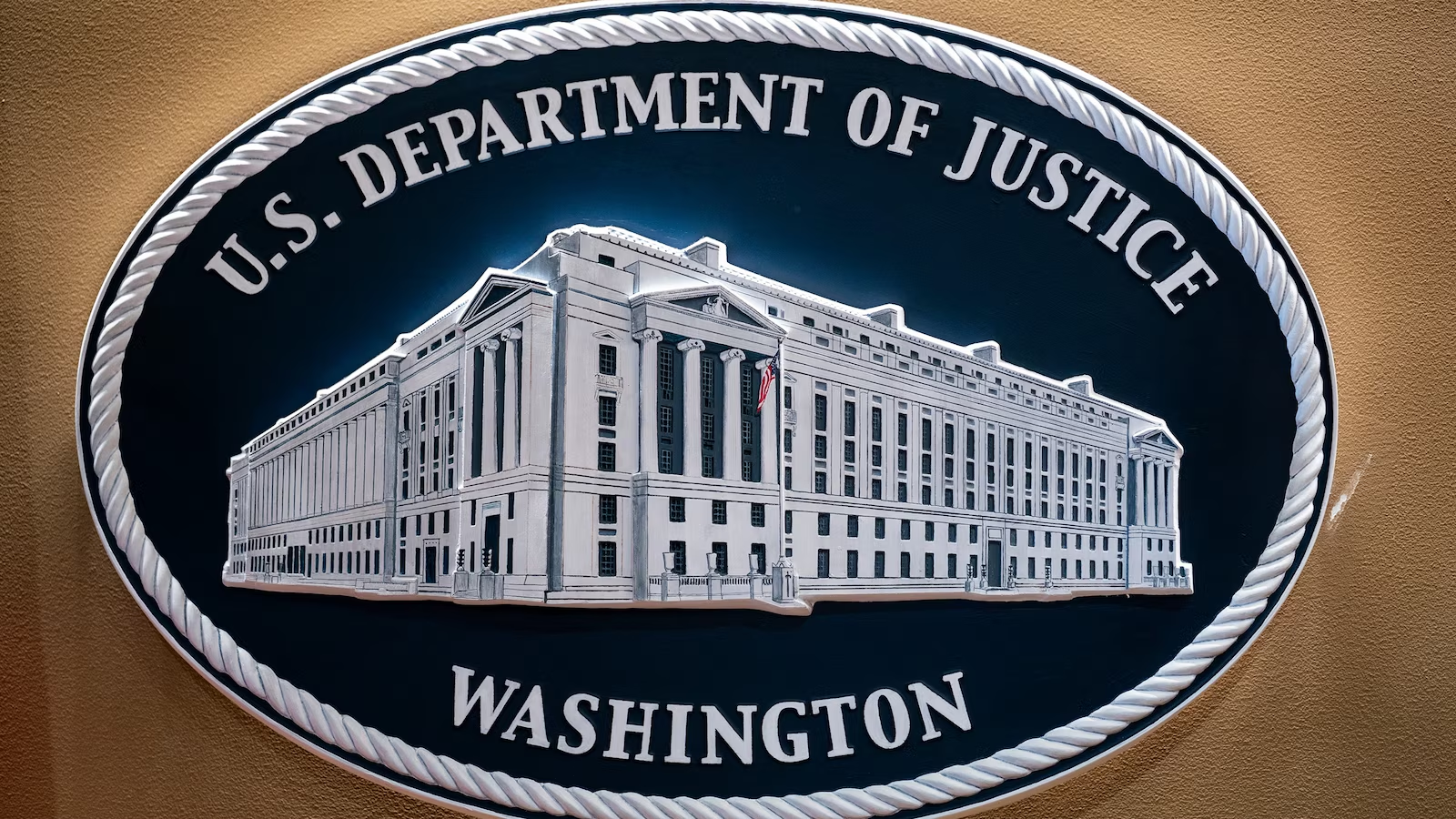
A sign for the Department of Justice (DOJ) during a news conference about safeguarding unaccompanied immigrant children at the Department of Justice headquarters, June 11, 2026, in Washington, D.C.
Al Drago/Getty Images
In their ruling, Bennett and Sanchez wrote: “The United States’s claimed emergency, at least in part, is a self-constructed one. At least part of the delay here is attributable to the United States’s own delay in filing suit, in realizing that existing California state law governs the issuance and processing of ballots, in recognizing that California has millions of registered voters and processes ballots on a schedule aligned with that scale, and in communicating to the court its desired relief.”
Earlier this month, the DOJ filed suit against California, accusing the state of failing to review a list of alleged noncitizens that the Trump administration claimed were sent mail-in ballots for next week’s midterm election.
In court papers filed earlier last week, Los Angeles officials said a preliminary analysis of 200 of the names on the 20,000-person list, included a “high percentage” of individuals who say they were born in the U.S. and many more who have no voting history at all.
Of those 200 individuals, officials said, nearly 40% “indicate that they were born in the United States, which is strong evidence of citizenship; and 71.2% of the records have no voting history,” according to a filing.
In a rare Sunday emergency hearing, the Justice Department’s efforts to have the appeals court quickly rule on its lawsuit faced considerable skepticism from the panel.
Bennett repeatedly questioned whether the appeals court had jurisdiction to step in at this stage in the litigation and expressed considerable constitutional concerns over the lawsuit itself.
“I don’t see how we have jurisdiction,” Bennett said to DOJ attorney Matthew Donnelly after pressing him over the timeline of the government’s decision to seek emergency appeal when a hearing before the district judge is already set for Tuesday.
Donnelly claimed that the DOJ’s decision to seek relief from the appeals court came after disclosures by California of the numbers of mail-in ballots already being processed in advance of the election — which number in the hundreds of thousands.
Bennett’s most significant concerns appeared to be the nature of the lawsuit and it appearing to directly contradict the Constitution’s Elections Clause — which mandates that states have jurisdictions over the manner their elections are run.
“How can the legislature making laws with regard to the manner of holding elections be preempted by a criminal statute passed by the Congress, especially when both the Congress and the California Legislature have made it illegal for non-citizens to vote?” he asked.
Donnelly repeatedly pointed to DOJ’s position that the way California is administering its elections — and not acting on the hard drive of potential 20,000 likely non-citizens — infringes on the federal government’s ability to enforce the federal statute barring voting by illegal immigrants.