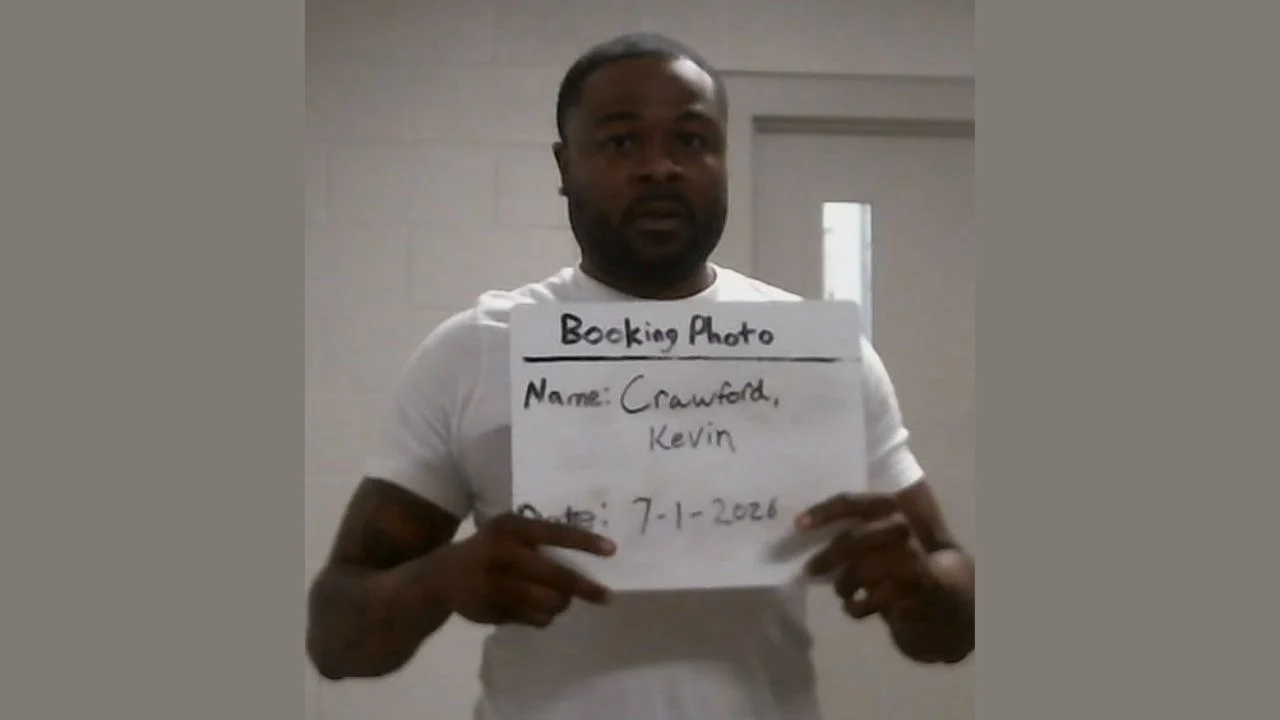
A Georgia man was arrested in Carter County, Missouri, after deputies said a local business reported suspicious activity involving a false identity, a false ID, and a fraudulent credit card.
Ozark Radio News reported that deputies responded July 1 after a business in Ellsinore called the Carter County Sheriff’s Office about suspected fraud. Deputies said the man initially gave a false identity and had a false ID and fraudulent credit card.
The suspect was later identified as Kevin Crawford of Austell, Georgia, according to the sheriff’s office. E-Communications reported that Crawford was being held in Carter County on a $20,000 cash-only bond.
The charges are allegations. Crawford has not been convicted.
Deputies Say The Card Had Already Been Used
Ozark Radio News reported that deputies said Crawford had already used the fraudulent card to take $600 worth of products from the store. He was allegedly trying to do the same thing again with another $750 worth of products when law enforcement responded.
The Carter County Sheriff’s Office said Crawford admitted to using a fraudulent credit card and said he had obtained both the false ID and fraudulent credit card from the dark web. Deputies also said Crawford stated he was aware of the scam he was involved in.
He Faces Four Felony Charges
E-Communications reported that Crawford was charged with felony fraudulent use of a credit device, two counts of felony forgery, and felony identity theft or attempted identity theft.
Ozark Radio News reported the same charge categories, citing the Carter County Sheriff’s Office. The sheriff’s office said a warrant had been issued and served.
The $750 Attempt Qualifies as a Criminal Offense Under Missouri Law
Missouri’s fraudulent-use-of-a-credit-device statute covers using a credit or debit device to obtain property or services while knowing the device is stolen, fictitious, forged, revoked, canceled, or otherwise unauthorized.
Under Missouri Revised Statutes § 570.130, fraudulent use of a credit or debit device becomes a Class E felony when the value of the property or services obtained or sought within a 30-day period is $750 or more.
Stolen Card Data Does Not Stay Online
The dark web detail is useful for cardholders because stolen identity and payment information can be used far away from the person whose data was compromised. It may show up as an online purchase, an in-store transaction, a fake account, or an attempt to pass false identification.
The Federal Trade Commission says people should report lost or stolen credit, ATM, and debit cards immediately. The FTC also says consumers should keep checking account statements and report fraudulent charges as soon as they spot them.
Anyone who sees an unfamiliar charge should contact the card issuer through the number on the back of the card or the bank’s official app, lock or cancel the card, dispute the transaction, and ask for a replacement card. If personal information was used with a fake ID or new account, the FTC recommends using IdentityTheft.gov to create a recovery plan.
Store Employees Spotted The Problem
The Carter County case started because a local business called law enforcement about suspected fraudulent activity, according to the sheriff’s office account cited by local outlets.
For retailers, warning signs can include inconsistent identity information, a payment card that does not match the ID, repeated high-value purchases, declined cards followed by another card, or rushed behavior around card verification.
Businesses that suspect card fraud should preserve receipts, transaction records, surveillance video, and any identification details presented during the purchase. If the situation appears criminal, they should contact law enforcement and notify their payment processor.