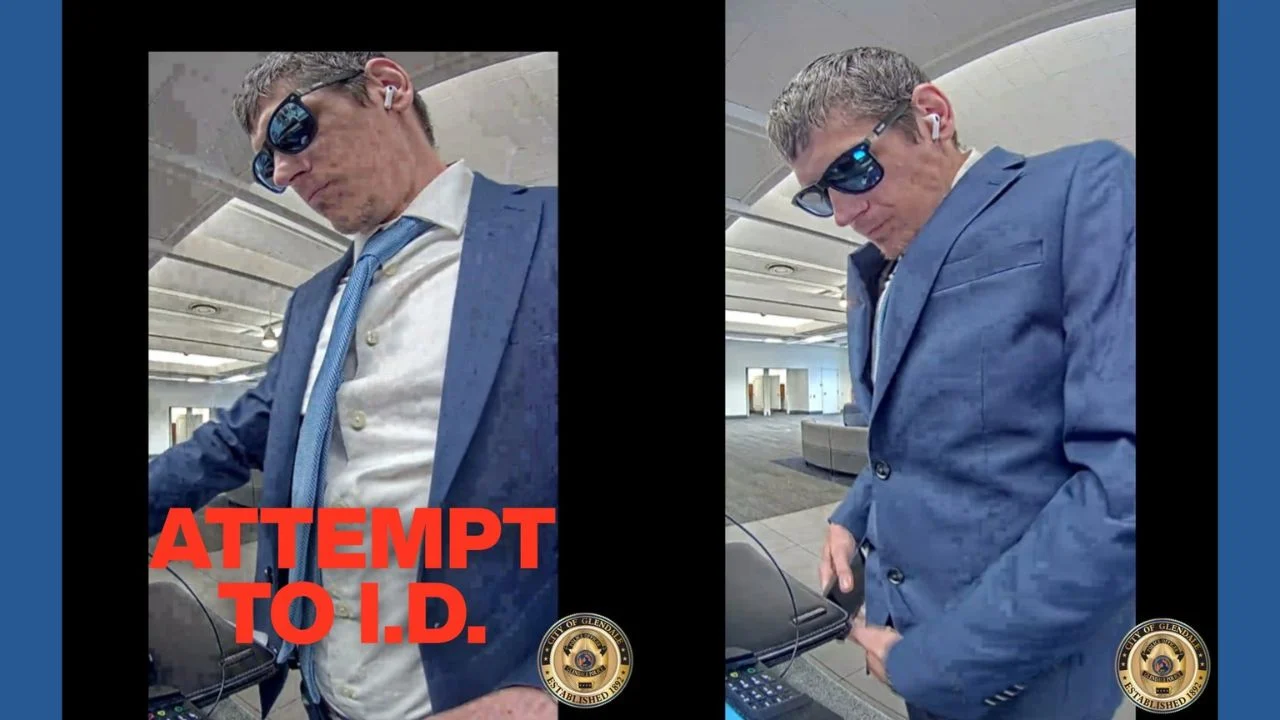
Glendale police in Arizona are asking for help identifying a man accused of using a fraudulent identification card to withdraw about $250,000 from an elderly victim’s bank account.
12News reported that police said the suspect acted as though he was the account owner and made four large withdrawals from an out-of-state bank account. The victim reported the loss the following day, according to the outlet.
The Glendale Police Department said in a public post that the fraudulent withdrawals happened at a financial institution near North 57th Drive and West Glendale Avenue on May 5, 2026.
No arrest has been announced in the available reports. Police are still trying to identify the man.
Police Say The Suspect Used A Fraudulent ID
According to 12News, the suspect provided a fraudulent identification card and acted as the account’s owner. Police said he was then able to make four large withdrawals from the victim’s out-of-state bank account.
The Glendale Police Department’s public alert said the man withdrew approximately $250,000 from an elderly victim’s account. Police asked anyone who recognizes him to contact Glendale police.
The Allegation Centers On In-Person Bank Withdrawals
The allegation is that someone impersonated the account holder at a financial institution and used fake identification to pull money from the account.
That kind of fraud can be especially damaging for older adults because the money may come from retirement savings, home-sale proceeds, inheritance funds, or emergency reserves. A victim may not know anything is wrong until a statement, online balance, bank alert, or failed transaction reveals the missing money.
Police said the victim reported the loss the following day. Glendale police are asking anyone with information about the man in the public alert to contact the department.
Identity Theft Can Reach Existing Bank Accounts
The FBI says identity thieves may use stolen personal information to access bank accounts, complete wire transactions, open fraudulent bank and credit accounts, or conduct other financial activity.
The FBI lists unfamiliar charges on bank or credit card statements, unexpected account locks, missing mail, unusual Social Security account activity, and requests for personal or financial information as signs of identity theft and cyber fraud.
Older adults and their families should watch for large withdrawals, new bank correspondence, address changes, missing statements, password resets, unfamiliar cards, or new checks that the account holder did not request.
What Victims Should Ask The Bank To Preserve
Anyone who finds an unauthorized withdrawal should contact the bank’s fraud department immediately, say the transaction was unauthorized, and ask the bank to reverse it.
The victim should also ask the bank to preserve surveillance video, teller notes, copies of any identification presented, withdrawal slips, signatures, branch records, and any account-change history from the days before and after the withdrawal.
The Consumer Financial Protection Bureau says a bank or credit union generally has 10 business days to investigate after a customer reports an unauthorized transaction. CFPB also says customers should report an unauthorized withdrawal within 60 days after the statement showing the transaction is sent.
Extra Bank Protections Can Help Older Account Holders
Account holders can ask their bank what extra protections are available for large withdrawals or unusual branch activity. Options may include real-time transaction alerts, account notes, extra verification steps, trusted-contact information, or alerts to a designated family member or advisor when the bank’s rules allow it.
Families helping an older relative should not wait for monthly paper statements if the account is active. Online access, text alerts, email alerts, and regular balance checks can shorten the time between a suspicious withdrawal and a fraud report.
The Glendale Police Department’s identity-theft victim information tells victims to contact financial institutions where suspected identity theft occurred, ask what paperwork is required, complete any forgery affidavit for an affected bank account, keep financial documents, and maintain a detailed record of contacts and documents.
Victims should also file an identity-theft report through IdentityTheft.gov, place a fraud alert or credit freeze with the major credit bureaus, change online banking passwords, and file a police report. If a driver’s license or other ID may have been copied or misused, the victim should ask the issuing agency what replacement or fraud-flag options are available.