Tommy John, the four-time All-Star pitcher whose remarkable comeback turned his name into shorthand for one of the most consequential operations in sports medicine, has died at 83.
John died peacefully at his home in Lakewood Ranch, Florida, surrounded by his wife, Cheryl, and other family members, according to a statement from his agent Mike Maguire reported by TMZ. A cause of death has not been announced.
His death came eight days after the New York Yankees shared a farewell letter from John while he was receiving hospice care in Florida. In it, the former pitcher thanked the organization, his teammates and fans, then singled out Dr. Frank Jobe, the surgeon whose unprecedented work on John’s damaged elbow allowed him to continue a career that had appeared finished.
“Thanks for Dr. Jobe, who saved my arm & made it possible for me to continue pitching,” John wrote. He added that the operation had gone on to save the careers of countless pitchers, placing the medical breakthrough at the center of his final public goodbye.
John Said Goodbye to Baseball Only Eight Days Before His Death
John was unable to attend the Yankees’ 78th Old-Timers’ Day on Aug. 8 as he dealt with serious health problems at home. The team instead shared his letter with the fans and former players gathered at Yankee Stadium.
Reuters reported that John was in hospice care at the time. He thanked the Yankees organization and Steinbrenner family for giving him the opportunity to say goodbye to the friends and fans who had followed him through his 26-year career.
John also remembered advice his father had given him when he left Terre Haute, Indiana, to pursue professional baseball. Regardless of what he accomplished, he would still be Tommy John from Terre Haute.
John credited the surgeon with saving his arm and making the second half of his extraordinary career possible. John had publicly discussed having bladder cancer in 2024.
A Surgery Given 1-in-100 Odds Gave Him 14 More Major League Seasons
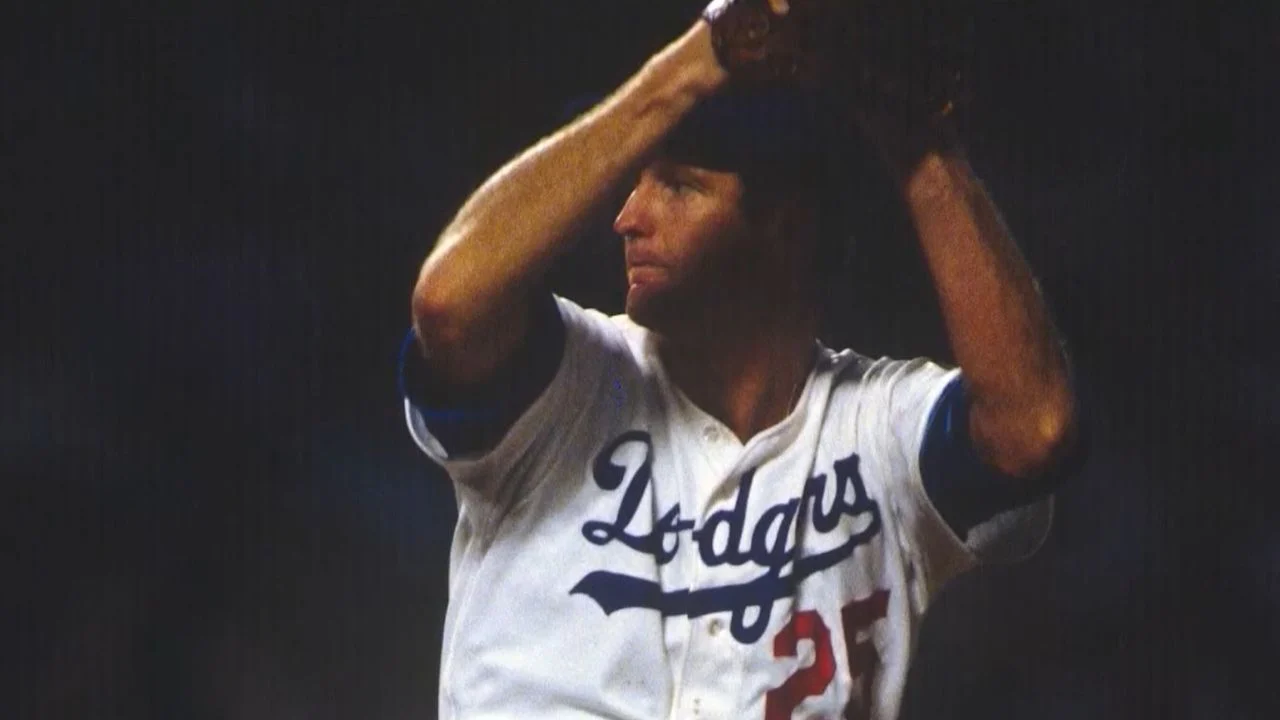
John was pitching for the Los Angeles Dodgers in 1974 when he severely damaged the ulnar collateral ligament in his left elbow. At the time, an injury of that severity could effectively end a pitcher’s career.
Dodgers team physician Frank Jobe proposed an experimental reconstruction. On Sept. 25, 1974, he took a tendon from John’s right wrist and used it to replace the damaged ligament in his pitching elbow. MLB says Jobe later recalled giving John roughly a one-in-100 chance of pitching again.
The operation had never previously been performed on a Major League pitcher. John missed the entire 1975 season during his rehabilitation before returning to the mound on April 16, 1976.
He did considerably more than simply pitch again. John won 164 games over the next 14 seasons, compared with 124 before surgery, meaning more than half of his 288 career victories came after an operation initially given extraordinarily long odds of working.
The procedure eventually became universally known as Tommy John surgery. MLB’s 50th-anniversary history reported that more than 2,400 such operations had been performed on professional baseball players by 2024, with the procedure transforming what had once been a potentially career-ending elbow injury into one from which pitchers routinely attempt to return.
His Career Was Bigger Than the Surgery That Carried His Name
John spent 26 Major League seasons between 1963 and 1989, pitching for Cleveland, the Chicago White Sox, Los Angeles Dodgers, New York Yankees, California Angels and Oakland Athletics. He finished with a 288-231 record, a 3.34 career ERA and 2,245 strikeouts across more than 4,700 innings. His longevity was particularly remarkable given that he lost an entire season to the elbow reconstruction and continued pitching until he was 46.
John was selected to four All-Star teams, first with the White Sox in 1968 and then after surgery with the Dodgers in 1978 and Yankees in 1979 and 1980. He also produced three 20-win seasons after the operation: 20 victories for Los Angeles in 1977, followed by 21 and a career-high 22 in his first two seasons with New York.
He twice finished second in Cy Young Award voting, first with the Dodgers in 1977 and again with the Yankees in 1979. John remained outside the Baseball Hall of Fame despite finishing only 12 victories short of 300.
His family plans to hold a private celebration of life in Florida. In lieu of flowers, they have asked that donations be made to the Duke University Medical Fund.