Shortly after the White House Correspondents’ Dinner began on Saturday, April 25, a heavily armed man charged through a security checkpoint at the Washington Hilton, exchanging gunfire with law enforcement before being apprehended. President Trump, First Lady Melania Trump, and numerous cabinet officials were evacuated from the ballroom.
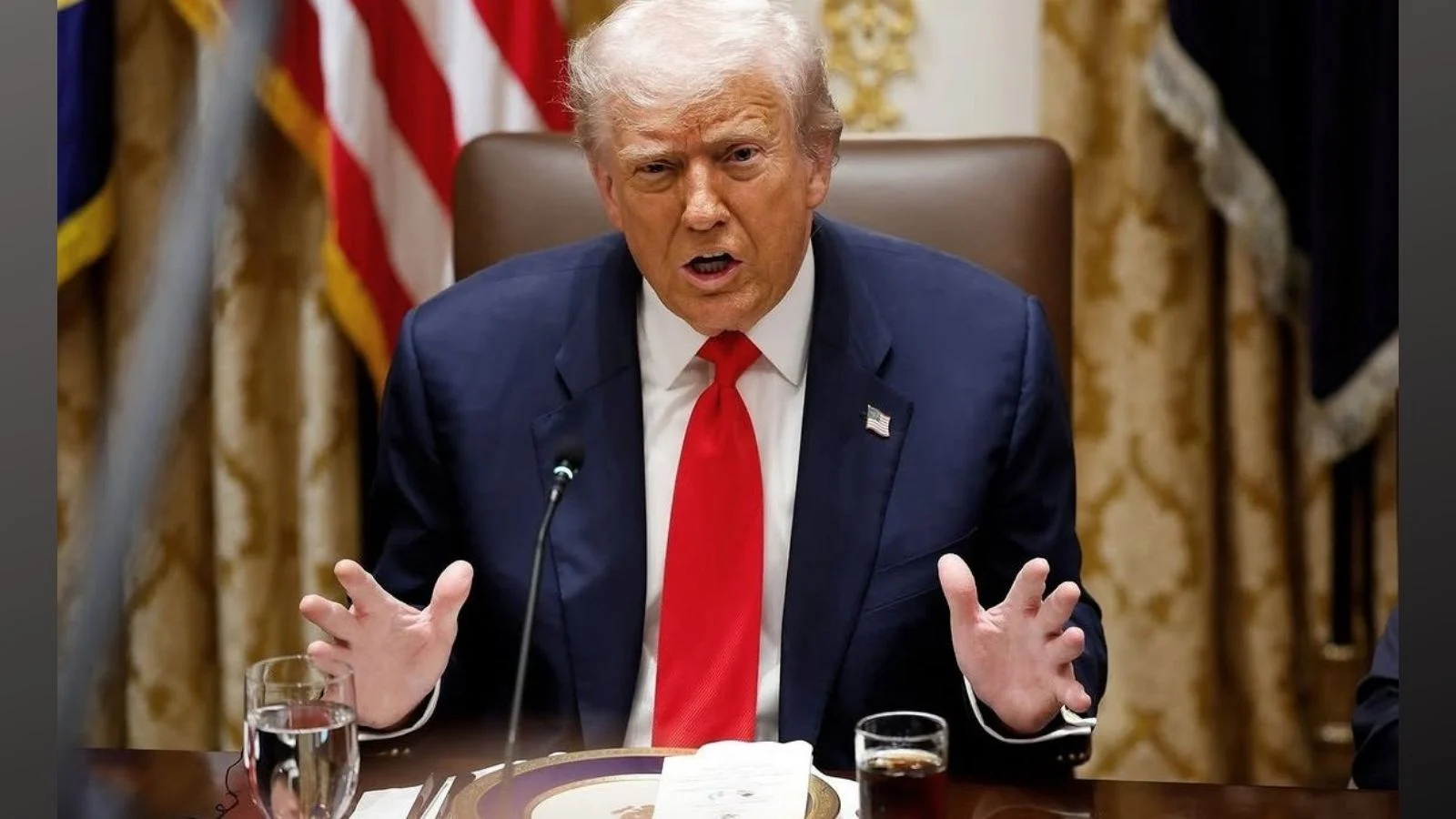
The dinner was canceled, the nation was shaken, and by the next afternoon, Trump was sitting down with CBS News correspondent Norah O’Donnell at the White House for a 60 Minutes interview.
Despite speaking with O’Donnell for 40 minutes on April 26, only 13 minutes of the interview aired on CBS. The network also published the full version and a complete transcript online, a level of transparency that did little to quiet the conversation already building around it.
The final 13-minute edit that CBS broadcast was described by one media analyst as something of a Frankenstein production, with Trump sometimes cut off mid-sentence while other sections were rearranged to give the conversation a smoother flow.
The timing made it impossible to ignore. This was Trump, on the same network he had sued over editing practices, now sitting inside a heavily edited version of his own interview, and raising no public objection.
The Same Network, the Same Tension
The irony was not lost on anyone paying attention. The interview came roughly a year and a half after Trump sued CBS in October 2024 over a 60 Minutes segment featuring then-Vice President Kamala Harris, accusing the network of deceptive editing to influence the election. Though Trump had refused a 60 Minutes interview during his 2024 campaign, he criticized CBS for airing two different answers from Harris to the same question, running in separate clips on 60 Minutes and Face the Nation on the same day.
That legal tension tied to this interview had been building since October 31, 2024, when Trump filed a $10 billion lawsuit against CBS over a 60 Minutes segment featuring then-Vice President Kamala Harris. The complaint alleged that the network used editorial selection to obscure what the filing termed word salad deficiencies and to skew the election in her favor.
That case did not stay at that number for long. In an amended complaint filed February 8, 2025, the claim expanded into a $20 billion claim, and Representative Ronny Jackson was added as a co-plaintiff. CBS, however, stood its ground, saying its editing choices were standard practice, and even released transcripts after an FCC review to defend its newsroom judgment.
The matter was resolved with a significant settlement. On July 1, 2025, Paramount agreed to pay $16 million to cover Trump’s legal fees, with the remainder designated for his presidential library. The company denied any wrongdoing and cited First Amendment protections. Behind the scenes, analysts noted that the timing aligned neatly with the Skydance merger, suggesting the settlement may have been just as much about clearing corporate hurdles as about resolving a legal fight.
The Anatomy of the Edit
When Trump sat down with O’Donnell on April 26, the conversation ran for 40 minutes. Only 13 minutes made it to air, roughly 32% of the full interview. CBS posted both versions online alongside a complete transcript, but the arithmetic alone was enough to restart a conversation the network had been trying to put behind it.
Still, without a precise breakdown of what was removed and why, it is hard to follow the exact thinking behind those choices. There is no side-by-side guide showing what was shortened, moved, or cut entirely. The same thing played out with the
By late April, around April 27, the dispute had picked up momentum online. A thread on the r/entertainment subreddit, organized around the claim that the interview had been “heavily edited” despite Trump’s earlier suit against CBS, drew sustained attention and discussion.
The thread leaned more on user reactions than on primary evidence, but its framing carried. Clips circulated, viewers assembled comparisons, spread, and the broadcast version became something audiences felt entitled to interrogate rather than simply receive.
The Social Echo and the Trade Reaction
By early 2026, the conversation had spread beyond the broadcast itself. Trade outlets started pointing out the irony, noting how Trump ended up benefiting from the same kind of editing he had previously challenged in court. It is the kind of twist that practically writes its own headlines.
Online, the reactions have been less formal but just as sharp. Some critics have suggested that the edits may have softened certain answers or removed moments that could have landed differently if left in. Others see it as standard practice being pulled into a bigger political spotlight.
What is noticeable is how split the broader media response has been. Trade publications lean into the contradiction, while general news outlets focus more on the implications of that multimillion-dollar settlement. There is a rising sense that legal pressure could start changing how interviews are edited long before they ever air.
That possibility changes the mood around these kinds of interviews. It is no longer simply about storytelling or clarity; it is also about risk. And when risk enters the room, it tends to stay there.
The Missing Material
In all the discussion, one thing is still missing: a clear, public breakdown of exactly what was removed from the original interview and why. We only know what was broadcast and the full runtime, not the specific parts that didn’t make it through.
That gap is where most of the noise comes from. When viewers can’t see what was cut, it naturally raises questions about how those choices were made, even if the editing itself followed standard newsroom practice.
And that is really the sticking point. Once there is no visible record of the cuts, the final version starts carrying more weight than it probably should, because it is the only version anyone can actually point to.