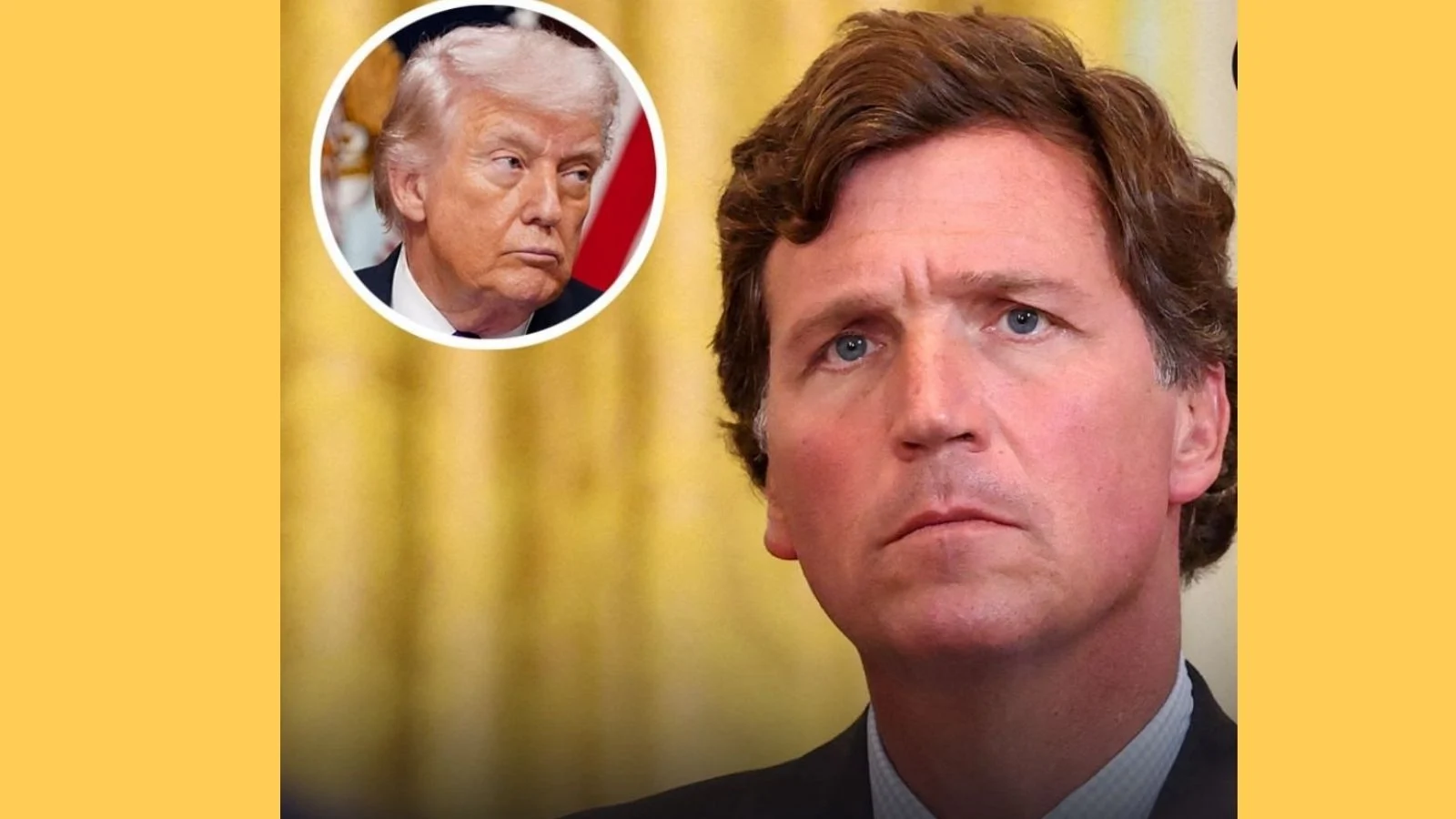
Grab your strongest espresso, because the conservative media multiverse just glitched in the most dramatic way possible. Tucker Carlson, once the loudest hype man for Donald Trump, just pulled a full emotional U-turn on his own podcast and did something that almost never happens in that orbit.
He said sorry, out loud, on record, and not in a polished, PR-safe way, but in a raw, “this is keeping me up at night” kind of way that instantly had everyone leaning in.
Speaking with his brother Buckley Carlson on the April 20 episode, Tucker admitted he feels personally responsible for helping Trump get elected and reelected, and he did not water it down. He used the word “tormented,” and tied his regret directly to the fallout from the Iran war and Operation Epic Fury, which he called “absolutely disgusting and evil.”
Timing-wise, this dropped like a perfectly placed plot twist, hitting the morning of April 21 and sending the media ecosystem into a full spin cycle.
The Most Awkward Family Dinner Ever Recorded
If you think your family group chat gets tense, this is on a completely different level because Tucker did not just confess; he brought his brother into the spotlight. Buckley is not some random relative; he literally wrote speeches for Trump while Tucker was out there campaigning and shaping the narrative.
So when Tucker says, “you and I and everyone else who supported him… we’re implicated in this,” it lands less like commentary and more like a joint accountability session happening in real time. If you ask me, this exchange feels like two former insiders comparing notes after the fact.
But he kept going, making it clear this was not symbolic guilt but something he believes has real consequences, saying they are, in small but real ways, part of why the country is in its current position. That is a wild pivot from their former roles as key players in the same machine they are now dissecting. It honestly felt less like a podcast episode and more like a family reckoning that accidentally got broadcast to millions.
When the Hype Man Finally Reaches His Breaking Point
For years, Tucker was the translator-in-chief of the Trump era, turning unpredictable moments into digestible narratives his audience could rally behind. But that role has clearly fractured, especially as the war in Iran became the defining feature of the administration. Now, instead of defending the moves, he is openly calling the damage “great and lasting,” which is a sharp break from the tone that built his brand.
The shift is not subtle; it is a full character arc reversal, and it reads like someone hitting their limit after pushing a storyline as far as it could go.
Trump has not exactly taken this criticism quietly, directing his frustration back at Carlson, well, in Trump’s own unique way. So now you have a classic fallout scenario where the former ally becomes the loudest critic, except this time, he is narrating the entire unraveling himself.
The Growing List of MAGA Stars Jumping Ship
Tucker might be the headline, but he is not alone in this vibe shift, and that is what makes the moment feel bigger than one apology. A growing list of conservative voices is stepping back from Trump, specifically over the Iran conflict, and these are not fringe names. Megyn Kelly, Candace Owens, Alex Jones, and even Joe Rogan have all raised concerns that signal a serious fracture in what used to be a tightly aligned media ecosystem.
It may be time to put Grandpa up in a home. pic.twitter.com/ruBJFA3RZw
— Candace Owens (@RealCandaceO) April 9, 2026
Rogan, who backed Trump in 2024, reportedly questioned how the war aligns with “America First,” a not-insubstantial critique from someone with that level of influence. When voices like these start diverging publicly, it stops being a personal opinion and begins to look like a broader realignment. Tucker’s apology, in that context, feels not like an isolated moment but more like part of a louder, messier chorus.
Tucker did not stop at personal accountability; he widened the lens, catching many people off guard. He explicitly said that millions of supporters, people like him and his brother, share responsibility for what is happening now. He also told listeners, “I want to say I’m sorry for misleading people,” while insisting it was not intentional, adding another layer to the situation.
That kind of statement does not just sit quietly; it challenges an entire audience to rethink their role in the bigger picture.
But Wait, Is This a Confession or a Comeback Strategy?
Well, Carlson has said everything a man seeking redemption can say; however, not everyone is moved to tears by the brotherly confessional energy. Dan Friesen, host of the Knowledge Fight podcast, is not exactly reaching for the tissues. In Monday’s episode of his show, Friesen offered a far less charitable read of what is actually going on here.
His theory, in plain terms: Carlson is not having a moral awakening. He is having a ratings calculation.
Friesen argued that Carlson has watched Trump’s popularity soften and noticed that anti-war, anti-Israel sentiment is gaining real traction on the right and beyond, and is now repositioning himself to stay ahead of where his audience is already heading. According to Friesen, the conscience is not new. The convenience is. “Tucker has known this all along,” Friesen said on his podcast. “It just wasn’t a problem until now.”
The criticism cuts deep because it reframes the entire “tormented” narrative. If Friesen is right, then what looked like a man confessing is actually a man pivoting, and the apology is less about accountability and more about audience retention dressed up in emotional language.
Friesen put it even more bluntly, accusing Carlson of spending years telling his viewers that Trump was a righteous figure worth following, and only now finding his principles once the math stopped working in that direction.
Whether that read is fair or too cynical is genuinely up for debate. But it is the question hanging over every “I’m sorry” Carlson delivers, and it is not going away anytime soon.
The Real-World Fallout and What Comes Next
This is not just internet drama; real-world ripples are showing up close to home for Carlson. Reports indicate his son recently left Vice President JD Vance’s team after Trump publicly criticized Tucker, suggesting this fallout is affecting both professional and personal circles. It is one thing to debate politics online; it is another when those tensions start reshaping actual careers and relationships.
The bigger question now is what this moment actually leads to, because Carlson himself admits that saying “I’ve learned my lesson” is not enough. He is calling for “rational people” to step in and use their influence for the common good. Whether this turns into a lasting change or fades into another viral moment depends on what happens next.
What is clear is that when a central figure in a movement starts using words like “tormented” and “evil” to describe it, people pay attention.
It is the kind of plot twist that forces audiences to reassess the story they thought they were watching. And right now, the cameras are still rolling, the tension is still building, and nobody quite knows how the next episode will play out.