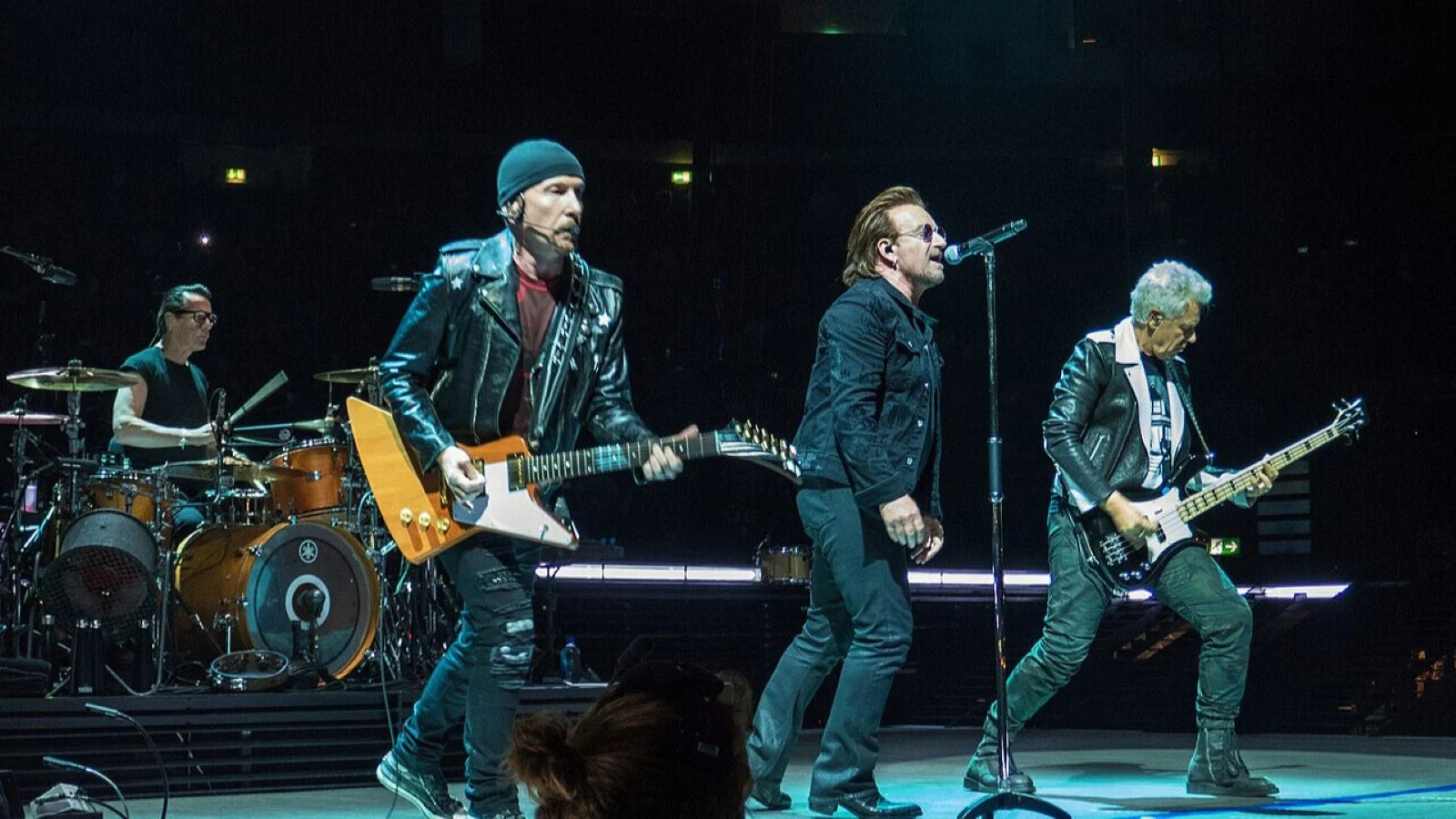
U2 chose Ash Wednesday for this because subtlety was never the point. Today, the band surprise-dropped Days of Ash, a six-track release that is less “new era.” More “we’re done pretending everything is fine.” It arrives like a dispatch. Short. Immediate. Written to live inside the mess, not above it.
The EP opens with “American Obituary,” a tribute to Renée Good, the Minneapolis mother of three who was fatally shot on January 7 during an encounter with an Immigration and Customs Enforcement agent. The shooting remains under investigation. The details are still contested. U2 did not wait for a neat conclusion.
They released the song anyway.
This is not the band doing vague “awareness” about “hard times.” It is U2 stepping directly into a live political fight, then refusing to speak in the passive voice.
A Tribute That Doubles as a Rebuttal
If you have followed the Renée Good story at all, you already know the country was split in two almost instantly. The federal government’s framing emphasized threat and justification. Video analysis and local officials pushed back, arguing the public story being sold did not match what the footage appears to show.
That is the arena U2 walked into. Not a settled case. A contested narrative.
The song’s posture is unmistakable. It insists that Good is not a prop or a label. She is a mother. A person. A death that cannot be processed away with a press conference.
And that’s where the “picked a side” part becomes real. The band is not simply mourning. They are disputing the moral framing that quickly hardened around her death.
The “Domestic Terrorism” Label Made This Unavoidable

The controversy didn’t only come from the shooting itself. It came from the language that followed.
After the incident, Homeland Security Secretary Kristi Noem used “domestic terrorism” rhetoric to describe what happened. That term is politically explosive, and experts have argued that it was legally and conceptually off-base in this context. The label functions like a shortcut. It tells the public who to sympathize with before anyone has to explain the facts.
U2’s EP drops into that environment and refuses the shortcut. Whether you agree with the band or not, the move is clear. They’re telling listeners to treat the victim as a human first and to treat the official framing as something that must earn trust.
Why Days of Ash Hits Harder Than a Typical “Political” Release
This isn’t a standalone single timed for a news cycle. It’s packaged like a statement.
For one thing, the project is structured like five songs plus a poem. One of the songs is a collaboration featuring Ed Sheeran and Taras Topolia. The titles and themes point outward, not inward. U2 isn’t singing about their feelings. They’re singing about the present. About bodies, borders, war, and the way power talks when it thinks no one can challenge it.
They also revived Propaganda, their long-running zine, with a digital issue tied to the EP. That is a deliberate choice. It signals intent. Receipts. A paper trail. Not just a song that disappears into the algorithm.
Call it performative if you want. But it is also disciplined. U2 is trying to control the narrative around their own narrative.

The Real Story Is the Public Argument This Forces
Here’s what people will fight about, and it will not be chord progressions.
One group will hear a band doing what protest music is supposed to do. Use fame to drag a story back into the light. Challenge the language that justifies violence. Refuse to let “investigation pending” become “move on.”
Another group will hear celebrity activism stepping into a case where facts are disputed, and they will call it irresponsible. They will argue that a song is not a courtroom, and that U2 is laundering a political stance through a melody.
Both groups will claim they’re defending the truth. They’re really defending their preferred authority. The government’s story. The footage. The band. The instinct to distrust all of it.
They Picked a Side. Here’s Why
U2 didn’t release Days of Ash to be liked. They released it to be argued with.
“American Obituary” is not a neutral memorial. It is a refusal. A demand that the public stop accepting labels as substitutes for accountability.
If you only want protest music when it’s safely historical, this EP will annoy you. If you want artists to respond to the world while it’s still bleeding, U2 just volunteered to take the heat.