Inflation held steady in December, continuing to prove stubborn just days after reports of a Department of Justice probe into Federal Reserve Chair Jerome Powell brought fresh scrutiny to the independence of the central bank and its capacity to manage price increases.
Prices rose 2.7% in December compared to a year earlier, U.S. Bureau of Labor Statistics data on Tuesday showed. The reading matched economists’ expectations.
Inflation stands at its lowest level since July, but it remains nearly a percentage point higher than the Fed’s target rate of 2%.
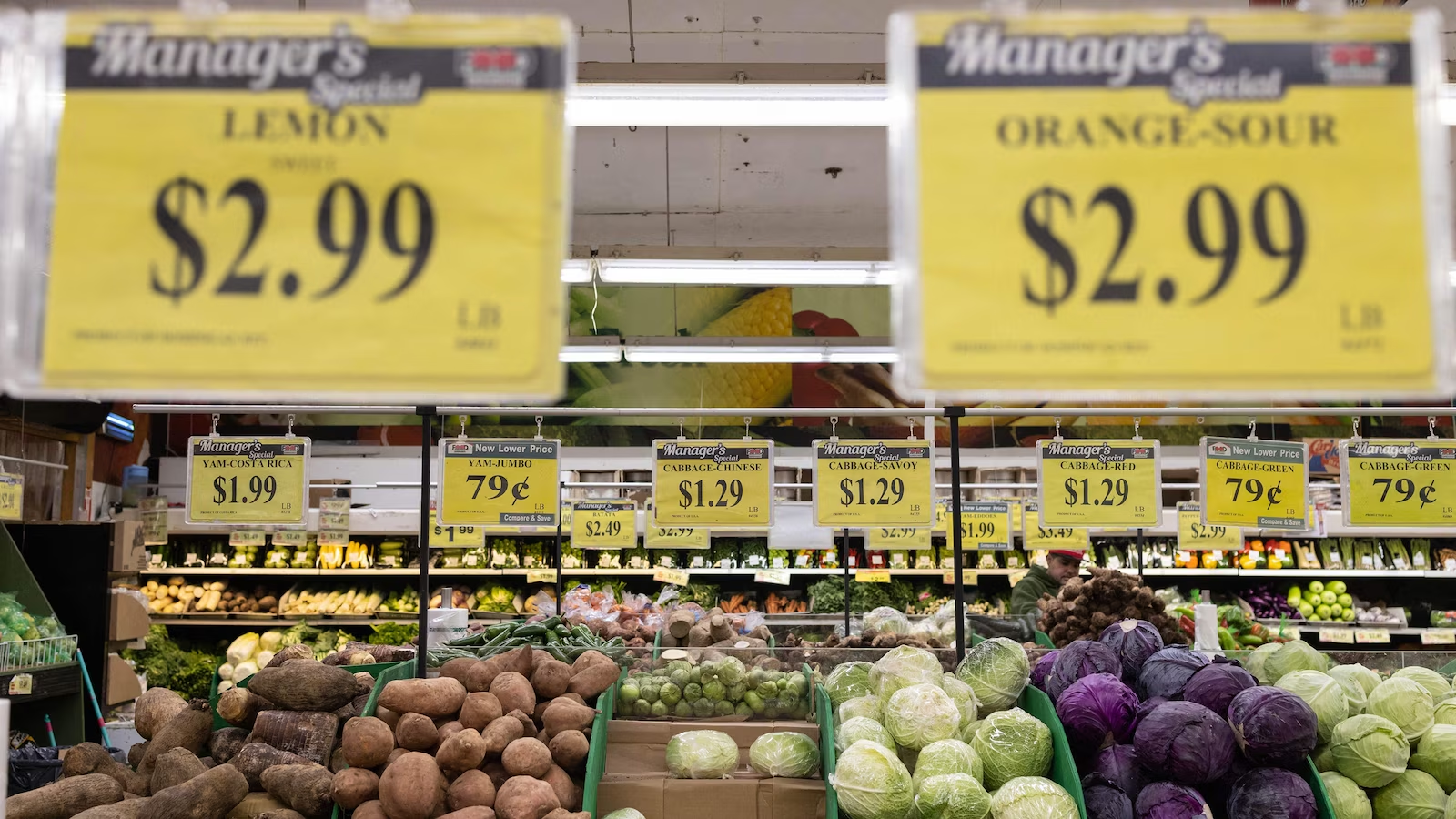
Some high-profile items like coffee and beef continued to soar in December. Coffee prices jumped nearly 20% in November compared to a year earlier, while beef prices climbed 16% over that span.
Egg prices plummeted, however, falling 20% in December compared to the previous year.
The onset of elevated inflation alongside sluggish hiring in recent months had put the Fed in a difficult position, even before the DOJ opened a probe into Powell.
The central bank must balance a dual mandate to keep inflation under control and maximize employment. To address pressure on both of its goals, the Fed primarily holds a single tool: interest rates.
The Fed cut interest rates at three consecutive meetings late last year in an effort to boost the flagging labor market. The reduction of interest rates, however, risks spurring demand and hiking inflation.
A longstanding norm of independence usually insulates the Fed from direct political interference.
In the event a central bank lacks independence, policymakers tend to favor lower interest rates as a means of boosting short-term economic activity, analysts previously told ABC News. But, they added, that posture poses a major risk in the possibility of years-long inflation fueled by a rise in consumer demand, untethered by interest rates.
The criminal probe into Powell appears to center on allegations of false testimony he made about cost overruns in a renovation of the Fed’s headquarters during a congressional hearing in June.

Federal Reserve Chair Jerome Powell speaks at the Federal Reserve, Dec. 10, 2025, in Washington.
Jacquelyn Martin/AP
Powell, who was appointed by Trump in 2017, issued a rare video message on Sunday night rebuking the investigation as a politically motivated effort to influence the Fed’s interest rate policy.
A bipartisan group of economists and former top Fed officials on Monday issued a joint statement condemning the probe as an attempt to undermine the Fed’s political independence.
The investigation follows months of strident criticism leveled at the Fed by President Donald Trump, who has urged the central bank to significantly reduce interest rates. Trump denied any involvement in the criminal investigation during a brief interview with NBC News on Sunday night.
In a statement to ABC News, a spokesperson for Attorney General Pam Bondi said, “The Attorney General has instructed her U.S. Attorneys to prioritize investigating any abuse of taxpayer dollars.”
Stocks closed higher on Monday, shrugging off a dip earlier in the day after reports of the DOJ probe into Powell.
Treasury yields, however, also ticked up on Monday, suggesting possible concern about the Fed’s ability to constrain inflation.
Since bonds pay a given investor a fixed amount each year, the specter of inflation risks devaluing the asset and, in turn, makes bonds less attractive. When bond prices fall due to a drop in demand for Treasuries, bond yields rise.